Tell us about the job
Takes about a minute. No obligation.
A contractor quoting a furnace installation in Adams County has to settle on a load figure before anything else, and the local weather record is one input into that. 92 severe weather events were recorded in Adams County, Wisconsin between 2015 and 2024. At roughly the national midpoint, that puts this county in neither the punishing tier nor the mild one. What it means in practice is that a contractor sizes for a real winter load without treating storm frequency as the dominant design pressure. Duct layout, equipment grade, and how well the install seals against the cold are the variables that determine how the system performs year over year.
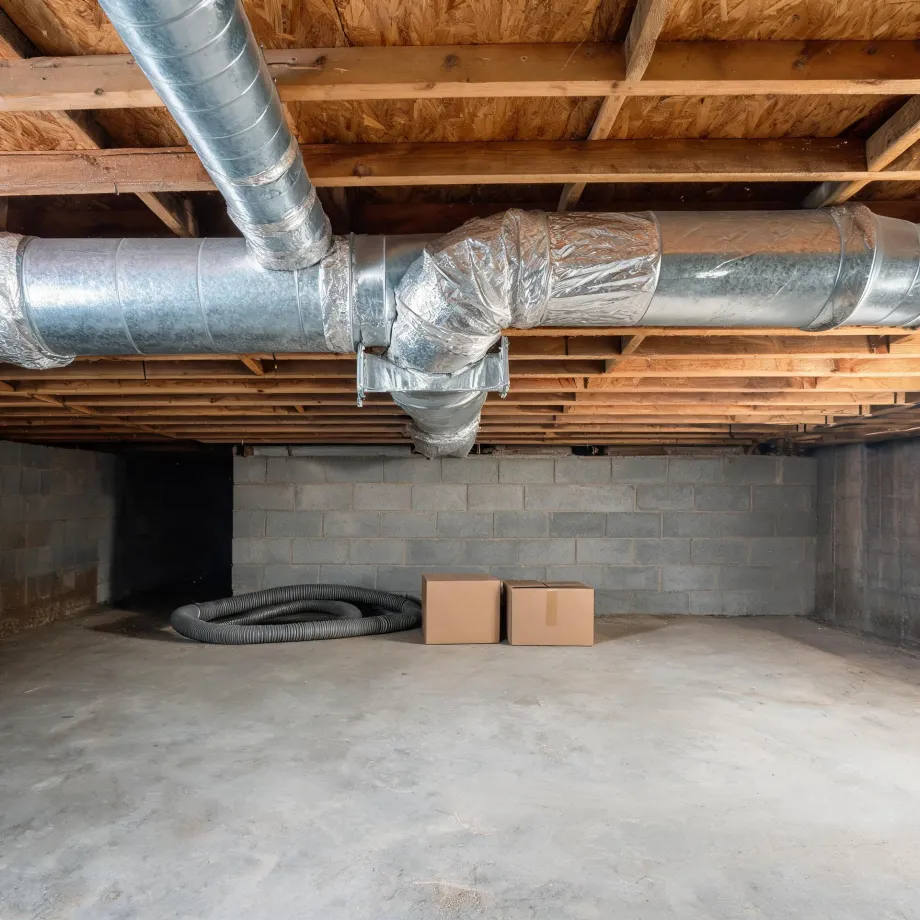
Ductwork laid into a house does not age the way a furnace does. A furnace gets swapped; the trunks and branches behind the walls stay. Half the homes in Adams County, Wisconsin were built in 1984 or earlier (2020-2024 ACS 5-year). That gap between when the ducts were designed and what a new furnace will push through them is the variable a contractor has to measure before the job can be priced honestly. If the existing layout cannot handle the airflow a new unit requires, the ductwork becomes a second project inside the first, and the quote changes accordingly.
What Gets Installed With a New Furnace
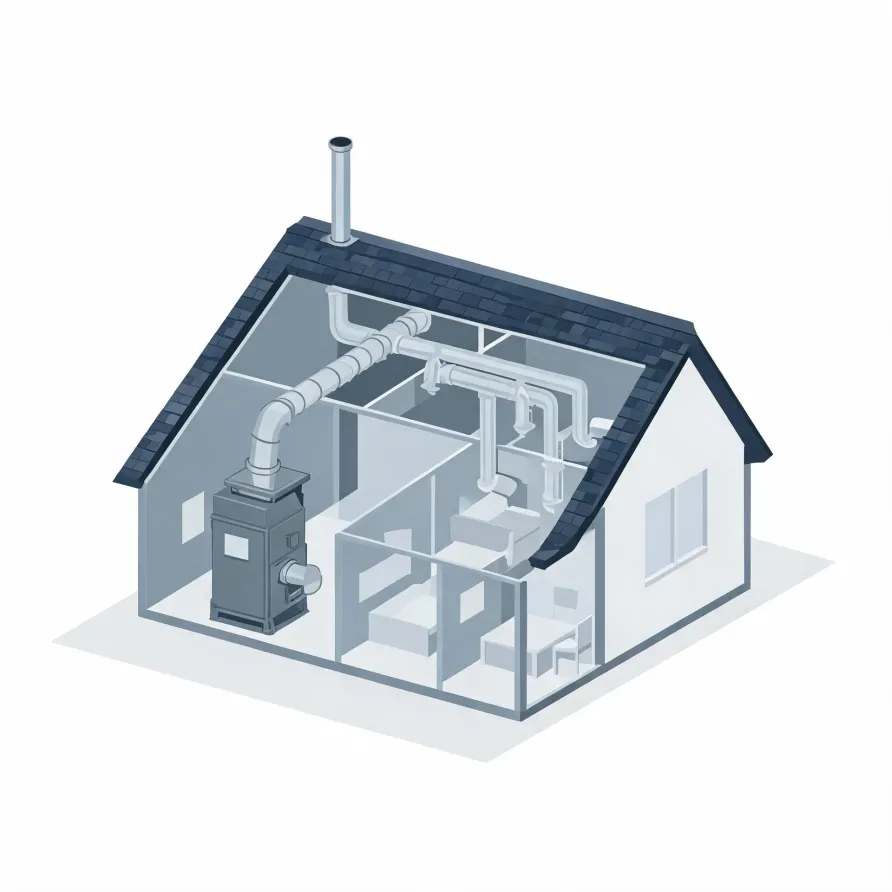
The furnace itself sits in the basement, utility room, or crawlspace and is the heart of what a homeowner is buying. A heat exchanger inside it warms the air, and a blower pushes that air out into the home. The flue or venting pipe runs from the furnace to an exterior wall or up through the roof, carrying combustion gases out.
The thermostat mounts on an interior wall and is what the homeowner touches every day to set temperatures. A filter housing attaches at the air intake, and a condensate drain line runs from the furnace to a floor drain when the unit is a high-efficiency model. Each of these pieces is part of what a contractor installs.
The drawing shows a typical layout, and a licensed contractor determines exactly what applies to this house.
Get matched in Adams CountyAdams County, Wisconsin, by the numbers
92 severe weather events were recorded in Adams County, Wisconsin between 2015 and 2024.
NOAA National Centers for Environmental Information, Storm Events Database, bulk CSV export, events 2015-01-01 through 2024-12-31.Half the homes in Adams County, Wisconsin were built in 1984 or earlier (2020-2024 ACS 5-year).
U.S. Census Bureau, 2020-2024 American Community Survey 5-Year EstimatesAdams County, Wisconsin holds 17,008 housing units (2020-2024 ACS 5-year).
U.S. Census Bureau, 2020-2024 American Community Survey 5-Year EstimatesOwners occupy 86.2% of the occupied homes in Adams County, Wisconsin (2020-2024 ACS 5-year).
U.S. Census Bureau, 2020-2024 American Community Survey 5-Year EstimatesCodes & Standards Governing Furnace Installation in Adams County, Wisconsin6 sourced rules and standards
What the installation actually looks like
Non-weatherized gas furnaces manufactured on or after November 19, 2015 must reach 80.0 percent AFUE.
Non-weatherized oil-fired furnaces manufactured on or after November 19, 2015 must reach 83.0 percent AFUE.
Mobile home gas furnaces manufactured on or after November 19, 2015 must reach 80.0 percent AFUE.
Non-weatherized gas furnaces manufactured on or after December 18, 2028 must reach 95.0 percent AFUE, up from the 80.0 percent minimum that applies to units manufactured before that date.
What Adams County, Wisconsin Requires for HVAC Installation
A Wisconsin business that employs a certified HVAC qualifier is a certified HVAC business, and no city or county may require it to hold a local certification or licence on top of that.
Wisconsin requires a state HVAC contractor registration: no person or business may install or service heating, ventilating or air conditioning equipment, or offer to, without one.
Severe Weather Events in Adams County
Adams County weather puts real demands on heating equipment, and those demands shape what a furnace here has to handle year after year. How hard a system works, and how long it holds up, is a local question.
92 severe weather events, 2015–2024. Source: NOAA National Centers for Environmental Information, Storm Events Database.