Tell us about the job
Takes about a minute. No obligation.
A furnace going into a Burnett County home carries a sizing question that has to be worked out on the ground, not pulled from a standard chart. 119 severe weather events were recorded in Burnett County, Wisconsin between 2015 and 2024. At that rate, severe weather is a standing part of what a heating system runs against here every season. A contractor has to account for that load when selecting equipment capacity and when sealing the installation, because an undersized or loosely fitted system will work harder than it was rated for and give out earlier. The install spec is a local decision.
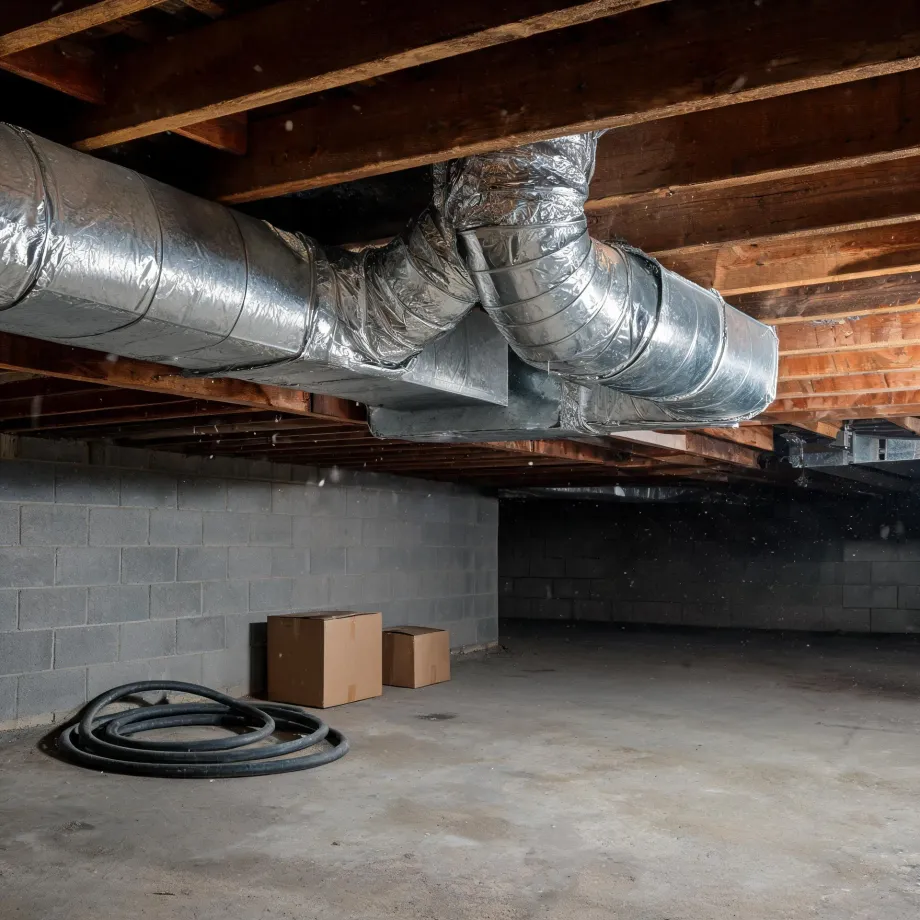
Ductwork sized for older equipment does not automatically carry a modern furnace. Half the homes in Burnett County, Wisconsin were built in 1983 or earlier (2020-2024 ACS 5-year). A house built by then was ducted around the performance envelope of whatever was available at the time, and a new furnace draws air and moves heat differently enough that a contractor has to assess the existing runs before the new unit can be matched to them. If the duct system cannot handle the new load, the equipment choice follows from that, not the other way around. The electrical service gets the same check, since newer units pull differently than what the original wiring was laid out to feed.
What Gets Installed With a New Furnace
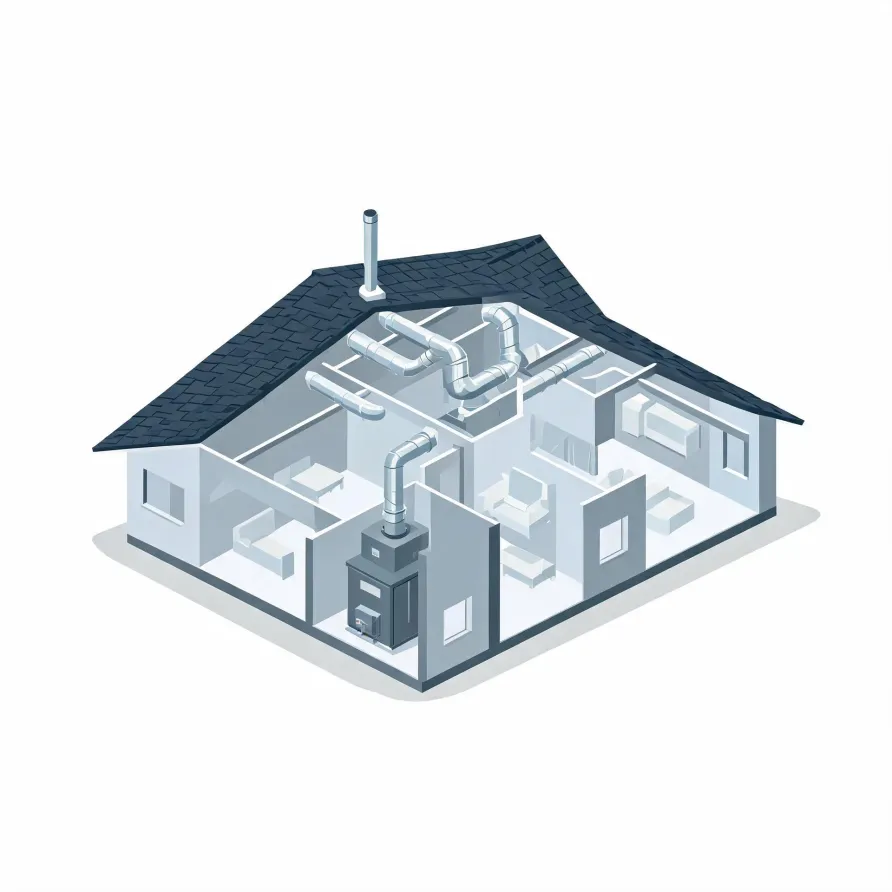
The furnace itself sits in a utility space, basement, or closet and is the heart of what a contractor puts in. A new installation also includes the flue or vent pipe, which runs from the furnace to an exterior wall or the roof and carries combustion gases out of the house.
The air handler or blower compartment, often built into the furnace cabinet, moves conditioned air into the duct system. A new furnace installation also calls for a thermostat, mounted on a main living-area wall, which is the control point the household uses every day.
The drawing shows a general layout of these components, and a licensed contractor determines exactly what applies to your house.
Get matched in Burnett CountyBurnett County, by the numbers
119 severe weather events were recorded in Burnett County, Wisconsin between 2015 and 2024.
NOAA National Centers for Environmental Information, Storm Events Database, bulk CSV export, events 2015-01-01 through 2024-12-31.Half the homes in Burnett County, Wisconsin were built in 1983 or earlier (2020-2024 ACS 5-year).
U.S. Census Bureau, 2020-2024 American Community Survey 5-Year EstimatesBurnett County, Wisconsin holds 15,396 housing units (2020-2024 ACS 5-year).
U.S. Census Bureau, 2020-2024 American Community Survey 5-Year EstimatesOwners occupy 85.9% of the occupied homes in Burnett County, Wisconsin (2020-2024 ACS 5-year).
U.S. Census Bureau, 2020-2024 American Community Survey 5-Year EstimatesFurnace Installation Rules for Burnett County, Wisconsin6 codes, standards, and laws
What the Installation Actually Looks Like
Non-weatherized gas furnaces manufactured on or after November 19, 2015 must reach 80.0 percent AFUE.
Non-weatherized oil-fired furnaces manufactured on or after November 19, 2015 must reach 83.0 percent AFUE.
Mobile home gas furnaces manufactured on or after November 19, 2015 must reach 80.0 percent AFUE.
Non-weatherized gas furnaces manufactured on or after December 18, 2028 must reach 95.0 percent AFUE, up from the 80.0 percent minimum that applies to units manufactured before that date.
Licensing Rules for Burnett County, Wisconsin
A Wisconsin business that employs a certified HVAC qualifier is a certified HVAC business, and no city or county may require it to hold a local certification or licence on top of that.
Wisconsin requires a state HVAC contractor registration: no person or business may install or service heating, ventilating or air conditioning equipment, or offer to, without one.
Severe Weather Events in Burnett County
Burnett County winters put a real load on heating equipment, and the stress doesn't stop when temperatures climb. How hard local weather pushes a furnace over its lifetime shapes what kind of installation makes sense here.
119 severe weather events, 2015–2024. Source: NOAA National Centers for Environmental Information, Storm Events Database.