Tell us about the job
Takes about a minute. No obligation.
A contractor quoting a furnace installation in Kenosha County has to figure out what the house has been running against before settling on equipment size and installation spec. 82 severe weather events were recorded in Kenosha County, Wisconsin between 2015 and 2024. At that rate, severe weather is a steady background condition rather than a rare event, and it factors into how a contractor thinks about duct layout, equipment capacity, and the quality of the seal work. A system installed light for this climate will be pushed harder in the seasons that matter most.
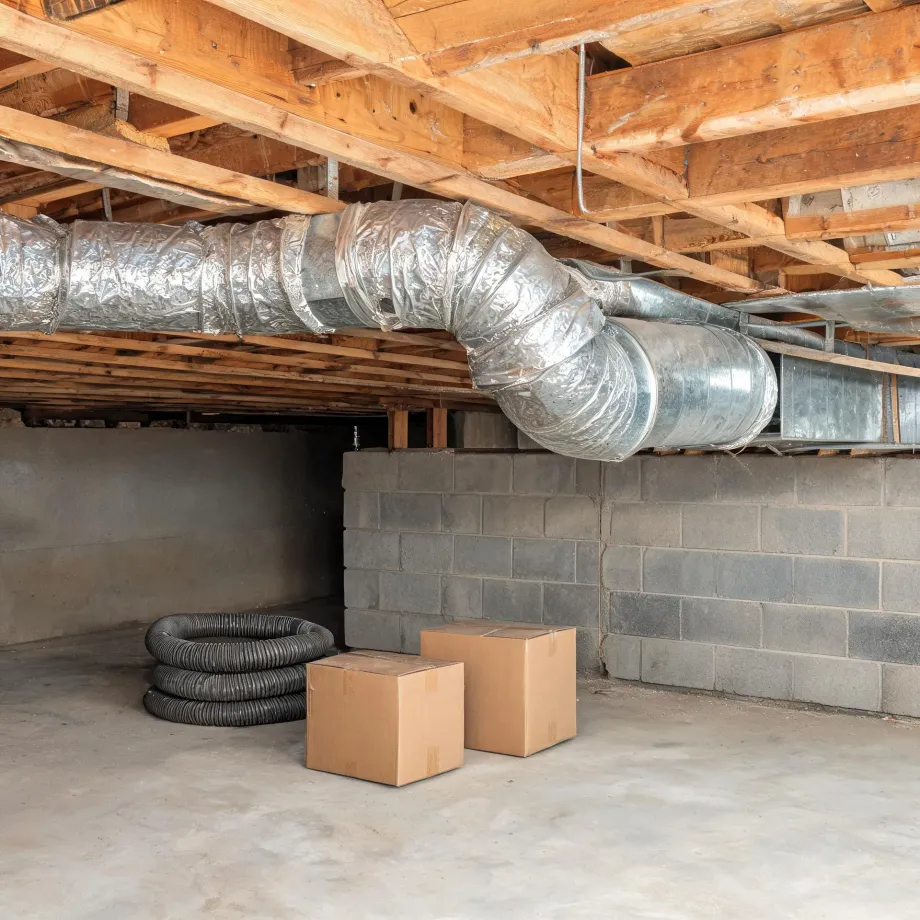
Ductwork laid down for an older furnace carries assumptions about airflow, trunk sizing, and return placement that a modern unit does not share. Half the homes in Kenosha County, Wisconsin were built in 1975 or earlier (2020-2024 ACS 5-year). A contractor installing a new furnace in stock like this has to assess what those runs will actually do under the load a new system puts on them, and whether the layout delivers heat to the rooms it is supposed to reach. If the ductwork needs modification, that work sets the scope and the price. The equipment selection comes after.
What Gets Installed With a New Furnace
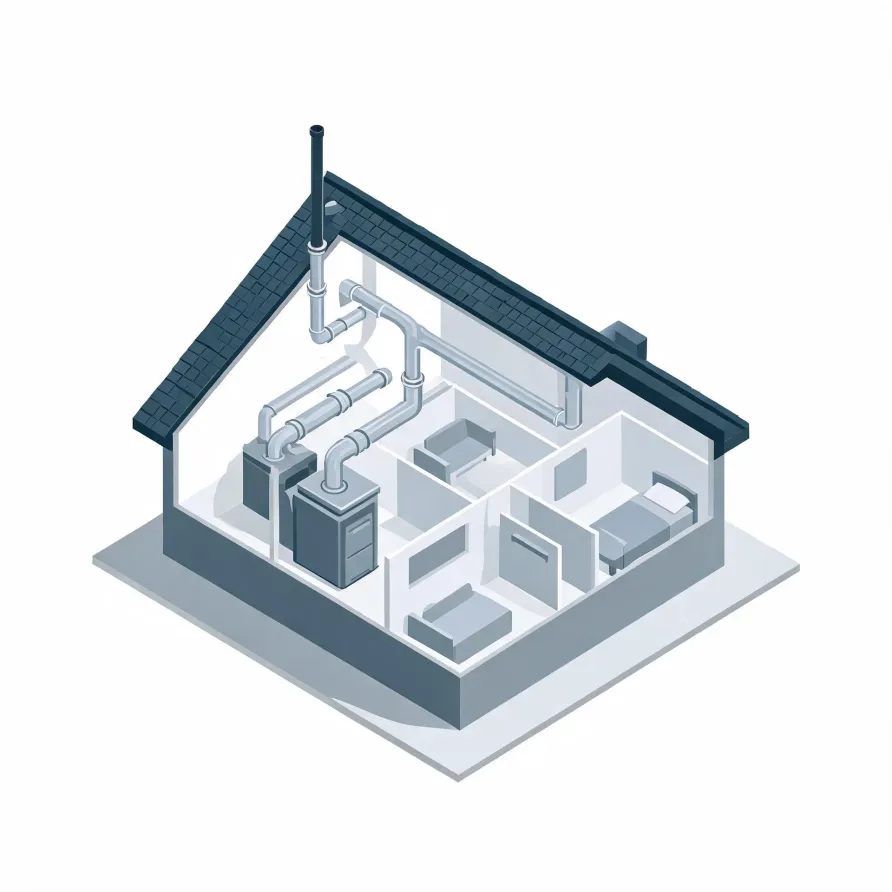
The furnace itself sits inside the house, most often in a basement, utility room, or closet. It is the unit that produces heat by burning fuel or running electrical elements through a heat exchanger, and all conditioned air passes through it before moving anywhere else in the home. The air handler, if separate, occupies the same general space.
The flue pipe runs from the furnace to an exterior wall or through the roof, carrying combustion gases out of the house. Alongside it, the thermostat mounts on an interior wall and serves as the control point where a homeowner sets temperatures and the system receives its operating signals.
The drawing shows a typical layout, and a licensed contractor determines exactly what applies to your house and how each piece gets positioned within it.
Get matched in Kenosha CountyKenosha County, by the numbers
82 severe weather events were recorded in Kenosha County, Wisconsin between 2015 and 2024.
NOAA National Centers for Environmental Information, Storm Events Database, bulk CSV export, events 2015-01-01 through 2024-12-31.Half the homes in Kenosha County, Wisconsin were built in 1975 or earlier (2020-2024 ACS 5-year).
U.S. Census Bureau, 2020-2024 American Community Survey 5-Year EstimatesKenosha County, Wisconsin holds 73,678 housing units (2020-2024 ACS 5-year).
U.S. Census Bureau, 2020-2024 American Community Survey 5-Year EstimatesOwners occupy 66.7% of the occupied homes in Kenosha County, Wisconsin (2020-2024 ACS 5-year).
U.S. Census Bureau, 2020-2024 American Community Survey 5-Year EstimatesFurnace Installation Rules for Kenosha County, Wisconsin6 codes, standards & laws
What the installation actually looks like
Non-weatherized gas furnaces manufactured on or after November 19, 2015 must reach 80.0 percent AFUE.
Non-weatherized oil-fired furnaces manufactured on or after November 19, 2015 must reach 83.0 percent AFUE.
Mobile home gas furnaces manufactured on or after November 19, 2015 must reach 80.0 percent AFUE.
Non-weatherized gas furnaces manufactured on or after December 18, 2028 must reach 95.0 percent AFUE, up from the 80.0 percent minimum that applies to units manufactured before that date.
Licensing Rules for Kenosha County, Wisconsin
A Wisconsin business that employs a certified HVAC qualifier is a certified HVAC business, and no city or county may require it to hold a local certification or licence on top of that.
Wisconsin requires a state HVAC contractor registration: no person or business may install or service heating, ventilating or air conditioning equipment, or offer to, without one.
Severe Weather Events in Kenosha County
Kenosha County weather puts real demand on heating equipment, and a furnace sized and installed for local conditions holds up better than one that is not. That workload is recorded in the data below.
82 severe weather events, 2015–2024. Source: NOAA National Centers for Environmental Information, Storm Events Database.