Furnace on but house still cold in Wisconsin

Step 1 of 3: Equipment

The furnace running without warming the house usually comes down to air that can't move or heat that can't reach the rooms. A clogged filter chokes the airflow, so the burner runs but the ducts only trickle warm air out. A failing blower motor does the same thing from the other end, spinning too weak to push heat through the house. Sometimes the furnace itself is fine and the problem is the thermostat reading the wrong temperature, or set to "on" instead of "auto" so the fan runs between heating cycles and blows cool air. In older systems, a cracked heat exchanger or a dying igniter can let the furnace run its fan without ever producing real heat. None of these fix themselves, and running a furnace that isn't heating all winter wastes gas and electricity for no warmth back. Someone who catches this early, before pipes or comfort are at real risk, is already ahead of most calls.

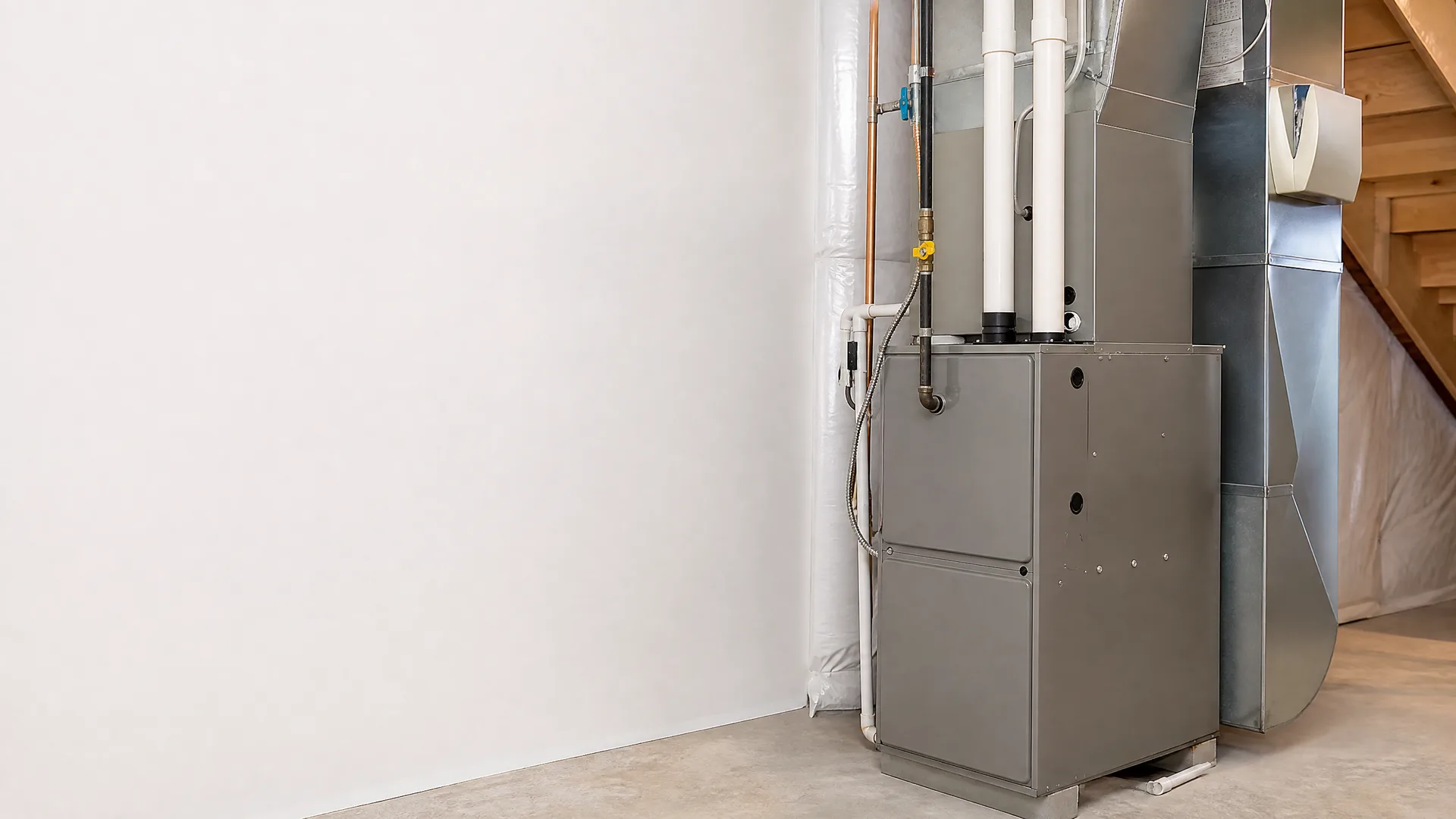
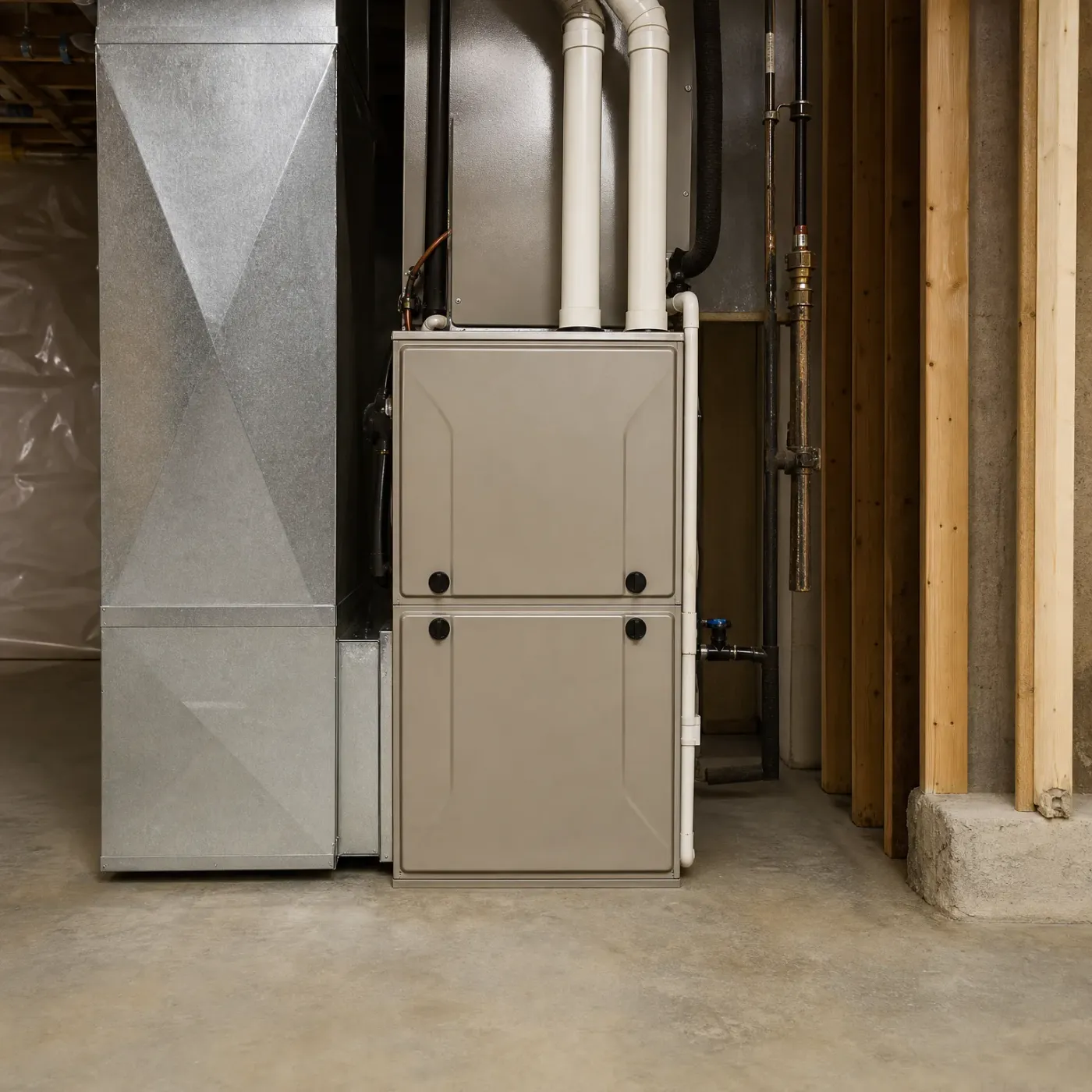
A beige high-efficiency furnace with white PVC vent pipes stands beside galvanized sheet-metal ductwork in a basement with a concrete floor, exposed wood studs, and metal piping along the wall.

Running right

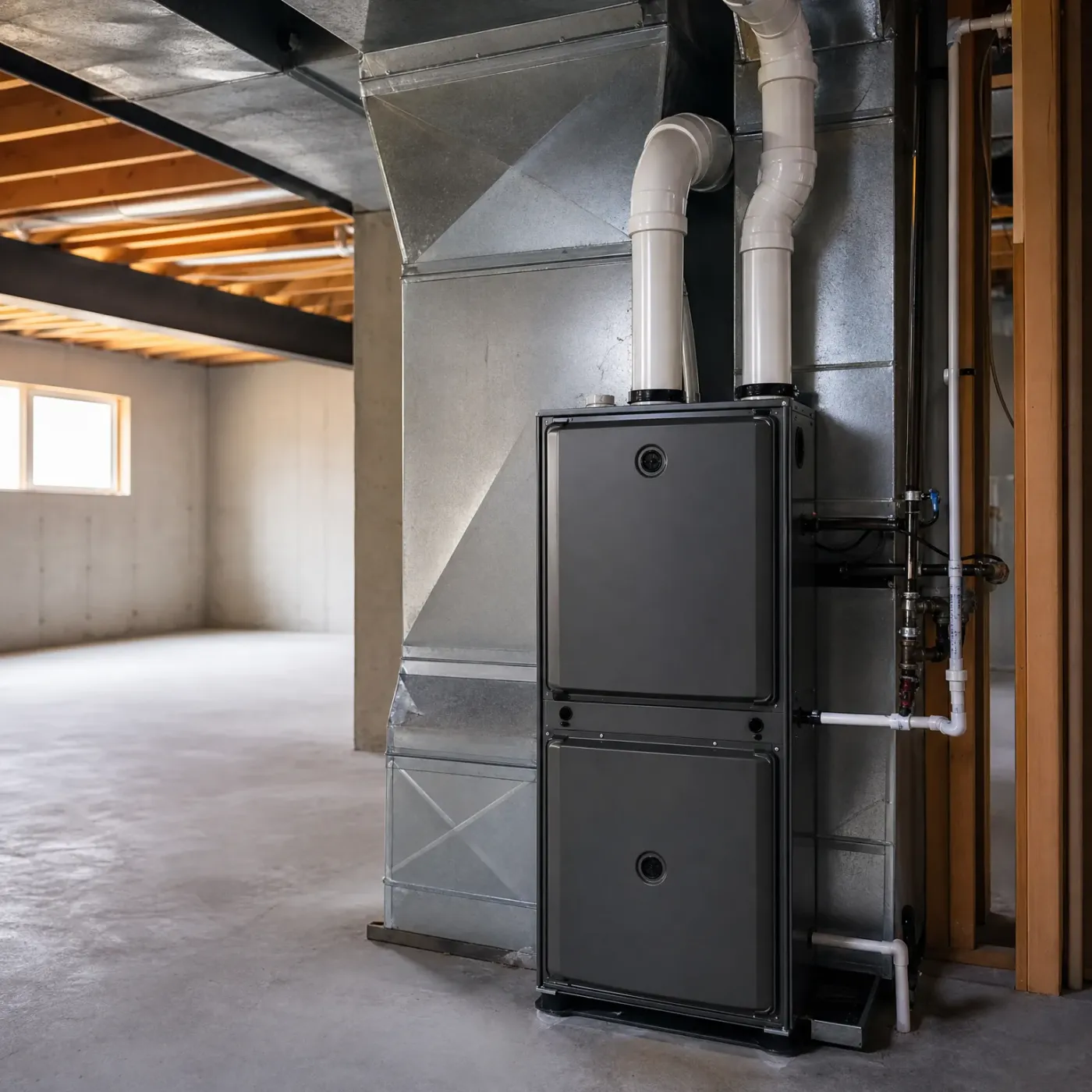
A furnace like this pulls air in through the intake pipe and pushes exhaust out through the other, both PVC, both sealed tight. Warm air moves out through the plenum into the ducts at a steady rate, so every room gets its share. If yours looks like this and the house still won't warm up, the problem is likely downstream, in the ductwork or the thermostat, not in the unit itself.
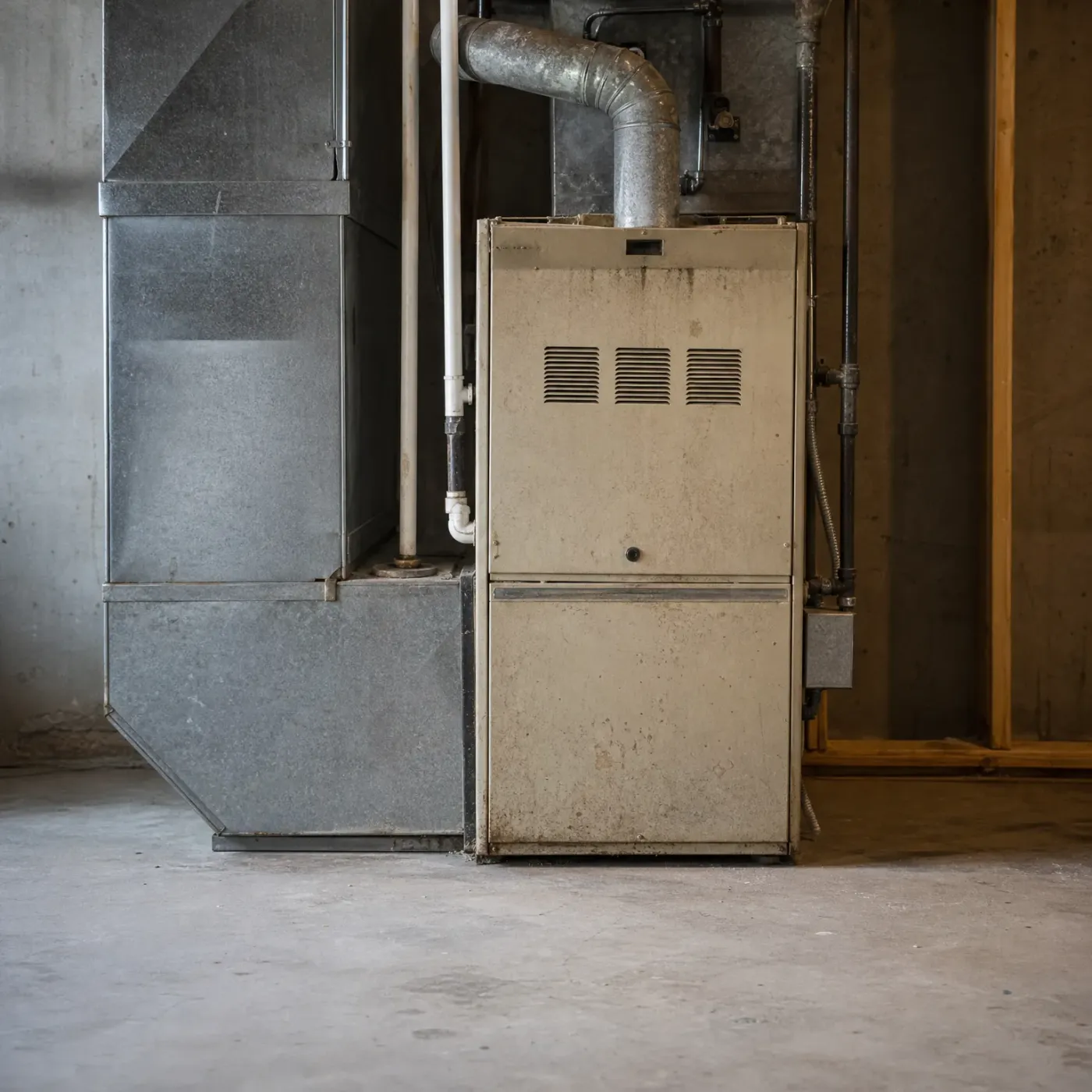
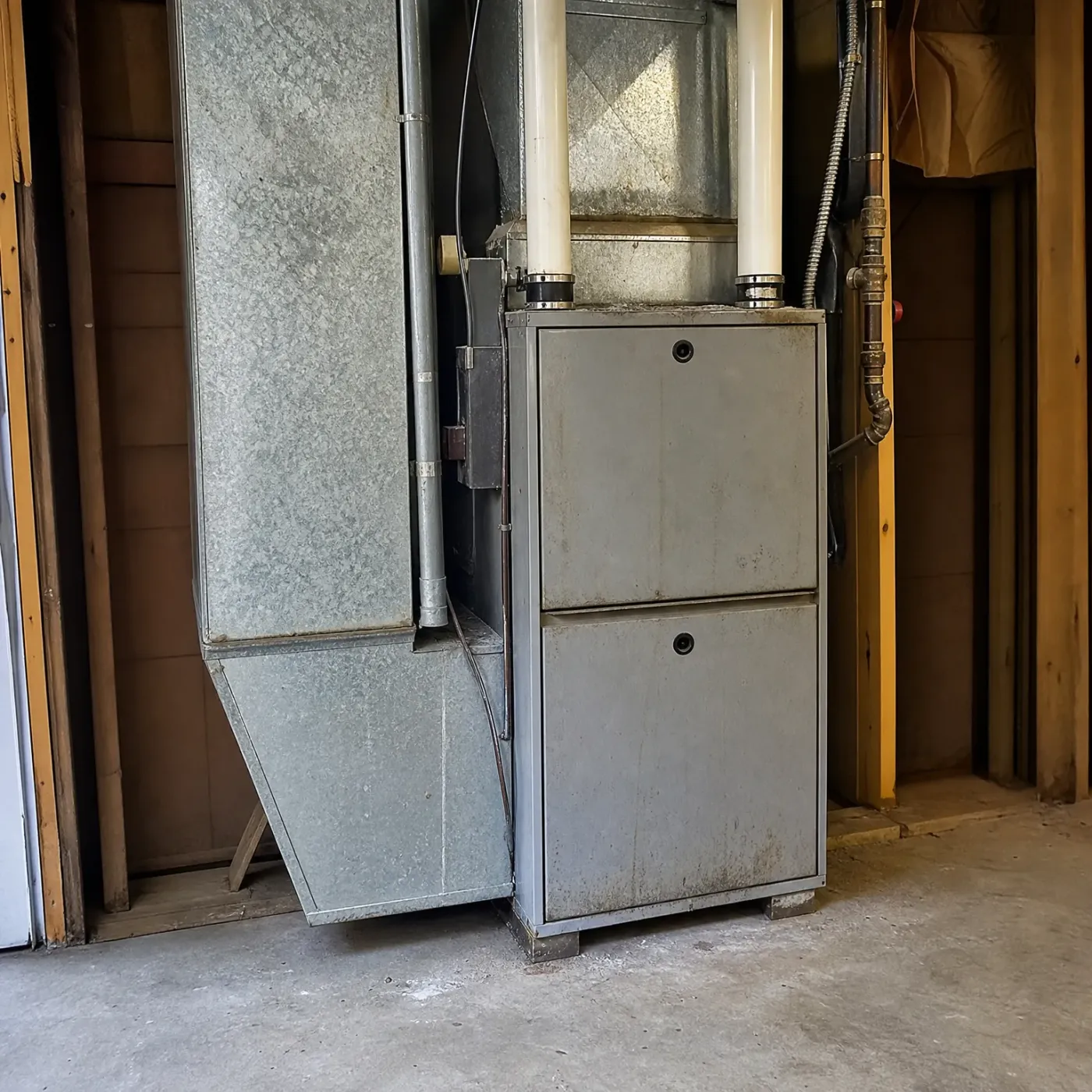
An older beige furnace with a louvered vent panel stands on a concrete basement floor beside galvanized sheet-metal ductwork, a metal flue pipe and vertical pipes along a concrete wall.

Signs of age

An older furnace like this vents through a metal flue instead of PVC, and that flue can rust or loosen where it meets the wall. A weak draft or a cracked heat exchanger inside a cabinet like this can let the burner run while the house stays cold. If your furnace is built this way, a technician needs to check the venting before anything else.

Check It Yourself or Call It In

Fix it now

  • A thermostat set to Auto instead of On, or a dead battery in it, stops the furnace from calling for heat at all.
  • A dirty filter can usually be swapped yourself for under twenty dollars and restores airflow in minutes.
  • Vents and registers closed or blocked by furniture keep warm air from ever reaching a room, no matter how hard the furnace runs.
  • A tripped breaker or a furnace switch bumped off by accident will shut the whole system down until it's flipped back.
  • Checking these first costs nothing and rules out the simplest explanations before anyone opens up the furnace itself.

Call a contractor

  • A blower motor that's weak or failing won't push enough warm air through the ducts even though the burner is firing fine.
  • A cracked heat exchanger or failing igniter needs a licensed hand, both for diagnosis and because gas furnaces involve combustion.
  • Ducts that have come loose or disconnected behind a wall or in the attic are leaking heat where you can't see it.
  • A thermostat that's miswired or a control board that's failing can make the furnace run without ever reaching the temperature you set.
  • Wisconsin winters don't leave much room to wait on a furnace that's running but not keeping up.
  • Getting it looked at now, while it's a small problem, is cheaper than waiting for it to become a bigger one.
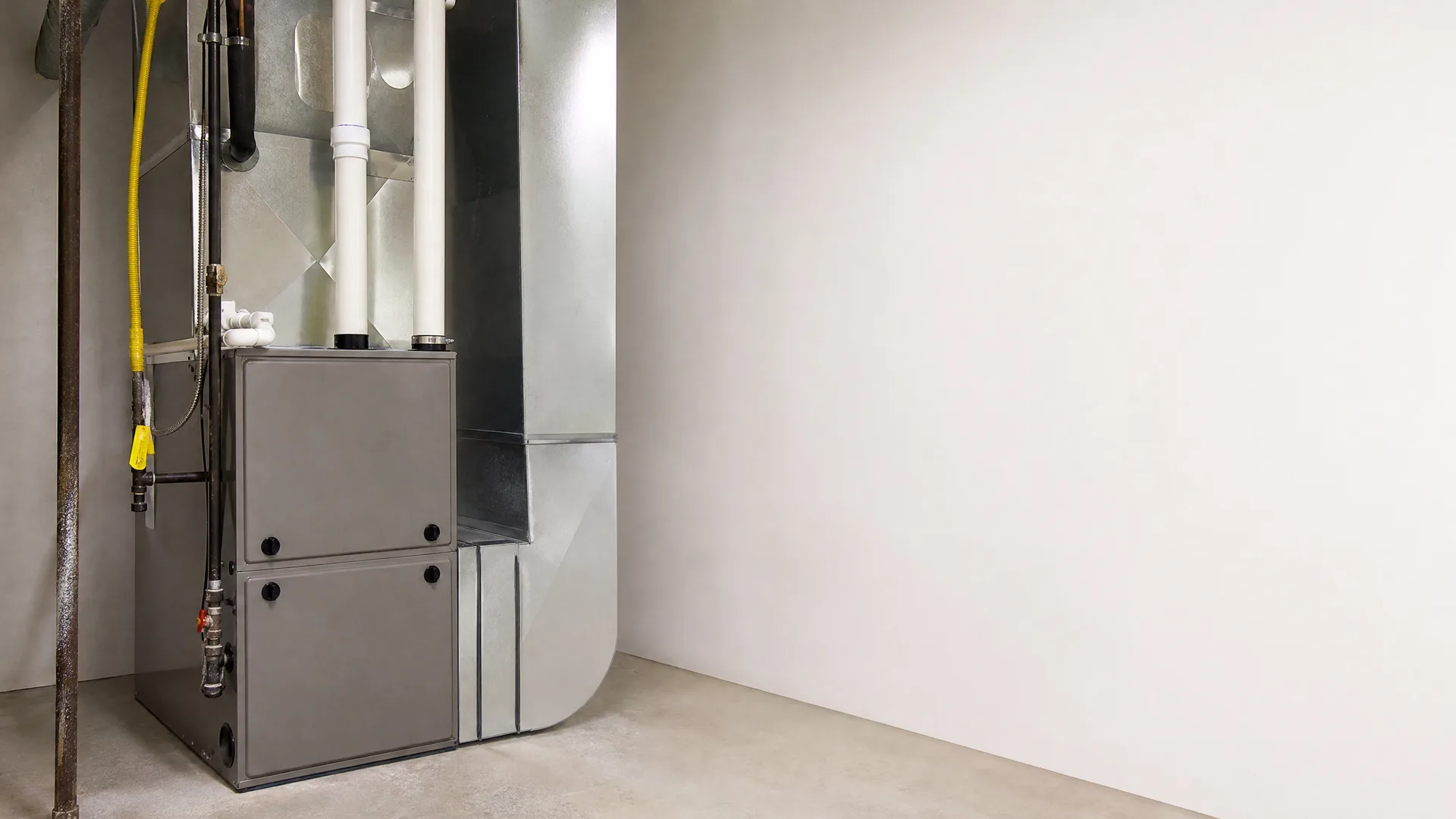
A gas furnace with two gray access panels stands against a plain wall in a basement, connected to sheet-metal ductwork, white PVC vent pipes, and a yellow gas line.

Why a clogged filter fools you

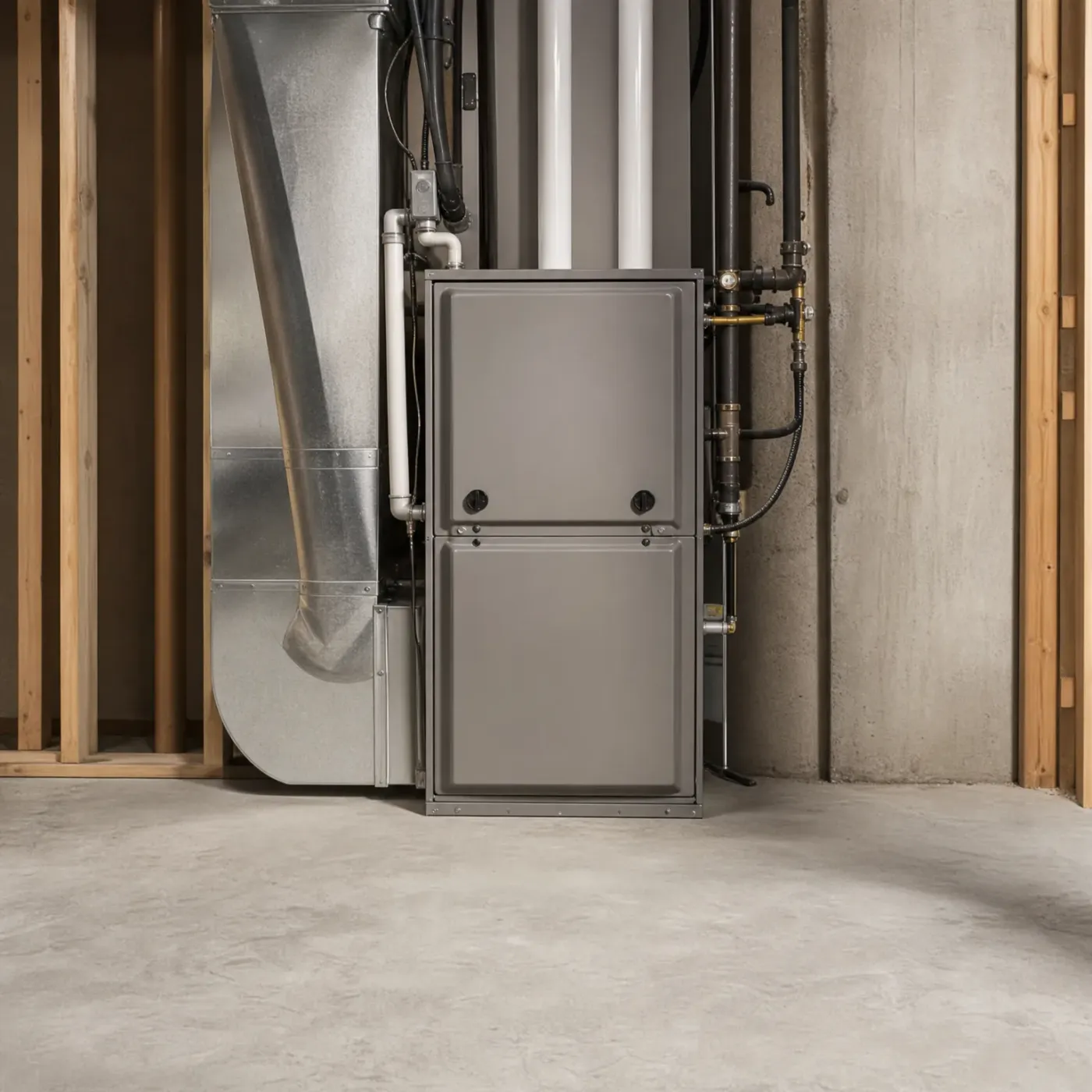
A furnace with a clogged filter still lights, still runs, still blows warm air at the register nearest the unit. That's why it looks fine up close. But a blocked filter starves the blower, and the drop in airflow across the heat exchanger means the far rooms get air that's lost most of its heat by the time it travels through the ducts. The burner isn't the problem. The filter is.

A gray high-efficiency furnace in a basement corner with white PVC vent pipes, copper and black gas piping, and sheet-metal ductwork beside a plain white wall and wooden stair framing.

What the blower is supposed to do

The blower motor moves a set volume of air across the heat exchanger and out into the duct system every minute it runs. When it's working right, that air picks up heat fast and carries it the full length of the ducts to every vent. A blower running slow, or a wheel caked in dust, moves less air per minute, and less air means more of the heat stays trapped near the furnace instead of reaching the rooms in Wisconsin where you actually feel cold.

A smiling man in a denim shirt and white t-shirt stands in an open dark doorway of a stucco house, facing a woman with long brown hair and a green jacket seen from behind in the foreground.

A cold bedroom down the hall isn't a small thing in a Wisconsin January

You notice it at the far end of the house first. The living room near the furnace feels fine, but the bedrooms down the hall or upstairs stay cold no matter how high you push the thermostat. That's the furnace working hard and losing the fight to get heat where it needs to go. Left alone through a Wisconsin winter, that imbalance doesn't fix itself. The furnace just runs longer to chase a temperature it can't reach, and with power priced the way it is here, that shows up on the bill before it shows up anywhere else.

You're the kind of homeowner who checks the filter and the thermostat batteries before it gets to this point, and that's usually enough to catch the easy stuff. When it isn't, the smart move is getting someone out to look at the blower and the ducts before a cold snap turns an uneven house into a house with a dead furnace. Once you send in the details, you're done chasing down who's available and who isn't. A contractor who handles this in your area gets the details and takes it from there.

A gray upholstered sofa with a matching cushion sits beside a potted plant and a wooden table holding a small green plant in a stone pot, near a curtained window.
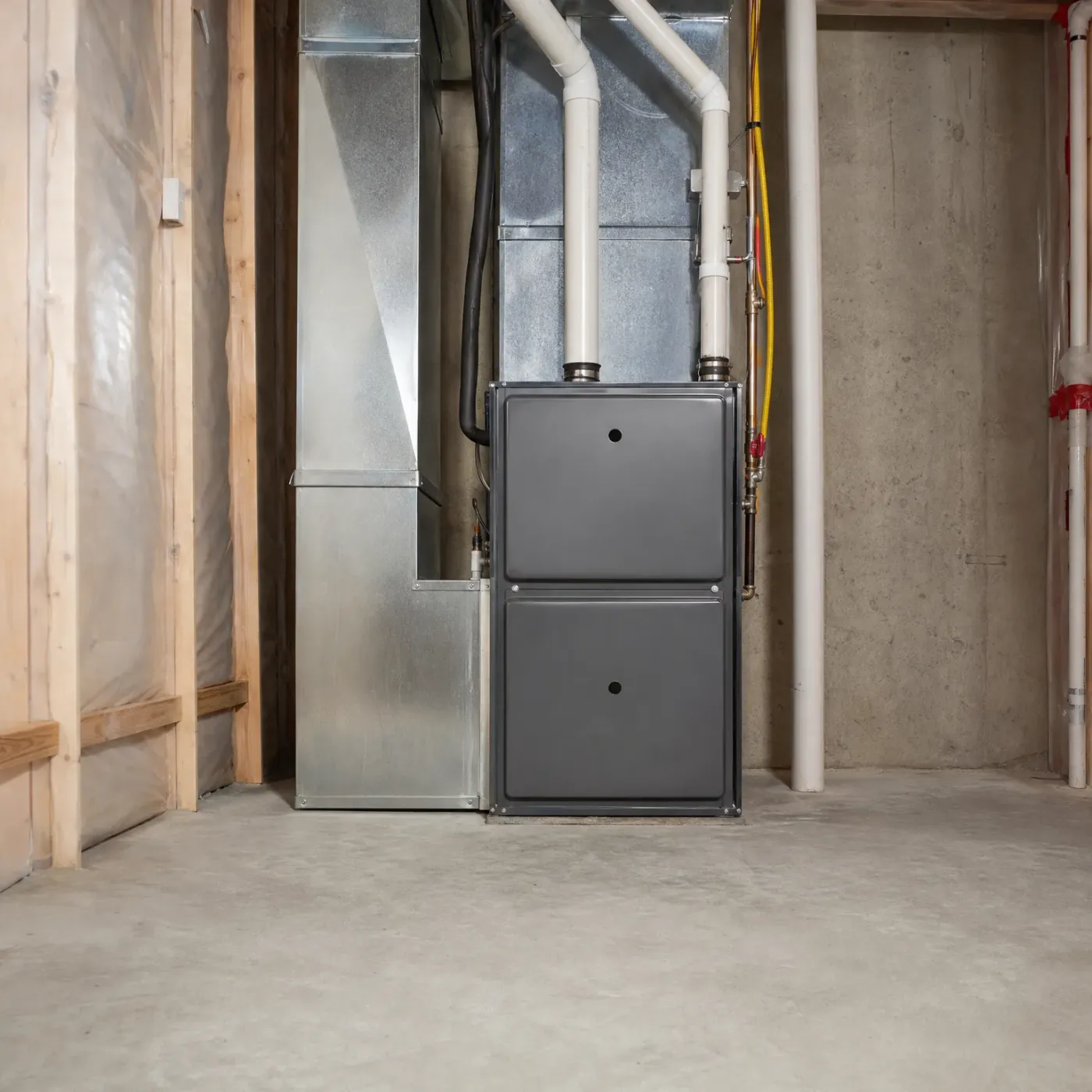
A gray high-efficiency furnace with two PVC vent pipes stands in an unfinished basement beside sheet-metal ductwork, a framed and plastic-covered wall, and a bare concrete wall with vertical pipes.

Running right

The flue pipes run white and clean, the gas line connects tight in yellow, and the ductwork carries warm air straight out to every room. A furnace set up like this heats the house evenly, basement to bedroom.

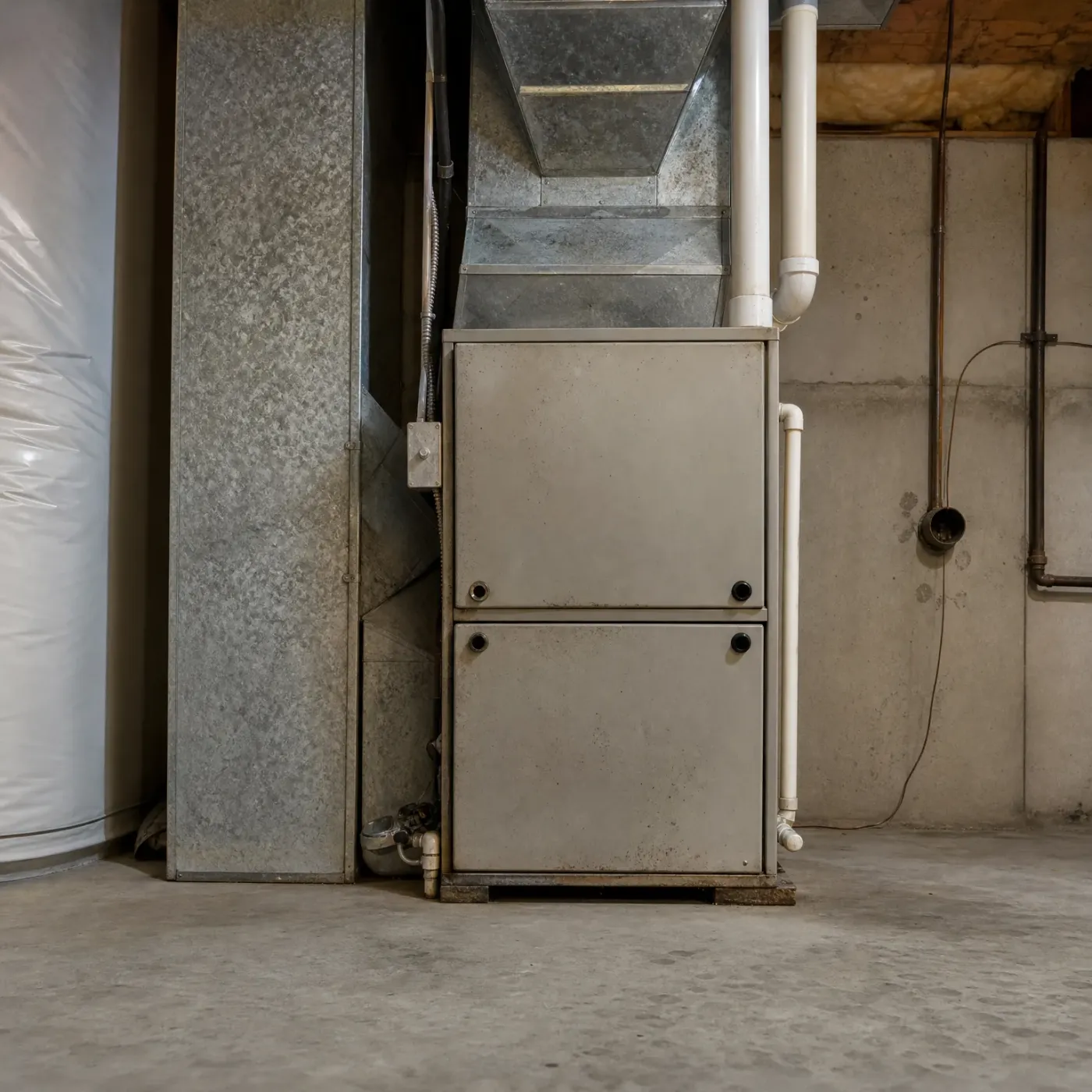
A gray furnace cabinet in a basement, connected to galvanized sheet-metal ductwork and white PVC pipes, against a concrete wall with exposed metal piping and insulation overhead.

Running in trouble

Set on a pallet with galvanized ducts overhead and bare block walls around it, this furnace may be venting or draining wrong. If your basement looks like this and rooms stay cold, the furnace itself may need a look.

What are you noticing room to room right now

Walk through the house and check each room against the thermostat setting. The furnace is running, maybe even running most of the day without shutting off, but the kitchen feels fine while the bedrooms stay cold. You might hear the blower going and still feel almost no air moving out of the vents, or air that comes out barely warm instead of hot. Some people notice the gas bill climbing while the house doesn't get any warmer for it, because a furnace that runs longer to reach the same temperature is burning more gas to do it. With a Wisconsin winter outside, a furnace that can't keep up stops being a minor annoyance fast.

A woman in a gray turtleneck sweater stands by a window looking outside at snowy ground, with a dimly lit living room containing a sofa, shelves, lamp and a lit candle behind her.
A woman in a cream cable-knit turtleneck sweater stands in a warmly lit living room with a fireplace and shelves behind her, looking out a window toward snow-covered trees and a railed deck.
A woman in a cream knit turtleneck sweater stands by a window looking out at snow, with a lit fireplace, sofa and lamp in the room behind her.
A woman in a gray knit sweater sits by a window looking out at falling snow, with a dimly lit living room containing a sectional sofa, pillows, a lamp and houseplants behind her.
A gray high-efficiency furnace with two white PVC vent pipes stands against sheet-metal ductwork in an unfinished basement with concrete floor and walls and exposed wood joists.

A local pro for your furnace repair

Once you send the form, finding a pro is off your list.

A local pro who knows furnaces gets your details and gets in touch.

I'm done searching

You only hire the pro if you want to.

Why does my furnace run constantly but never actually heat the house?

You keep hearing the burner kick on, the blower running, and the furnace sounds like it's working hard. But the thermostat never satisfies, the furnace never shuts off for long, and the house stays cold anyway. That's different from short cycling, where it shuts off too soon. This is the opposite problem, and it points to something specific going on inside the unit.

It's heating air the house can't hold onto, or heat that can't get there fast enough

A furnace sized right for the house should cycle on, bring the temperature up, and shut off. If it runs nonstop in a Wisconsin winter, either it's undersized for the house, the ductwork is too restrictive to move the heat it's making, or warm air is leaking out through gaps before it reaches the rooms. A cracked heat exchanger can also force the furnace to run longer because the burner isn't transferring heat efficiently anymore. None of these show up by looking at the furnace itself. A contractor checks static pressure in the ducts, the heat rise across the exchanger, and whether the unit's output actually matches the square footage it's trying to heat.

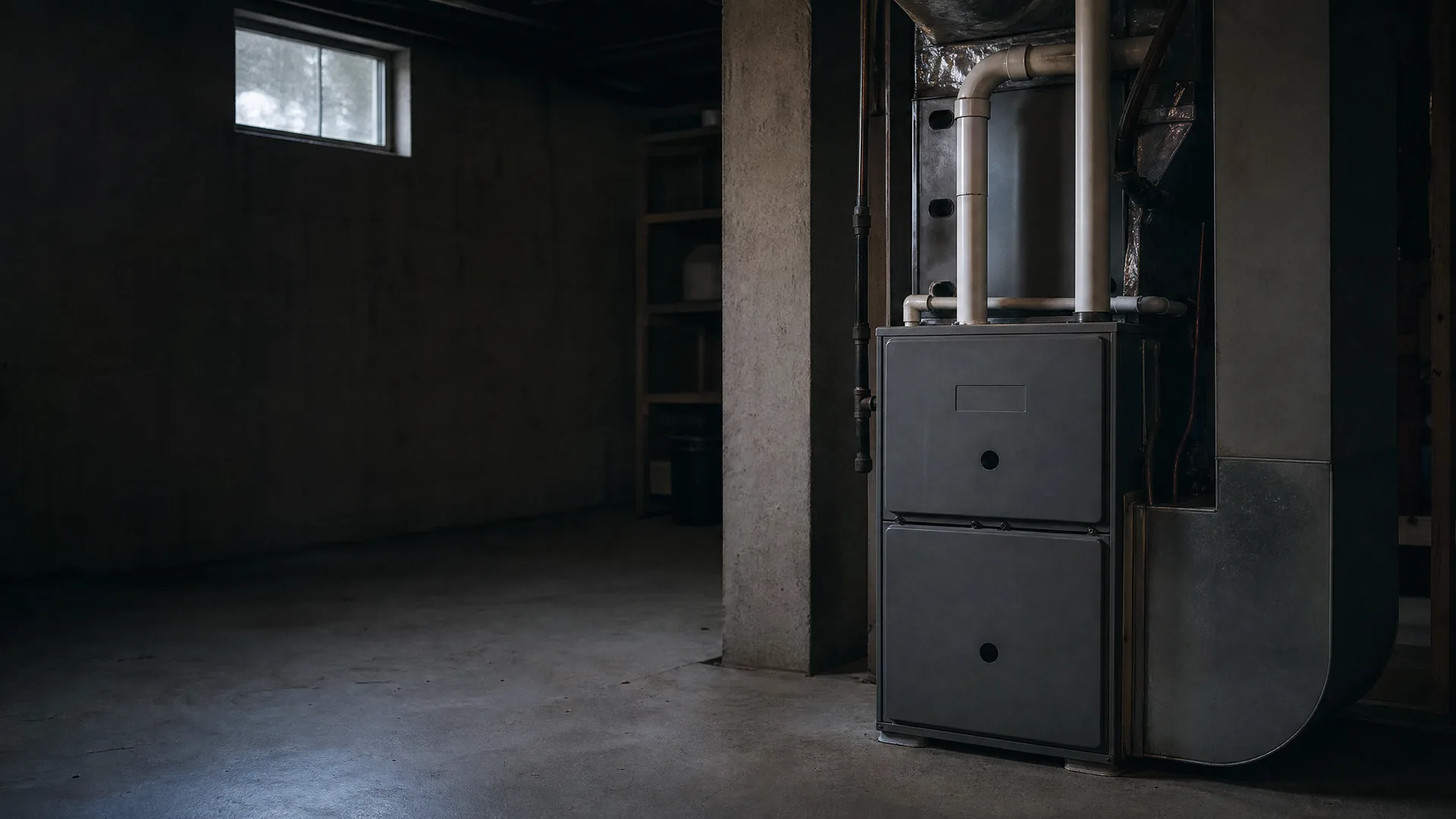
A gray high-efficiency furnace with white PVC vent pipes and attached ductwork stands beside a concrete support column in a dim, empty basement with bare concrete walls and floor and a small window.

You go down to check the furnace around seven, after the light outside is gone. The basement is cold enough that you can see your breath near the stairs. The burner isn't firing. No hum from the blower, no orange glow through the sight glass, nothing. A thin haze hangs in the air near the cabinet, dust that settled out once the air stopped moving. You put a hand on the ductwork overhead and it's cool to the touch. Upstairs the thermostat still reads the temperature you set it to, waiting on a furnace that's gone quiet. Outside it's a November night in Wisconsin, the kind where the cold settles in fast once the sun's down.

A gray furnace cabinet in a basement with sheet-metal ductwork, white PVC vent pipes, and black gas piping against a concrete wall and wood-framed partition on a bare concrete floor.
New metal, tight joints, open framing behind it, airflow with nothing in its way to the ducts.
A gray metal furnace with two white PVC vent pipes stands on a concrete floor beside galvanized sheet-metal ductwork in a basement or utility space with wood framing.
Rust spreading across the cabinet is the furnace losing ground before it ever stops heating.
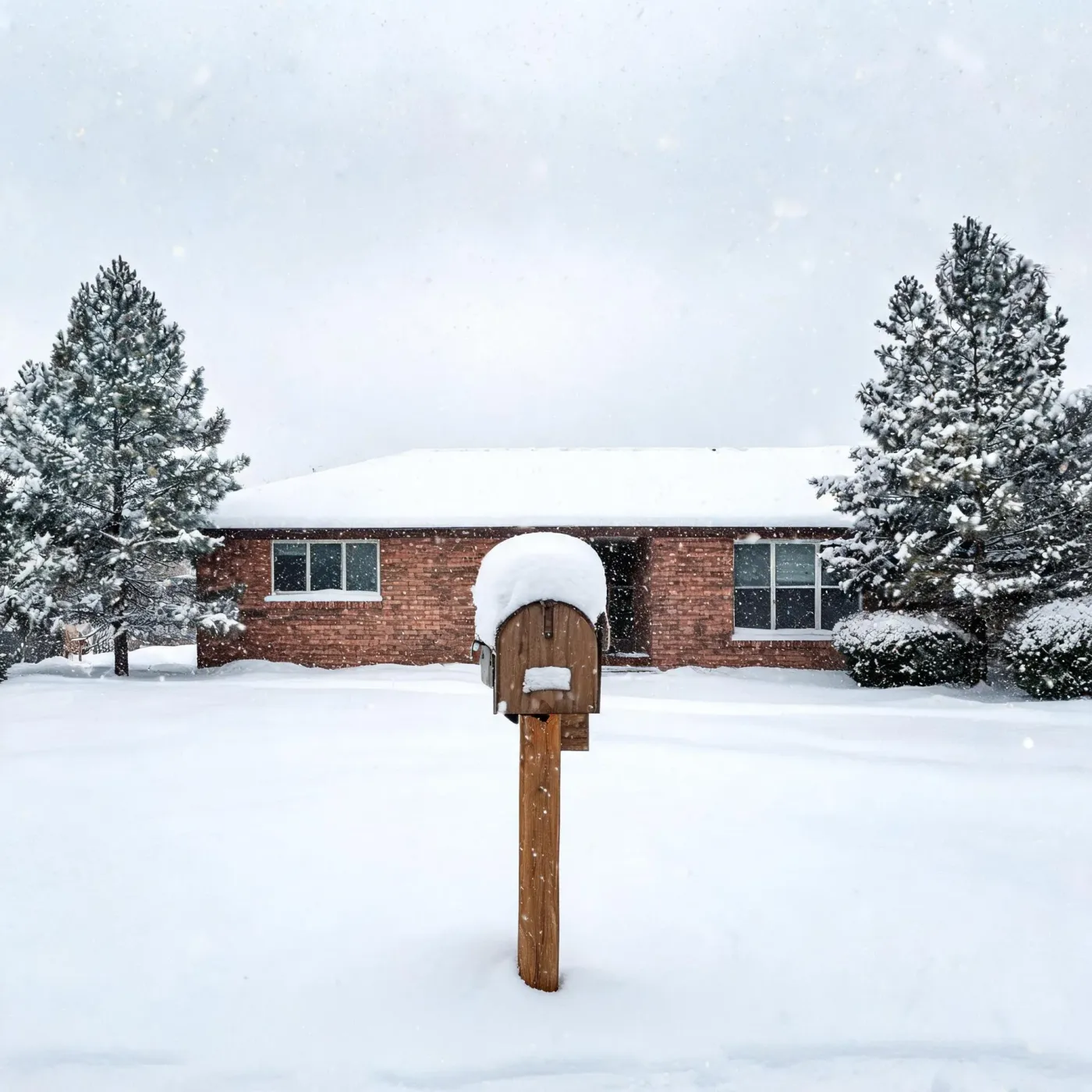
A snow-covered wooden mailbox on a post stands in a deep snowy yard in front of a single-story brick house flanked by snow-laden pine trees during falling snow.

Wisconsin winter nights average 13°F across the state, according to NOAA climate data. That's the temperature your furnace is fighting most nights from December through February, not the daytime high. A furnace sized and running right keeps up with that without much trouble. One that's already struggling, low airflow, a weak igniter, a thermostat miscalling the cycle, loses ground fast once it's working against cold that deep. You'll notice it as a furnace that runs longer stretches without the house feeling any warmer, or rooms that used to hold heat through the night that don't anymore. The colder it gets outside, the less room there is for a furnace to cover for a problem it's already carrying.

NOAA nClimDiv 1991-2020 county normals weighted by homes

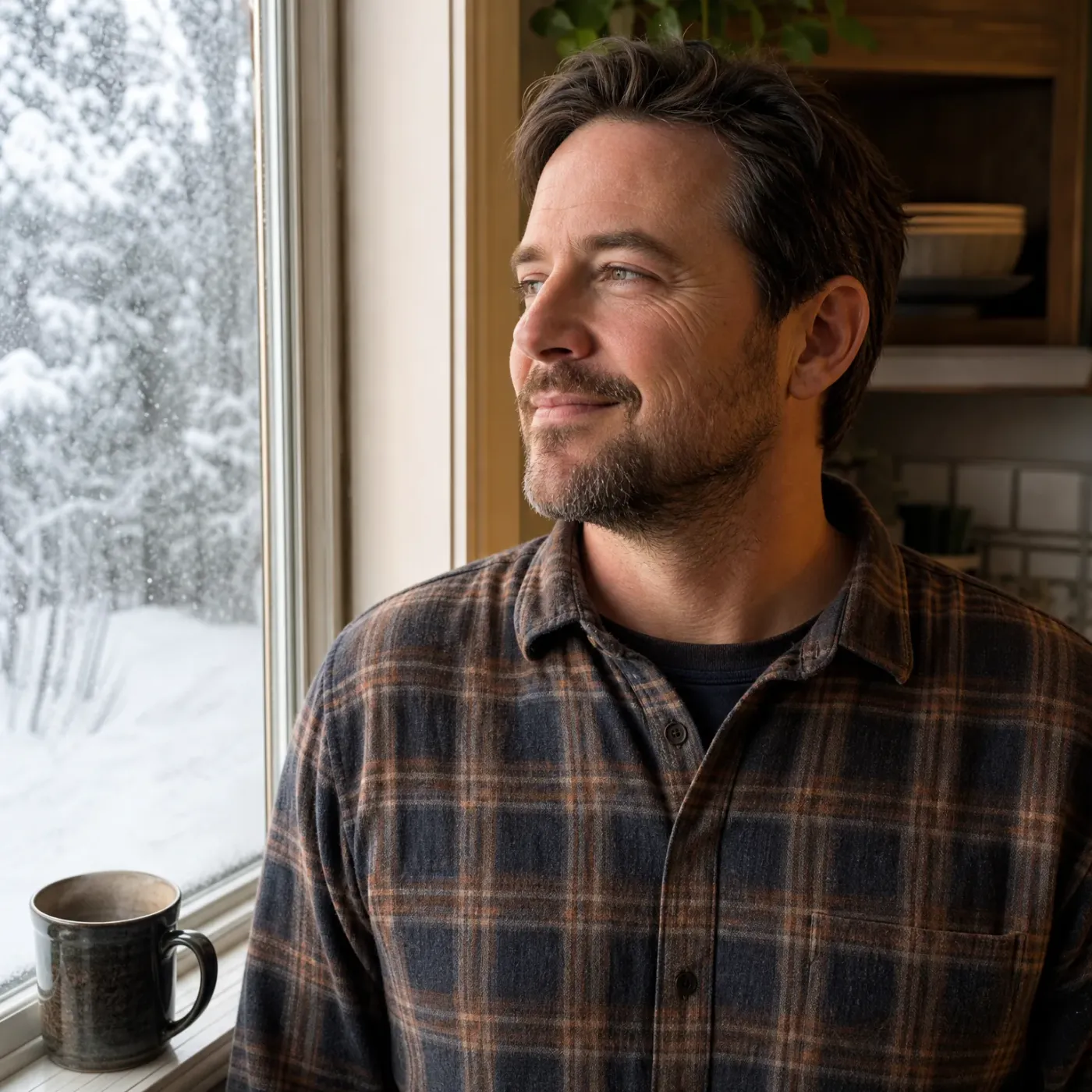
A bearded man in a blue and brown plaid flannel shirt stands indoors looking out a window at snow-covered trees, with a ceramic mug on the windowsill.
A man in a blue T-shirt sits on a light gray sofa, laughing while looking at an open laptop in the foreground, with a framed picture, lamp and potted plant behind him.

Winter nights average 13°F statewide

At 13°F, your furnace is running close to full output most of the night to hold the house at 68 or 70. If it's coming up short now, a dirty filter or a weak igniter will show it fastest on the coldest nights, not the mild ones.

NOAA nClimDiv 1991-2020 county normals weighted by homes

Furnace running, house still cold

  • A furnace that runs but can't warm the house points to airflow or ignition, not something that needs guessing room by room.
  • Most of what stops a furnace short, a clogged filter, a weak igniter, a stuck thermostat setting, is a known fix a contractor can name fast.
  • The coldest nights are when a struggling furnace shows its weakest point first, so waiting rarely buys you anything.
  • Sending the form hands off the search for someone qualified, so you're not the one calling around for a contractor who's free.
  • A furnace losing ground in January doesn't fix itself, and the rooms farthest from it will keep feeling it first.
  • Once you're matched, the work shifts to someone who can look at your actual furnace instead of guessing from symptoms.

A furnace that keeps running without warming the house is telling you something specific, not something vague. Air isn't moving the way it should, or heat isn't reaching the rooms it's supposed to. That's airflow or ignition, and both point to a handful of known parts rather than a mystery. A clogged filter, a weak igniter, a thermostat set wrong, a blower losing strength. These are things a contractor sees often enough to recognize fast, not puzzles that take days to work out.

Wisconsin nights don't leave much room for a furnace that's already behind. When it's 13 degrees outside and your furnace is working near its limit just to hold 68 indoors, any weak point shows itself there first, on the coldest night, not the mild one. A problem that's been small for weeks doesn't stay small once the temperature drops further. The bedrooms down the hall, the ones already running colder than the rest of the house, are the first to feel it.

None of that means the fix is complicated. It means it's worth looking at now instead of pushing the thermostat higher and hoping. Once you send the form, the search for someone qualified to look at your furnace isn't yours to carry anymore. You're not the one calling around, checking who's available, explaining the problem over and over. Someone who can look at the actual furnace, not just what you've described, takes it from here.

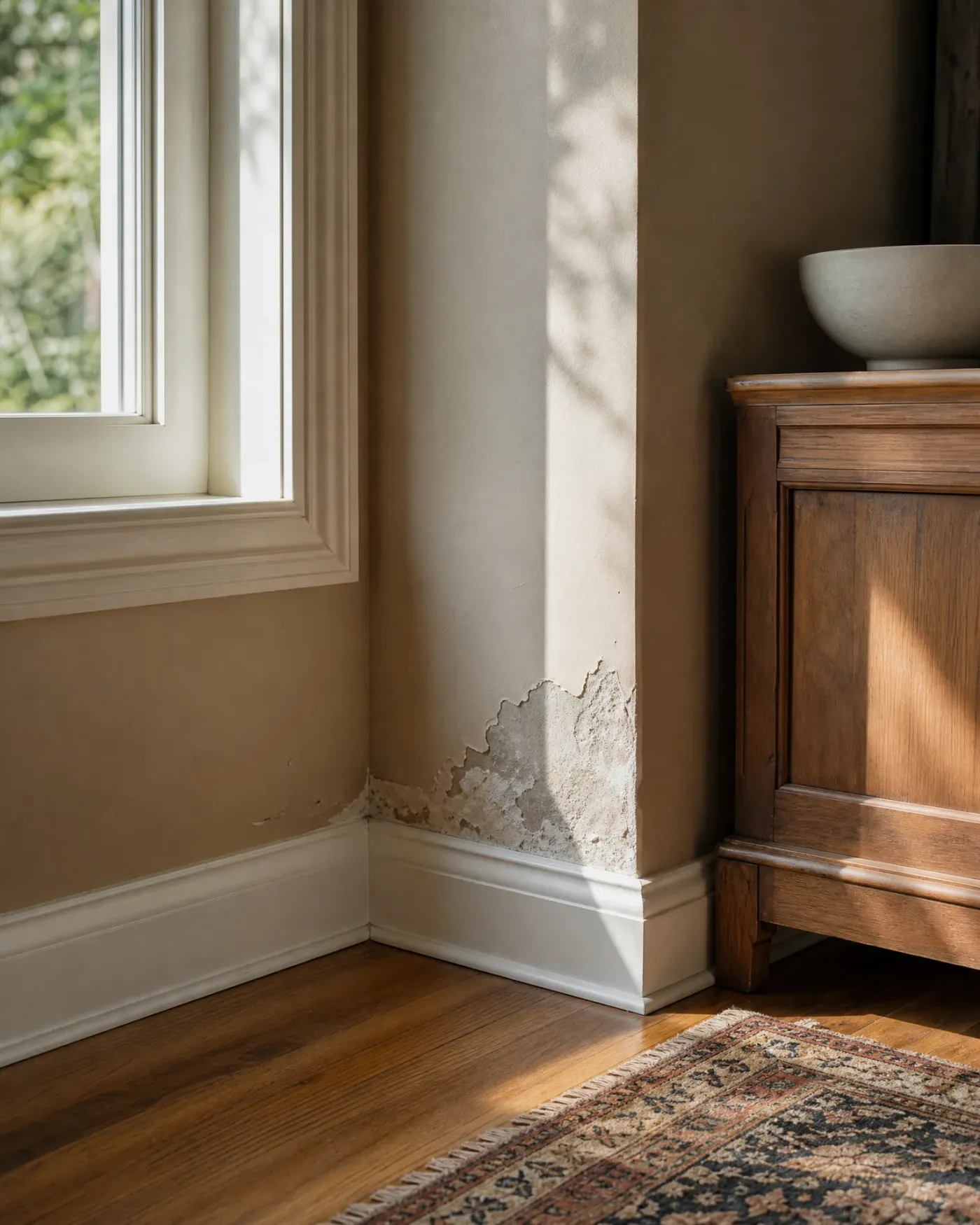
Interior room corner with sunlight from a window, showing peeling paint and damaged plaster on the wall above a white baseboard, a wooden cabinet with a pale bowl on top, hardwood floor and a patterned rug.
Interior corner of a room with tan walls, white profiled baseboard and window trim, a wood-plank floor in sunlight, and green foliage visible through the window.
An empty room corner with cream walls, white baseboard, two windows with deep sills showing green foliage outside, and a wood plank floor lit by sunlight.
Empty room corner with beige walls, white beadboard wainscoting, chair rail and baseboard, a window with green foliage outside, and sunlight casting leaf shadows on the wall above a wood floor.
Sunlit room corner with a multi-pane window, beige walls, white baseboard, wood floor with a woven rug, and a dark wooden cabinet holding a ceramic table lamp below a framed picture.

Get the right pro for your furnace

After you send the request, you're done searching.

Hand it over

Asking costs nothing, and the choice to hire stays yours.