Tell us about the job
Takes about a minute. No obligation.
A furnace repair in Ozaukee County starts with the unit itself, not with the weather outside. 75 severe weather events were recorded in Ozaukee County, Wisconsin between 2015 and 2024. At that rate, severe weather is an occasional fact of life here, not a grinding constant, so the load it puts on a heating system is real but limited. When a heat exchanger cracks or a blower motor fails, the contractor's first questions are about age and service history. Those are what wear equipment down in a county like this, and a repair quote built around storm exposure is missing the likelier cause.
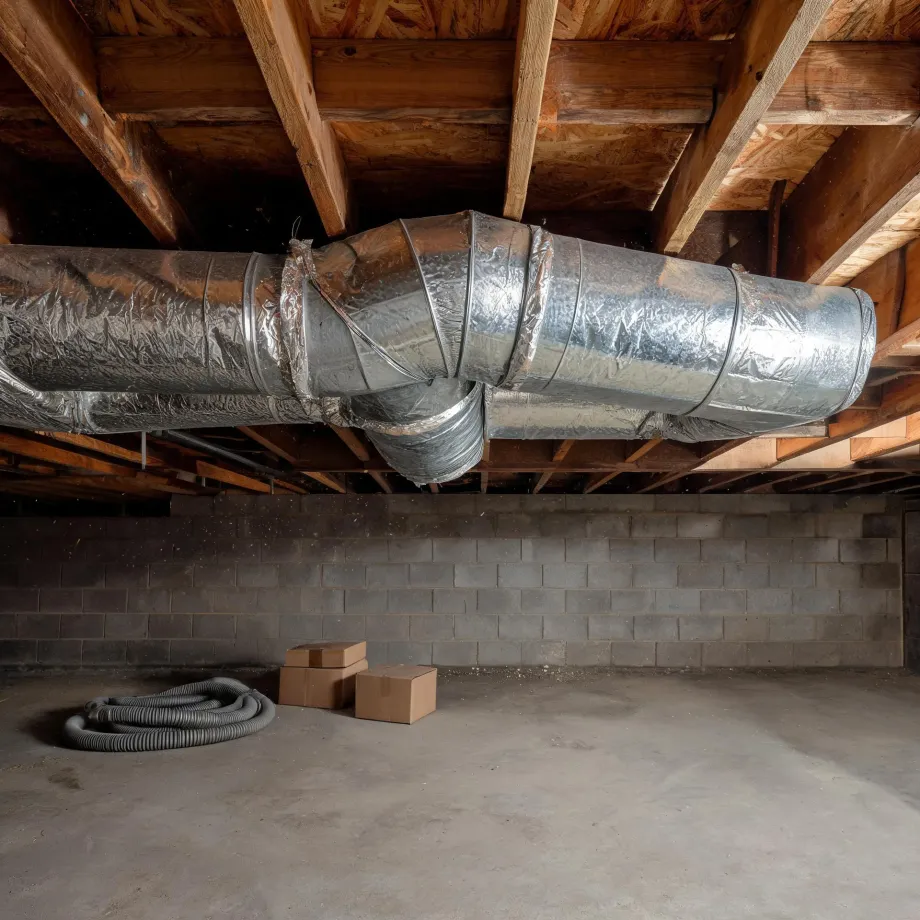
Furnaces in houses this old have usually been replaced at least once, and what runs in the house now has little connection to what was there when the walls went up. Half the homes in Ozaukee County, Wisconsin were built in 1978 or earlier (2020-2024 ACS 5-year). A contractor opening a furnace here is deciding whether cracked heat exchangers, corroded burners, or failed controls can be sourced and swapped, or whether the repair cost tips toward replacement. Parts availability for older equipment varies by brand and model, and that calculation, not the age printed on the permit, is what drives the scope and the price.
The Parts of a Furnace a Contractor Checks First
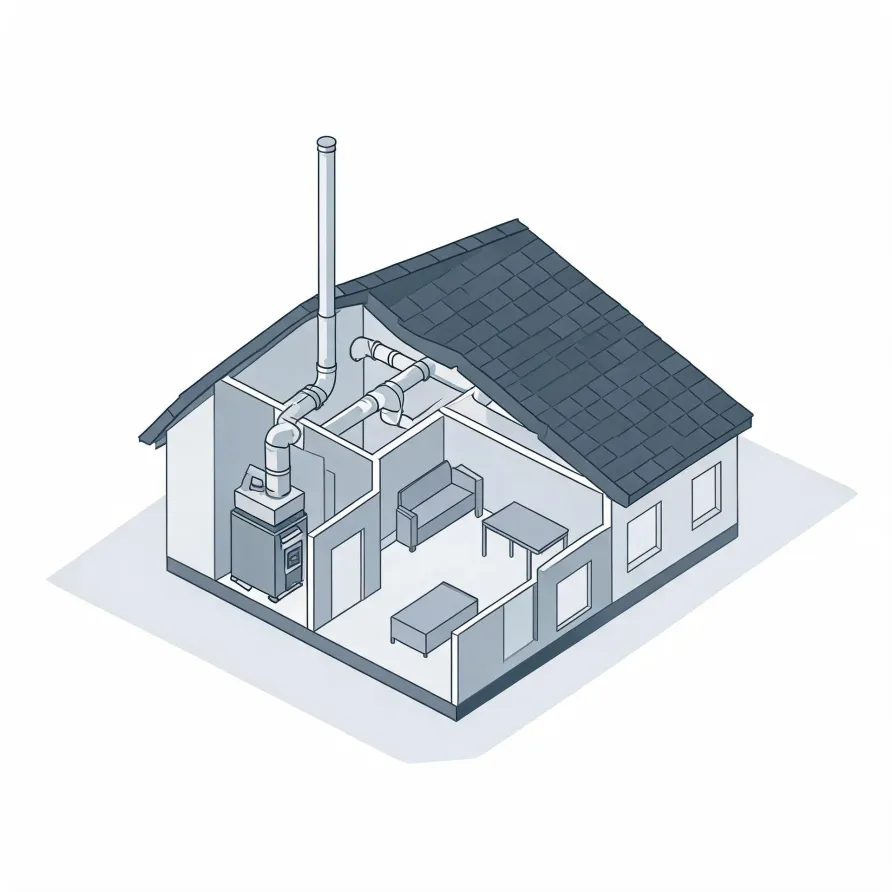
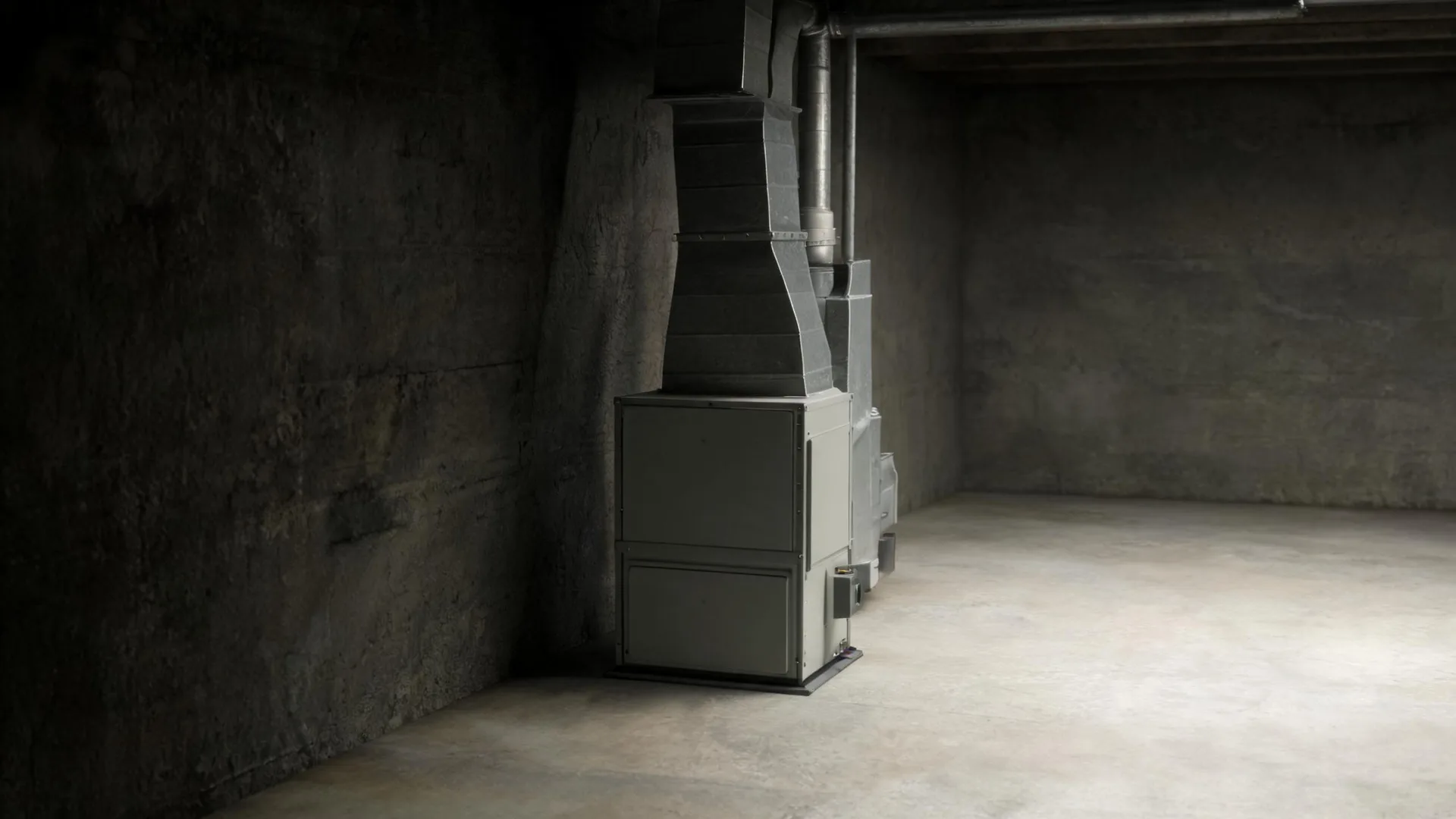
The furnace itself sits in the basement, utility room, or garage and is the heart of the system. Inside it, the heat exchanger is the piece a contractor looks at early: cracks or corrosion there let combustion gases into the living space. The burners, the igniter, and the flame sensor all live inside that same cabinet and are common sources of a furnace that won't start or won't stay lit.
The blower motor sits at the base of the furnace and pushes heated air into the supply ducts. Near it, the limit switch and control board read temperatures and signals from the thermostat and tell the burners and blower when to run. A fault in any of these pieces can stop the system or cause it to cycle in ways the homeowner notices before they know why.
The drawing shows the general layout of a furnace system, and a licensed contractor determines which components need attention in your specific home.
Get matched in Ozaukee CountyOzaukee County, by the numbers
75 severe weather events were recorded in Ozaukee County, Wisconsin between 2015 and 2024.
NOAA National Centers for Environmental Information, Storm Events Database, bulk CSV export, events 2015-01-01 through 2024-12-31.Half the homes in Ozaukee County, Wisconsin were built in 1978 or earlier (2020-2024 ACS 5-year).
U.S. Census Bureau, 2020-2024 American Community Survey 5-Year EstimatesOzaukee County, Wisconsin holds 39,872 housing units (2020-2024 ACS 5-year).
U.S. Census Bureau, 2020-2024 American Community Survey 5-Year EstimatesOwners occupy 72.9% of the occupied homes in Ozaukee County, Wisconsin (2020-2024 ACS 5-year).
U.S. Census Bureau, 2020-2024 American Community Survey 5-Year EstimatesFurnace Repair Rules on Record for Ozaukee County, Wisconsin6 sourced standards and codes
What the repair visit looks like
Non-weatherized gas furnaces manufactured on or after November 19, 2015 must reach 80.0 percent AFUE.
Non-weatherized oil-fired furnaces manufactured on or after November 19, 2015 must reach 83.0 percent AFUE.
Mobile home gas furnaces manufactured on or after November 19, 2015 must reach 80.0 percent AFUE.
Non-weatherized gas furnaces manufactured on or after December 18, 2028 must reach 95.0 percent AFUE, up from the 80.0 percent minimum that applies to units manufactured before that date.
Licensing Rules for HVAC Repair in Ozaukee County, Wisconsin
A Wisconsin business that employs a certified HVAC qualifier is a certified HVAC business, and no city or county may require it to hold a local certification or licence on top of that.
Wisconsin requires a state HVAC contractor registration: no person or business may install or service heating, ventilating or air conditioning equipment, or offer to, without one.
Severe Weather Events in Ozaukee County
Extreme weather puts real stress on furnace systems, from hard starts in sudden cold snaps to the wear that builds up across a rough season. How much of that load your equipment carries depends on what the weather here actually does.
75 severe weather events, 2015–2024. Source: NOAA National Centers for Environmental Information, Storm Events Database.