Tell us about the job
Takes about a minute. No obligation.
A furnace repair in Barron County starts with a question about what the system has already been through. 92 severe weather events were recorded in Barron County, Wisconsin between 2015 and 2024. At that rate, severe weather is part of the normal operating life of every furnace in the county, not a footnote to it. A contractor working through a diagnosis here checks heat exchangers and blower motors with that load in mind, because cumulative stress on those components can produce failures that look like ordinary age but have a shorter explanation.
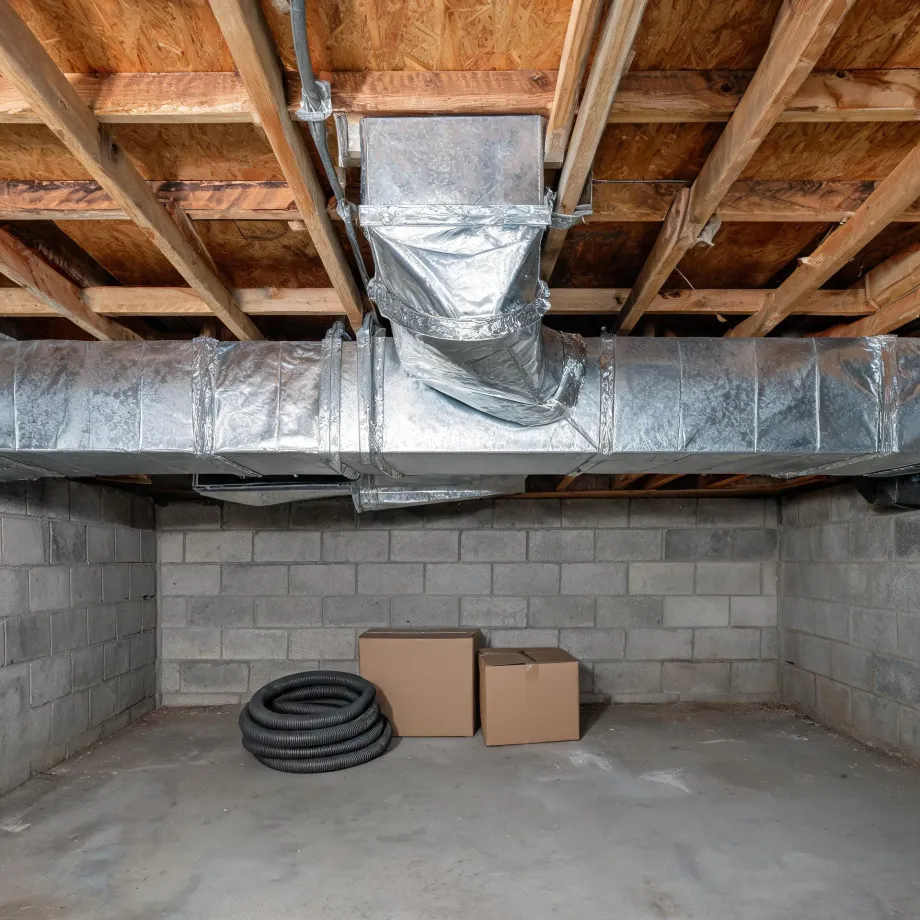
Older housing stock accumulates replacement history that a furnace's exterior gives no sign of. Half the homes in Barron County, Wisconsin were built in 1977 or earlier (2020-2024 ACS 5-year). A unit sitting in a house built that long ago may be the second or third furnace to occupy that spot, running on a configuration that successive owners adapted rather than replaced outright. When a contractor opens the cabinet, the question is whether the components inside belong to a parts line still in production. If they do not, the repair decision shifts: a contractor sourcing discontinued parts is pricing a different job than one pulling from current stock.
The Parts of a Furnace a Contractor Checks First
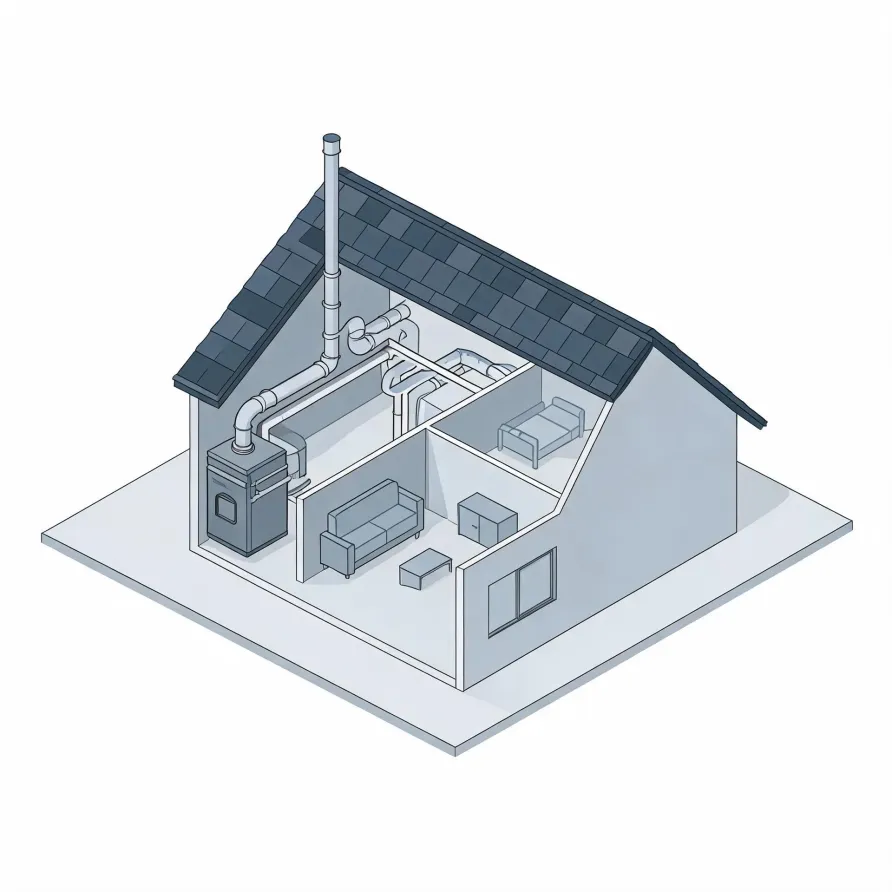
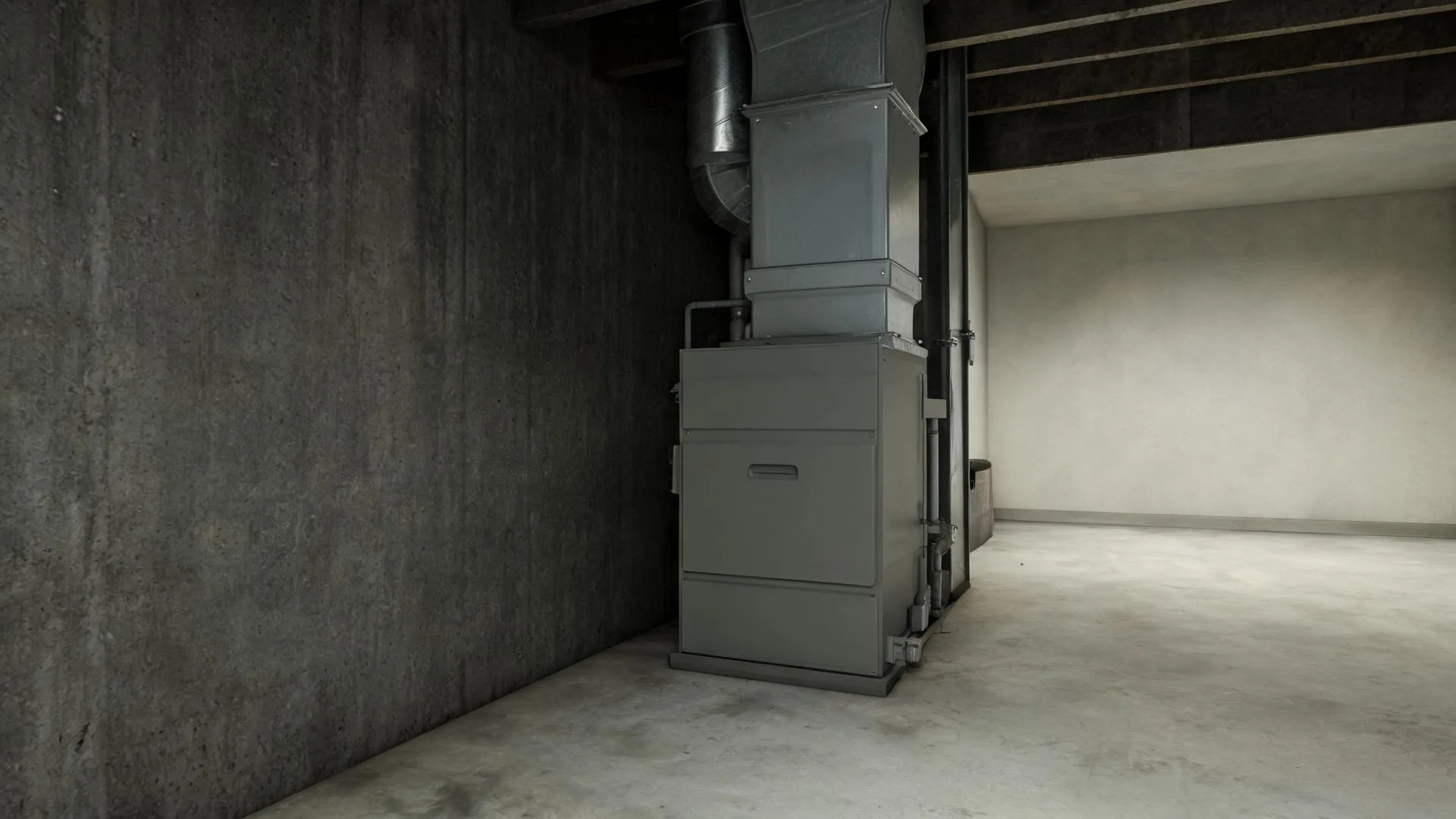
The furnace itself sits in the basement, utility room, or closet and is the piece a contractor looks at first. Inside it, the heat exchanger and burner assembly are the usual suspects when heat stops arriving or the system short-cycles. The blower motor, housed in the same cabinet, pushes conditioned air out into the home.
The flue pipe exits the furnace cabinet and vents combustion gases out of the house. Alongside it, the igniter and flame sensor work together to start and confirm a steady burner flame. The thermostat on the wall is the control point, and a contractor checks it early because a failed signal there looks exactly like a failed part deeper in the system.
The drawing shows a general layout of these components, and a licensed contractor determines what applies to the specific system in your home.
Get matched in Barron CountyBarron County, by the numbers
92 severe weather events were recorded in Barron County, Wisconsin between 2015 and 2024.
NOAA National Centers for Environmental Information, Storm Events Database, bulk CSV export, events 2015-01-01 through 2024-12-31.Half the homes in Barron County, Wisconsin were built in 1977 or earlier (2020-2024 ACS 5-year).
U.S. Census Bureau, 2020-2024 American Community Survey 5-Year EstimatesBarron County, Wisconsin holds 24,067 housing units (2020-2024 ACS 5-year).
U.S. Census Bureau, 2020-2024 American Community Survey 5-Year EstimatesOwners occupy 77.4% of the occupied homes in Barron County, Wisconsin (2020-2024 ACS 5-year).
U.S. Census Bureau, 2020-2024 American Community Survey 5-Year EstimatesFurnace Repair Rules on the Books for Barron County, Wisconsin6 sourced standards and codes
What happens when a contractor comes out
Non-weatherized gas furnaces manufactured on or after November 19, 2015 must reach 80.0 percent AFUE.
Non-weatherized oil-fired furnaces manufactured on or after November 19, 2015 must reach 83.0 percent AFUE.
Mobile home gas furnaces manufactured on or after November 19, 2015 must reach 80.0 percent AFUE.
Non-weatherized gas furnaces manufactured on or after December 18, 2028 must reach 95.0 percent AFUE, up from the 80.0 percent minimum that applies to units manufactured before that date.
Licensing and Legal Requirements in Barron County, Wisconsin
A Wisconsin business that employs a certified HVAC qualifier is a certified HVAC business, and no city or county may require it to hold a local certification or licence on top of that.
Wisconsin requires a state HVAC contractor registration: no person or business may install or service heating, ventilating or air conditioning equipment, or offer to, without one.
Weather Stress on HVAC Equipment in Barron County
Furnaces in Barron County work against whatever the local climate puts out, and that workload shapes how hard components run and how fast they wear. Repair needs here are tied to local conditions, not a national average.
92 severe weather events, 2015–2024. Source: NOAA National Centers for Environmental Information, Storm Events Database.