Tell us about the job
Takes about a minute. No obligation.
A furnace repair in Richland County starts with what the equipment has actually been through. 56 severe weather events were recorded in Richland County, Wisconsin between 2015 and 2024. At that rate, severe weather is an event here, not a standing condition, which means a contractor diagnosing a failed heat exchanger or a worn inducer motor is not looking at a system beaten down by relentless seasonal punishment. Age and how well the unit has been maintained are what show up in the opened cabinet, and that is what shapes the repair scope and the parts a contractor orders.
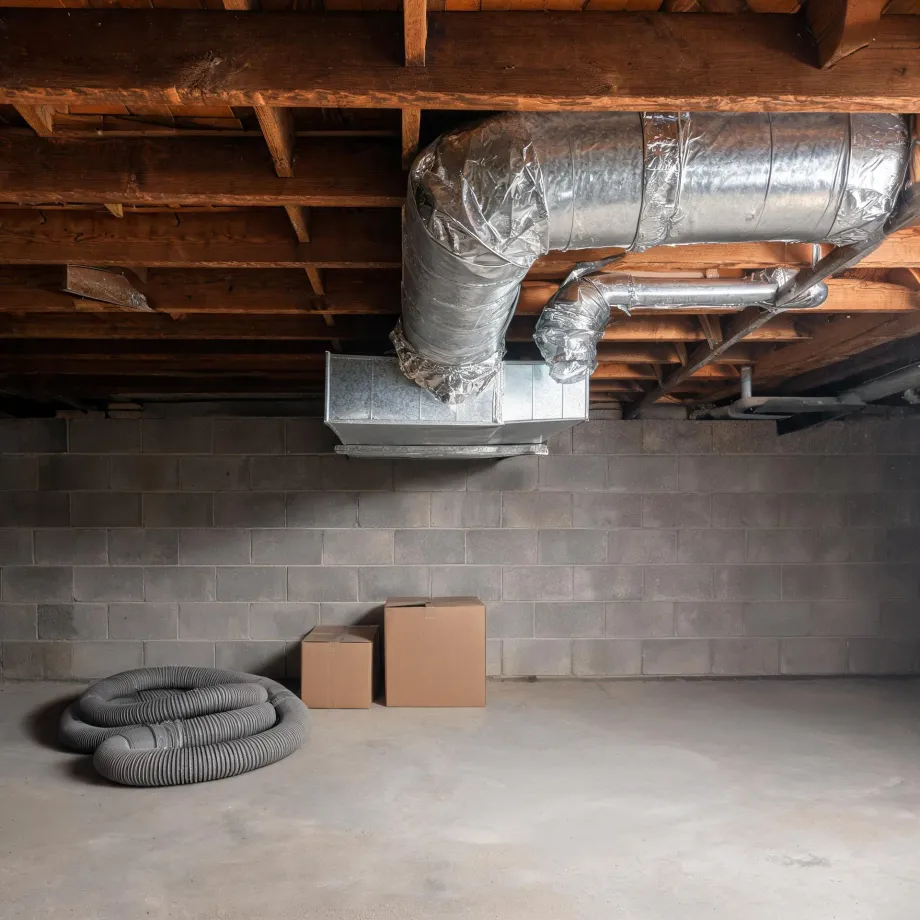
Furnaces in houses this old have often been repaired before, and not always with original parts. Half the homes in Richland County, Wisconsin were built in 1971 or earlier (2020-2024 ACS 5-year). What that means for repair work is that once the unit is open, a contractor checks whether what failed is something a distributor still stocks or something that has to be sourced specially, because those two outcomes produce a different repair scope entirely. Sheet-metal patches, previous owner workarounds, and components from discontinued lines all show up in equipment of this vintage, and each one changes what the job actually is.
The Parts of a Furnace a Contractor Checks First
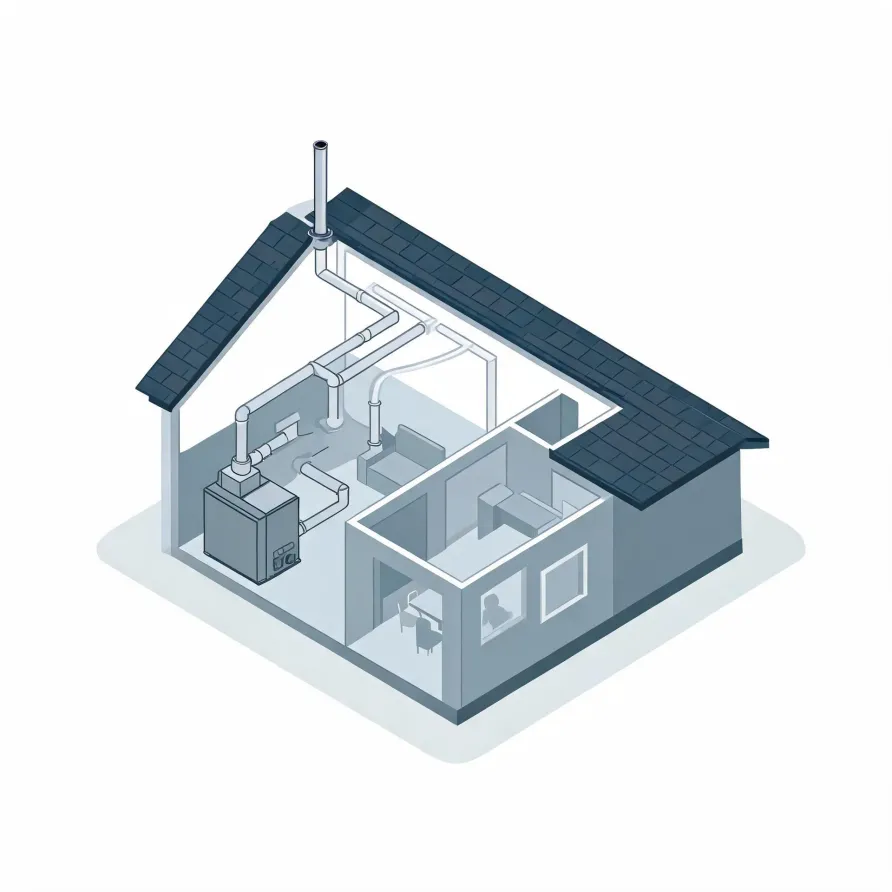
The furnace itself sits in a utility room, basement, or closet and is the core of the system. Inside it, the heat exchanger is the piece a contractor looks at early: cracks or corrosion there let combustion gases into the living space. The burners, igniter, and flame sensor sit just below it and are common sources of a no-heat call.
The blower motor and its fan wheel push conditioned air out through the supply side and pull return air back in. The control board ties these components together, reading inputs from the thermostat and telling each part when to run. A failed board can mimic symptoms that actually belong to a sensor or a motor, so contractors test both.
The drawing shows the general layout of a furnace system, and a licensed contractor determines which components apply to your particular house.
Get matched in Richland CountyRichland County, by the numbers
56 severe weather events were recorded in Richland County, Wisconsin between 2015 and 2024.
NOAA National Centers for Environmental Information, Storm Events Database, bulk CSV export, events 2015-01-01 through 2024-12-31.Half the homes in Richland County, Wisconsin were built in 1971 or earlier (2020-2024 ACS 5-year).
U.S. Census Bureau, 2020-2024 American Community Survey 5-Year EstimatesRichland County, Wisconsin holds 8,532 housing units (2020-2024 ACS 5-year).
U.S. Census Bureau, 2020-2024 American Community Survey 5-Year EstimatesOwners occupy 73.9% of the occupied homes in Richland County, Wisconsin (2020-2024 ACS 5-year).
U.S. Census Bureau, 2020-2024 American Community Survey 5-Year EstimatesCodes & Standards Behind Furnace Repair in Richland County, Wisconsin6 sourced rules & standards
What the Repair Visit Looks Like
Non-weatherized gas furnaces manufactured on or after November 19, 2015 must reach 80.0 percent AFUE.
Non-weatherized oil-fired furnaces manufactured on or after November 19, 2015 must reach 83.0 percent AFUE.
Mobile home gas furnaces manufactured on or after November 19, 2015 must reach 80.0 percent AFUE.
Non-weatherized gas furnaces manufactured on or after December 18, 2028 must reach 95.0 percent AFUE, up from the 80.0 percent minimum that applies to units manufactured before that date.
Licensing and Legal Requirements in Richland County, Wisconsin
A Wisconsin business that employs a certified HVAC qualifier is a certified HVAC business, and no city or county may require it to hold a local certification or licence on top of that.
Wisconsin requires a state HVAC contractor registration: no person or business may install or service heating, ventilating or air conditioning equipment, or offer to, without one.
Severe Weather Events in Richland County
Hard weather puts real hours on a furnace. What hits Richland County shapes how hard that equipment works and how often it needs attention.
56 severe weather events, 2015–2024. Source: NOAA National Centers for Environmental Information, Storm Events Database.