Tell us about the job
Takes about a minute. No obligation.
A furnace repair in Waupaca County starts with what the system has already been through. 115 severe weather events were recorded in Waupaca County, Wisconsin between 2015 and 2024. At that rate, severe weather is a periodic presence rather than a constant one, which means the load it puts on a furnace is real but not the dominant story. A contractor opening a heat exchanger or checking a blower motor here is more often reading years of run hours and deferred service than the aftermath of any particular storm. Age and maintenance history are where the diagnosis lands.
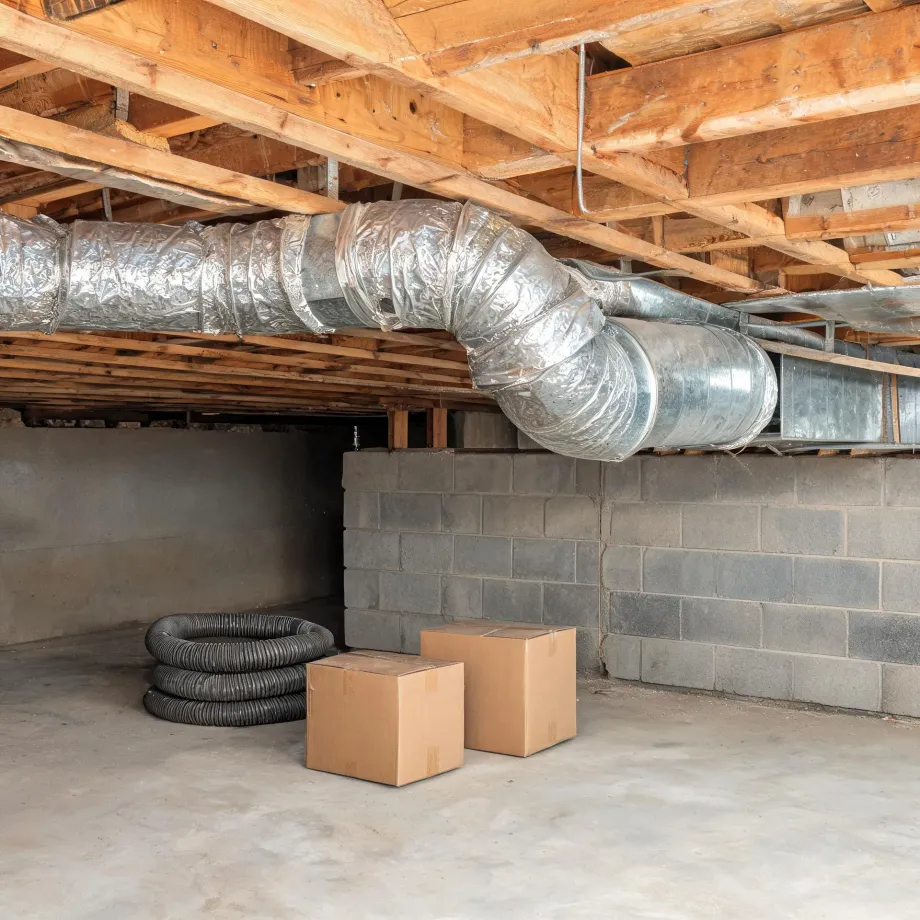
Older ductwork and aging electrical are installation concerns. For repair work, the question is what the opened furnace contains and whether the parts it takes are still in production. Half the homes in Waupaca County, Wisconsin were built in 1975 or earlier (2020-2024 ACS 5-year). A system running in a house of that vintage may have been serviced with whatever was available at the time, and the components inside are not always what the original unit shipped with. A contractor working a repair here checks part numbers against current supply before quoting anything, because a discontinued part changes the repair into a different conversation entirely.
The Parts of a Furnace a Contractor Checks First
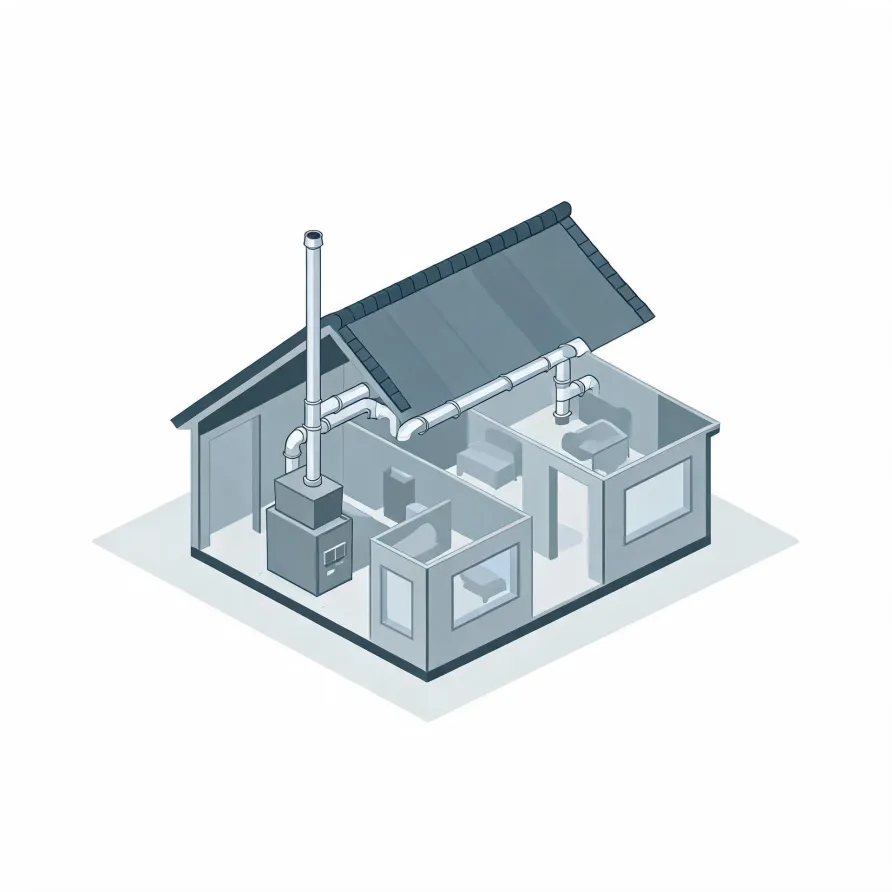
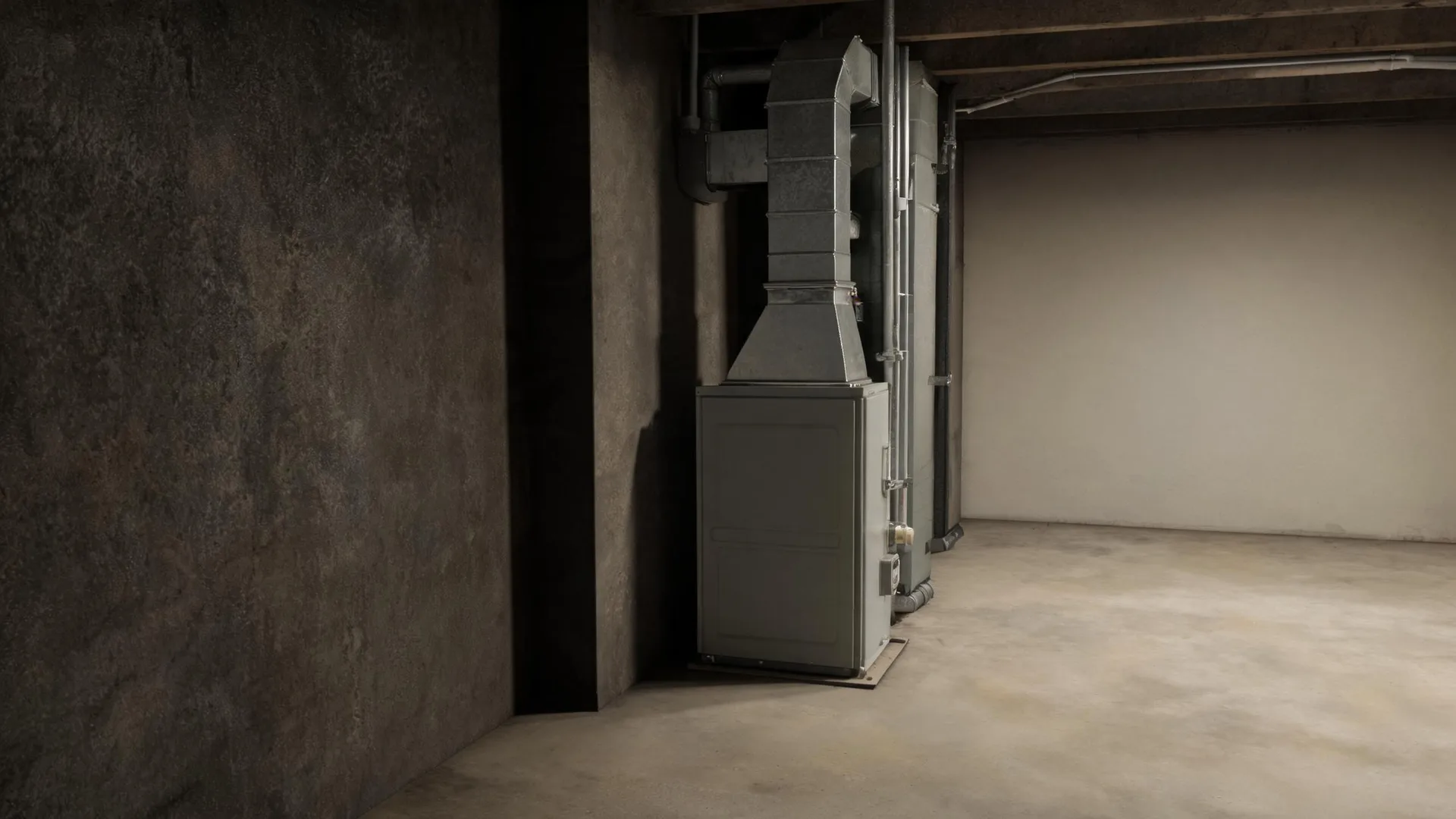
The furnace itself sits in the basement, utility room, or crawl space and is the core of the system. Inside it, the heat exchanger and burner assembly are where most failures begin. A cracked heat exchanger, a dirty or misfiring burner, or a failed igniter are among the first things a contractor looks at when the unit stops heating or cycles incorrectly.
The blower motor moves conditioned air out through the supply side and draws return air back in. The flue or vent pipe runs from the furnace to the outside, carrying combustion gases out of the house. The control board ties these pieces together, and when it fails, symptoms can look like problems elsewhere in the system.
The drawing shows a typical furnace layout, and a licensed contractor determines which components apply to the specific equipment and configuration in your home.
Get matched in Waupaca CountyWaupaca County, by the numbers
115 severe weather events were recorded in Waupaca County, Wisconsin between 2015 and 2024.
NOAA National Centers for Environmental Information, Storm Events Database, bulk CSV export, events 2015-01-01 through 2024-12-31.Half the homes in Waupaca County, Wisconsin were built in 1975 or earlier (2020-2024 ACS 5-year).
U.S. Census Bureau, 2020-2024 American Community Survey 5-Year EstimatesWaupaca County, Wisconsin holds 25,791 housing units (2020-2024 ACS 5-year).
U.S. Census Bureau, 2020-2024 American Community Survey 5-Year EstimatesOwners occupy 75.3% of the occupied homes in Waupaca County, Wisconsin (2020-2024 ACS 5-year).
U.S. Census Bureau, 2020-2024 American Community Survey 5-Year EstimatesFurnace Repair Rules & Standards for Waupaca County, Wisconsin6 sourced regulations and codes
What HVAC Repair Looks Like in Waupaca County
Non-weatherized gas furnaces manufactured on or after November 19, 2015 must reach 80.0 percent AFUE.
Non-weatherized oil-fired furnaces manufactured on or after November 19, 2015 must reach 83.0 percent AFUE.
Mobile home gas furnaces manufactured on or after November 19, 2015 must reach 80.0 percent AFUE.
Non-weatherized gas furnaces manufactured on or after December 18, 2028 must reach 95.0 percent AFUE, up from the 80.0 percent minimum that applies to units manufactured before that date.
Licensing and Legal Requirements in Waupaca County, Wisconsin
A Wisconsin business that employs a certified HVAC qualifier is a certified HVAC business, and no city or county may require it to hold a local certification or licence on top of that.
Wisconsin requires a state HVAC contractor registration: no person or business may install or service heating, ventilating or air conditioning equipment, or offer to, without one.
Severe Weather Events in Waupaca County
Extreme weather puts real strain on furnace systems, cycling them hard through cold snaps and power fluctuations that accelerate wear. How much strain depends on what the weather actually does in this area, which is why local event history matters when you are looking at repair work.
115 severe weather events, 2015–2024. Source: NOAA National Centers for Environmental Information, Storm Events Database.