Tell us about the job
Takes about a minute. No obligation.
A furnace repair in Wood County starts with a question a contractor has to settle before they can quote accurately: how much has this system already been pushed, and which components absorbed that load. 118 severe weather events were recorded in Wood County, Wisconsin between 2015 and 2024. At that rate, the heat exchanger, pressure switches, and inducer motor have been working against real stress cycles, not a quiet suburban baseline. When a part fails, a contractor checks whether the failure is stress-related or simply wear at end of service life, because the repair scope and the parts ordered are different in each case.
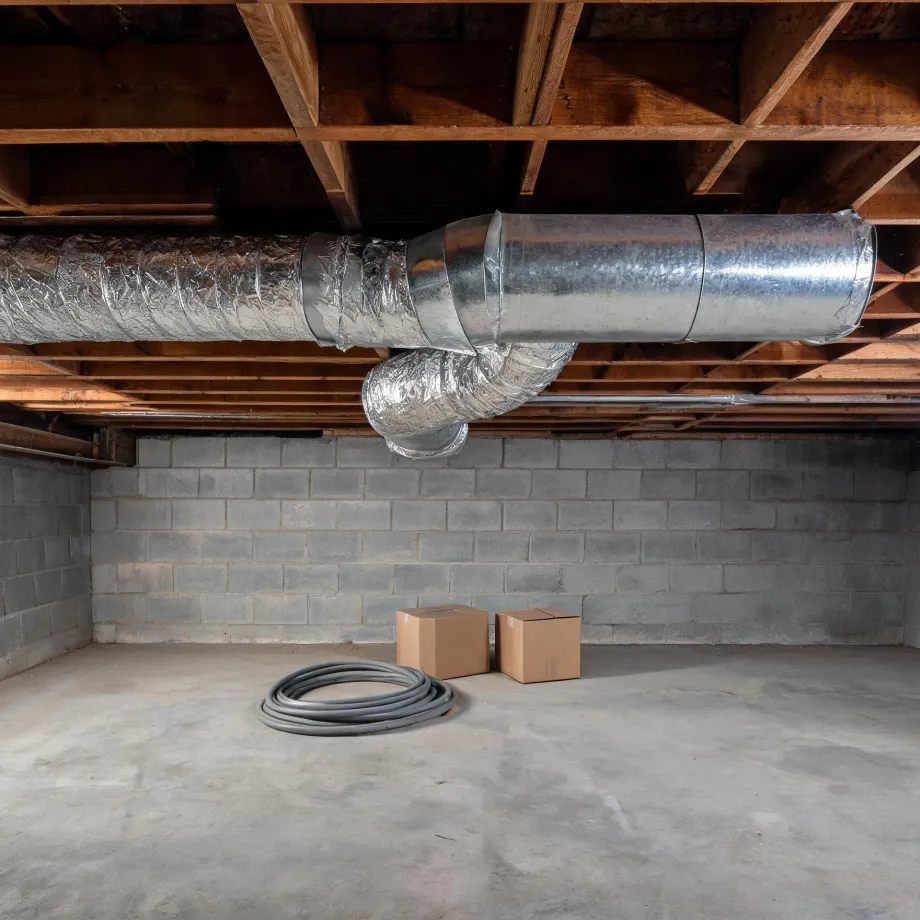
Ductwork in a house this old was routed and sealed for whatever furnace sat in it first, and that furnace is almost certainly gone. Half the homes in Wood County, Wisconsin were built in 1972 or earlier (2020-2024 ACS 5-year). A contractor who opens a furnace in stock like this has to confirm that the heat exchanger, burner assembly, or control board it takes can still be sourced, because some components from that era have aged out of distribution. If the part is gone from supply, the repair scope changes before a price is written.
The Parts of a Furnace a Contractor Checks First
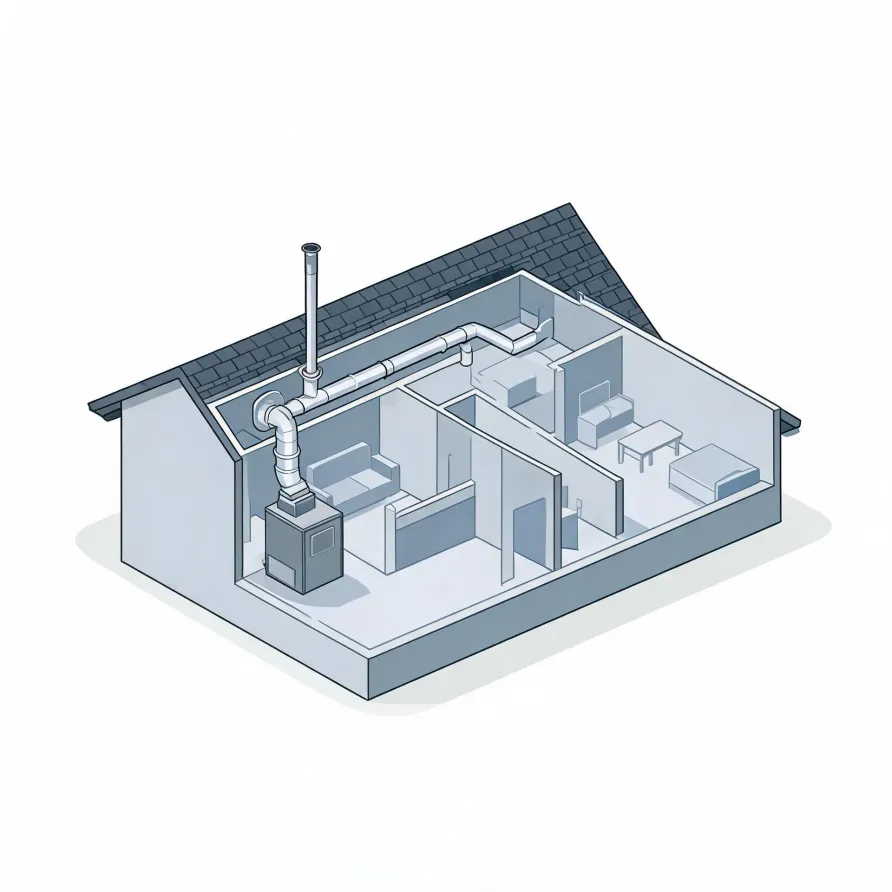
The furnace itself sits in a utility space, basement, or closet and is the piece a contractor goes to first. Inside it, the heat exchanger, burners, and blower motor each have a specific job, and each fails in its own way. A cracked heat exchanger, a burner that won't light, or a blower that runs but moves little air all point the diagnosis in a different direction.
The flue pipe carries combustion gases out of the house and connects the furnace to the outside; problems there show up as backdrafting or carbon monoxide risk. The thermostat sits on an interior wall and tells the furnace when to fire. The filter, wherever it is housed, restricts airflow when clogged and puts strain on the blower and heat exchanger.
The drawing shows a general layout, and a licensed contractor determines what applies to your specific system and home.
Get matched in Wood CountyWood County, Wisconsin, by the numbers
118 severe weather events were recorded in Wood County, Wisconsin between 2015 and 2024.
NOAA National Centers for Environmental Information, Storm Events Database, bulk CSV export, events 2015-01-01 through 2024-12-31.Half the homes in Wood County, Wisconsin were built in 1972 or earlier (2020-2024 ACS 5-year).
U.S. Census Bureau, 2020-2024 American Community Survey 5-Year EstimatesWood County, Wisconsin holds 34,755 housing units (2020-2024 ACS 5-year).
U.S. Census Bureau, 2020-2024 American Community Survey 5-Year EstimatesOwners occupy 72.6% of the occupied homes in Wood County, Wisconsin (2020-2024 ACS 5-year).
U.S. Census Bureau, 2020-2024 American Community Survey 5-Year EstimatesCodes & Standards Governing Furnace Repair in Wood County, Wisconsin6 sourced rules and standards
What HVAC Repair Looks Like in Wood County
Non-weatherized gas furnaces manufactured on or after November 19, 2015 must reach 80.0 percent AFUE.
Non-weatherized oil-fired furnaces manufactured on or after November 19, 2015 must reach 83.0 percent AFUE.
Mobile home gas furnaces manufactured on or after November 19, 2015 must reach 80.0 percent AFUE.
Non-weatherized gas furnaces manufactured on or after December 18, 2028 must reach 95.0 percent AFUE, up from the 80.0 percent minimum that applies to units manufactured before that date.
What Wood County, Wisconsin Requires for HVAC Repair
A Wisconsin business that employs a certified HVAC qualifier is a certified HVAC business, and no city or county may require it to hold a local certification or licence on top of that.
Wisconsin requires a state HVAC contractor registration: no person or business may install or service heating, ventilating or air conditioning equipment, or offer to, without one.
Severe Weather Events in Wood County
Hard weather puts real hours on a furnace. The more a system has to work against extreme cold, ice, and power fluctuations, the sooner its parts wear.
118 severe weather events, 2015–2024. Source: NOAA National Centers for Environmental Information, Storm Events Database.