Profile view of a bearded man wearing a dark baseball cap and a dark gray T-shirt against a plain off-white background.

How often to change your furnace filter in Wisconsin

Step 1 of 3: Equipment

How often should I change my furnace filter in Wisconsin?

Your furnace runs for months straight once the cold sets in, and the filter is doing its job the whole time. You want to know if there's a real schedule to follow instead of just guessing, or waiting until the furnace sounds like it's working too hard.

Every 1 to 3 months during the heating season

A standard 1-inch filter catches dust and pet hair fast, and once it's clogged, your furnace has to pull harder to move air through it. That strain shows up as higher power use, and power here isn't cheap. Wisconsin winters keep gas furnaces running from October into April, so the filter is under steady, months-long use rather than occasional bursts. Check it monthly, and replace it once it looks gray or matted, usually somewhere between 30 and 90 days depending on the filter type and whether anyone in the house has pets. A thicker, 4-inch or 5-inch filter installed in the ductwork can often go longer, sometimes a full season, but a basic 1-inch filter needs more frequent attention.

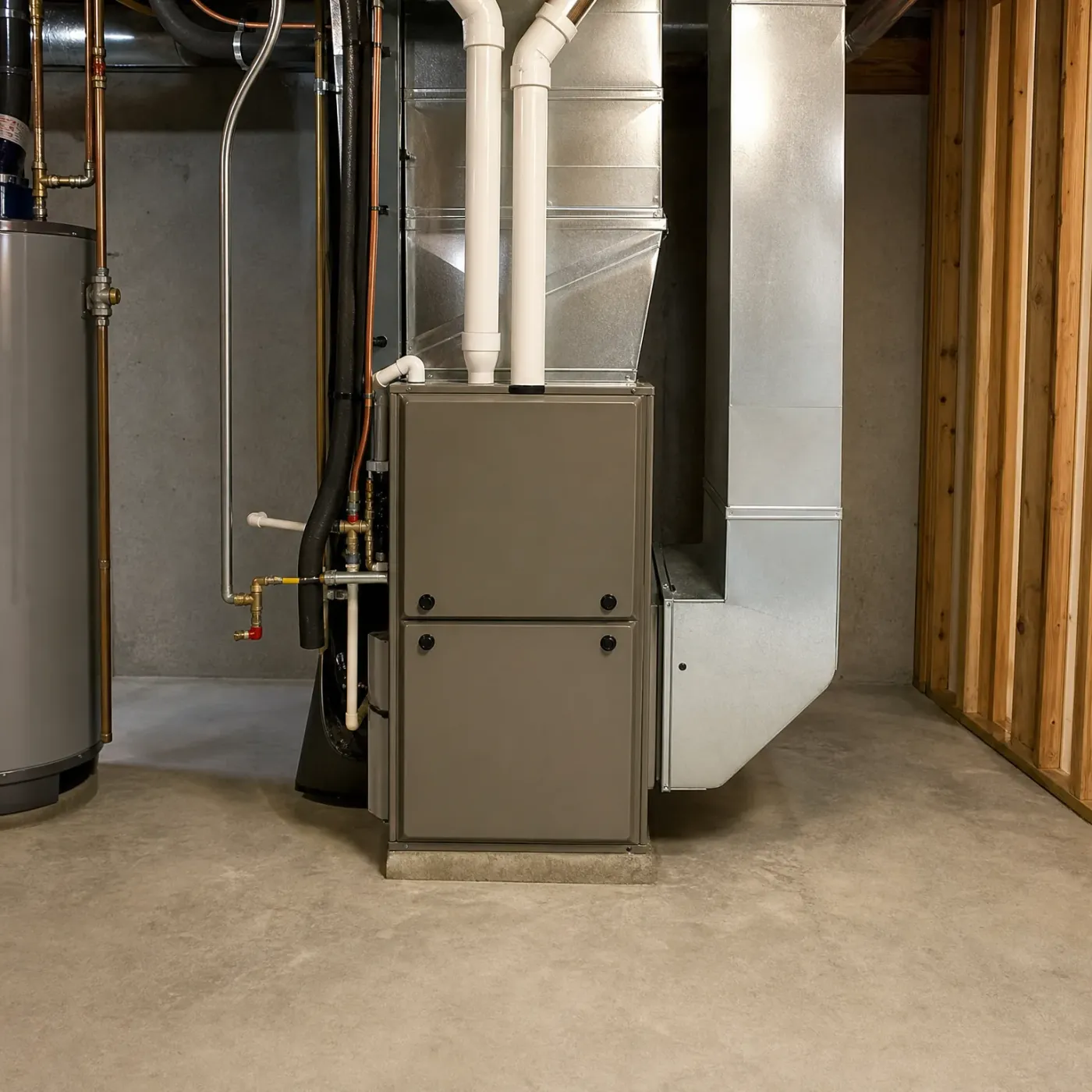
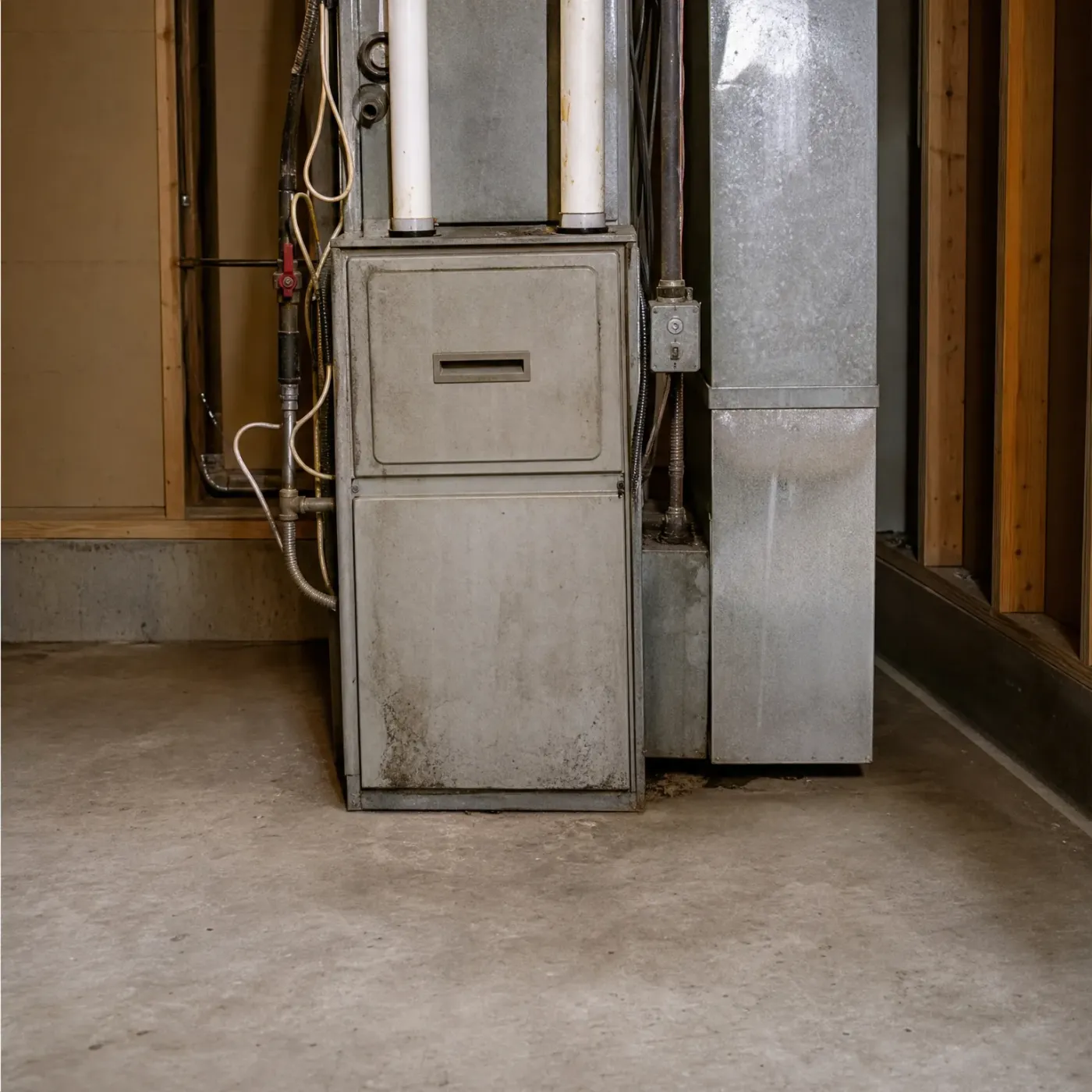
A gray high-efficiency furnace in a basement with PVC vent pipes, sheet-metal ductwork, copper and insulated pipes, a water heater at left, and an unfinished wood-stud wall at right.

A filter on schedule

A clean filter lets air move through the furnace the way it was built to. The burner fires, the heat exchanger does its job, and warm air reaches every room without the blower straining to pull air through a clogged filter.

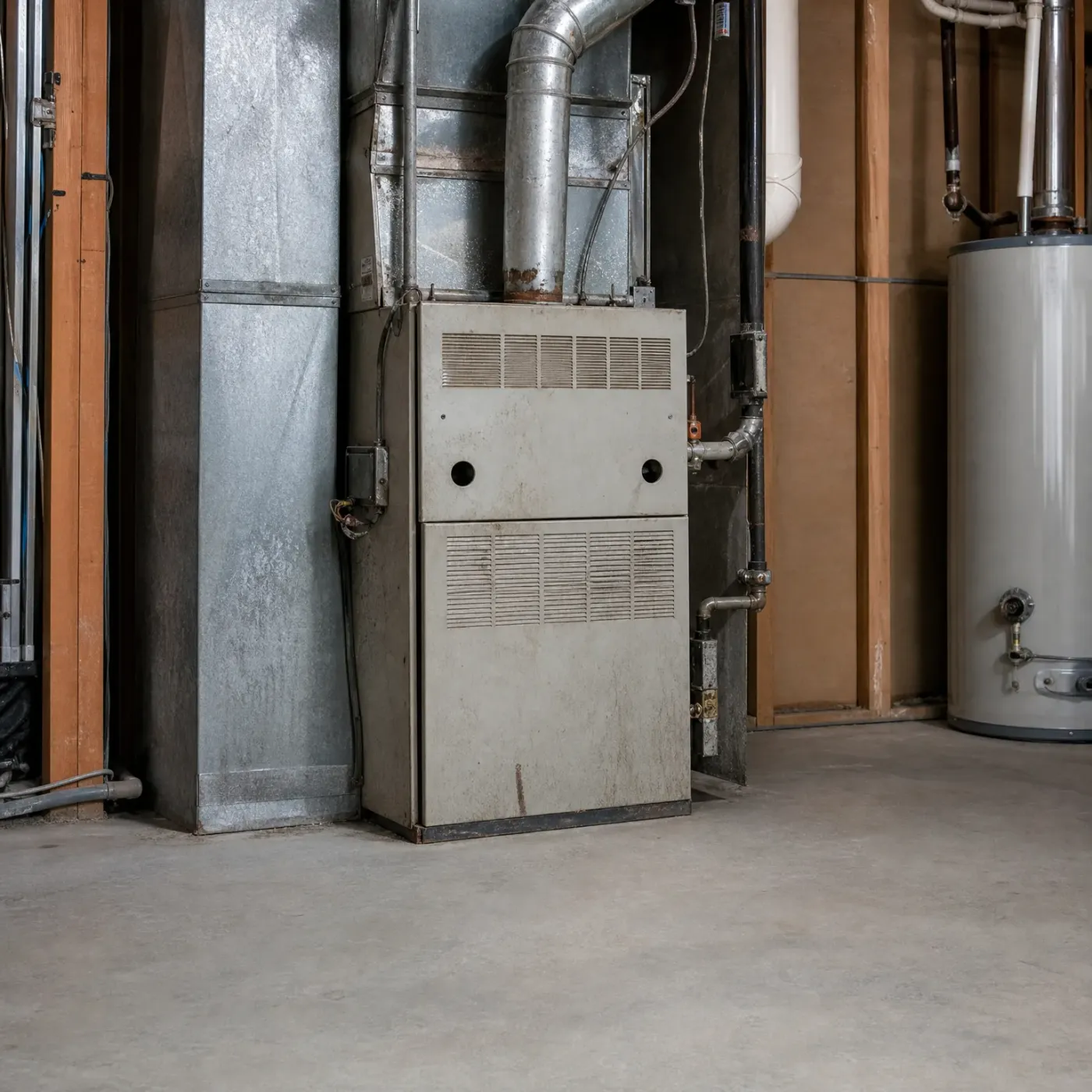
An older beige furnace with louvered front panels stands on a concrete basement floor beside galvanized ductwork, metal and plastic pipes, exposed wood framing, and a cylindrical water heater at right.

A filter left too long

Once a filter is packed with dust, the blower has to work harder to pull air through it. That older furnace in the picture has to push against that resistance every time it cycles on, and gas and electric use both climb from it.
1-inch filter or thicker filter

1-inch filter

  • A 1-inch filter is what came with most furnaces here, and it needs a look every month once the furnace is running daily.
  • It costs less per filter, but you're buying and swapping them more often across a Wisconsin winter.
  • Dust and pet hair load up a 1-inch filter fast, so skipping a month can mean the blower is pulling air through a filter that's already packed.
  • If your furnace runs October through April, that's six or seven checks, not one or two.

4-inch or 5-inch filter

  • A thicker filter has more surface area, so it holds more dirt before it chokes off airflow, and most hold up for three to six months.
  • Check it in January anyway. A Wisconsin winter is long enough that a filter rated for six months can still fill up early in a dusty house.
  • Not every furnace has the housing for one. If yours came with a 1-inch slot, swapping to a thicker filter means modifying the return duct, not just buying a bigger filter.
  • Fewer changes means less chance of forgetting one mid-winter when the furnace can least afford a clogged filter.
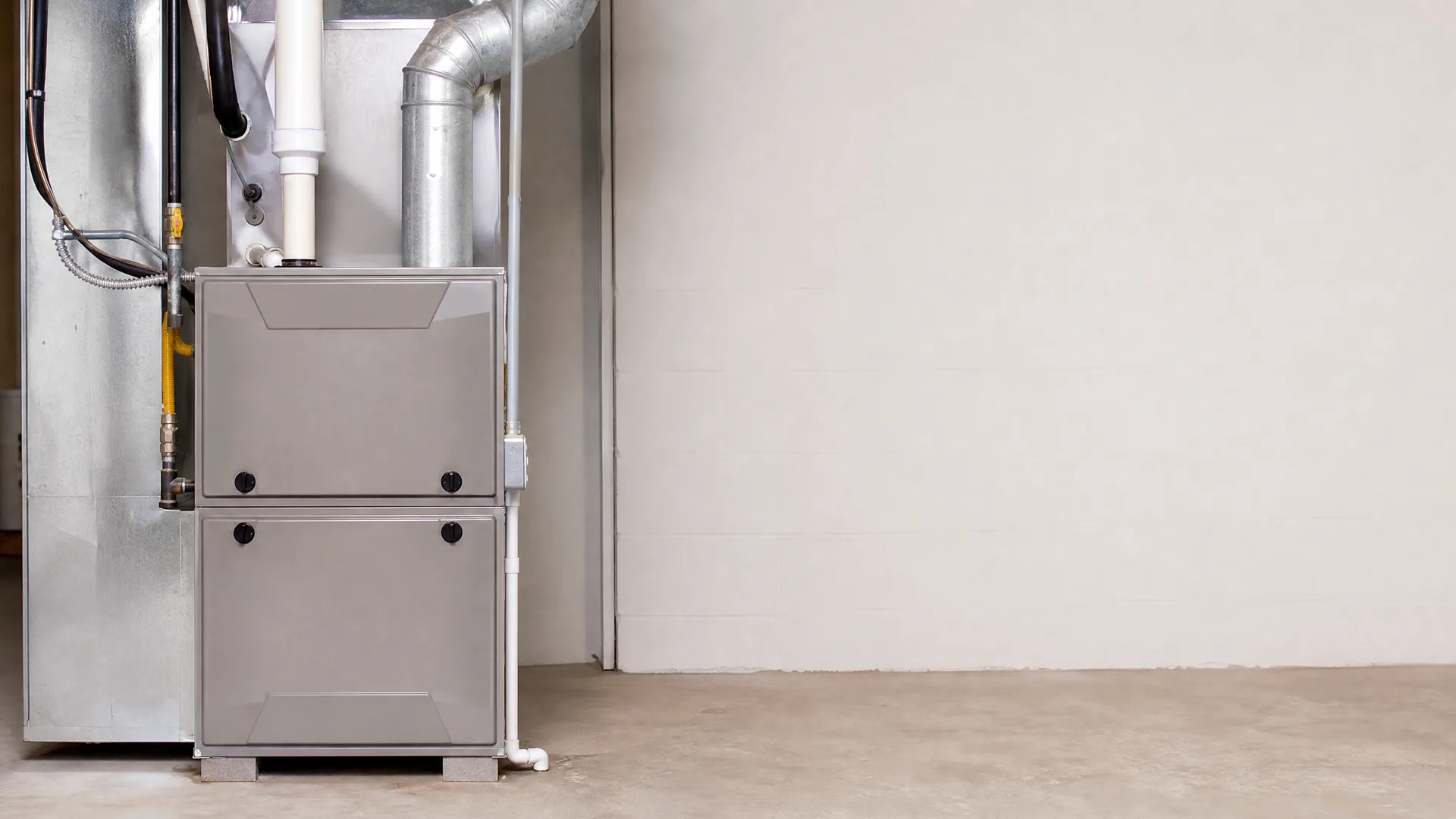
A gray gas furnace with ductwork, PVC venting and gas piping stands against a light-colored wall on a concrete floor, with empty wall space to the right.

What a clogged filter does to the blower

When a filter loads up with dust, the blower motor has to pull harder to move the same amount of air through it. That motor is built to run against a certain resistance, not against a filter packed solid. Over a long Wisconsin winter, a blower working that hard draws more power and wears faster. The heat exchanger can also run hotter than it should, since less air is moving across it to carry the heat away into your ducts.
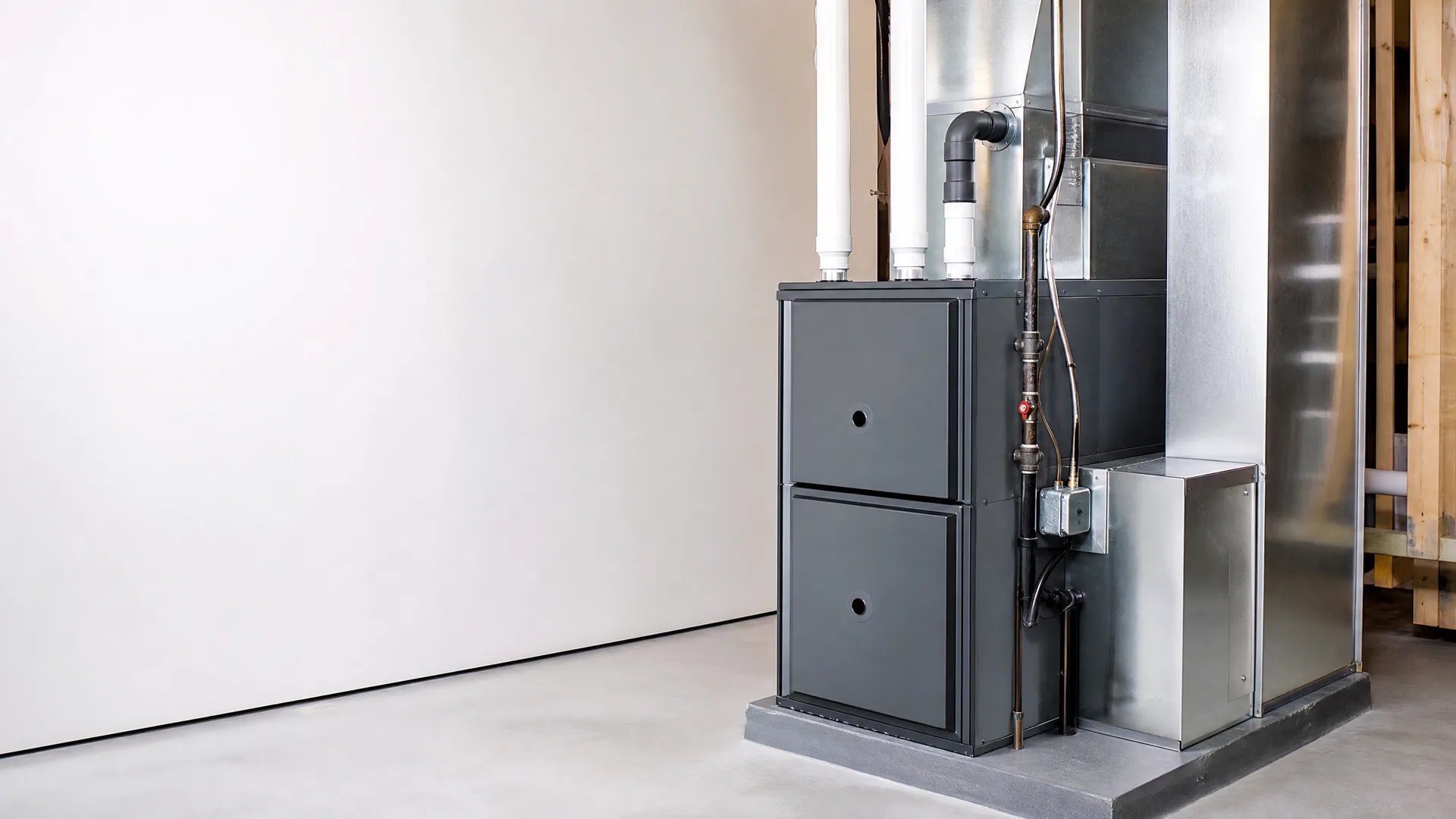
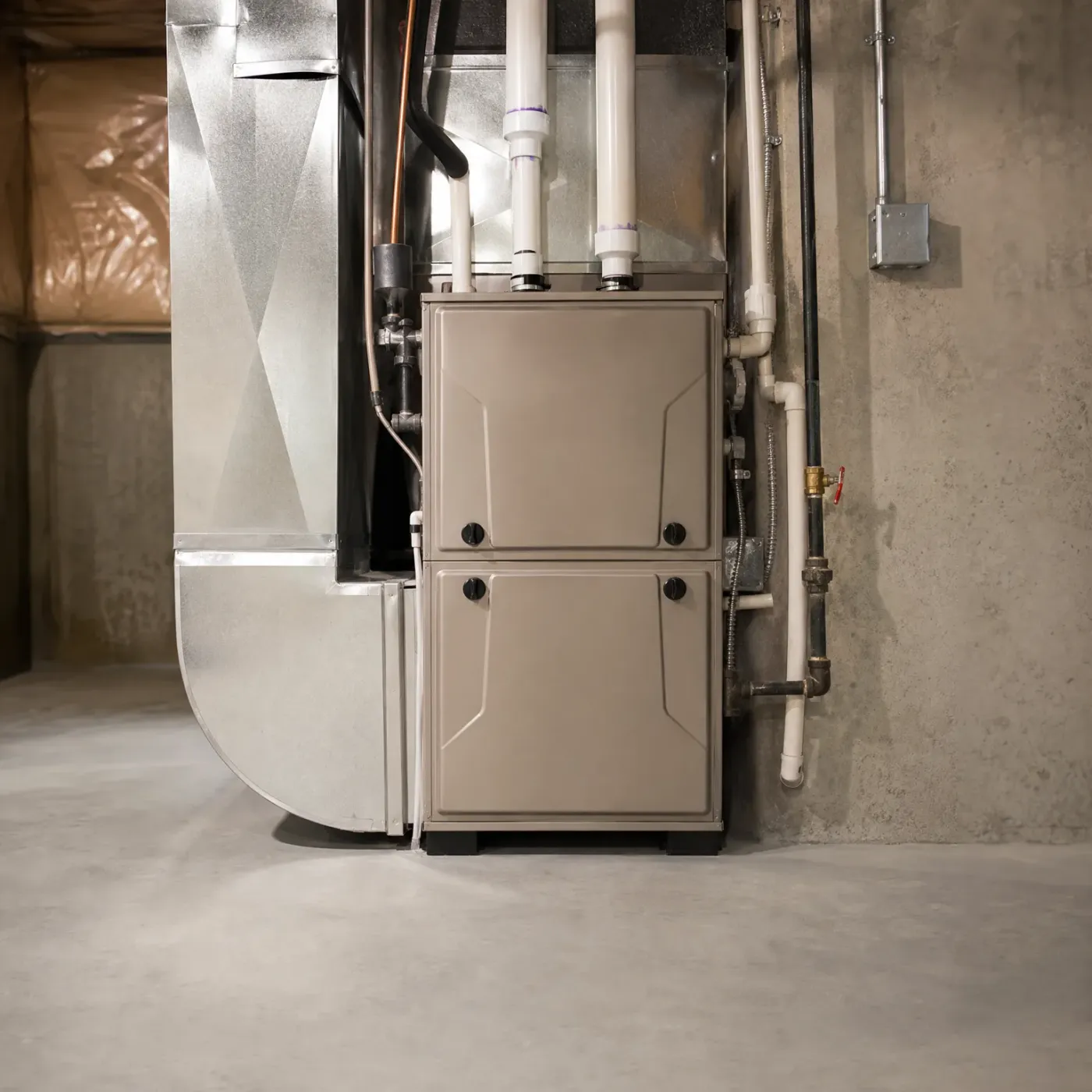
A dark gray furnace with two access panels sits on a concrete pad beside sheet-metal ductwork, white PVC vent pipes, copper gas piping and an electrical junction box against a plain light wall.

Why the furnace runs longer than it needs to

A dirty filter slows the air reaching your rooms, so the thermostat takes longer to see the temperature it's set for. The furnace keeps firing to close that gap. With gas prices what they are and power costing what it does here, a furnace running extra cycles through December and January adds up. A filter changed on schedule keeps the burner cycling the way it was designed to, no longer and no harder than the house actually needs.

Winter nights average 13°F statewide

At 13°F, your furnace is firing often and pulling air through that filter for hours at a time. A filter clogged with dust makes the blower work harder to push air through those long runs, right when you need the heat most.

NOAA nClimDiv 1991-2020 county normals weighted by homes

A man in a blue sweatshirt reclines with closed eyes in a brown leather armchair in a living room with a bookshelf, houseplant, sofa, window, and a side table holding newspapers and a dark mug.
A bearded man in a gray pullover reclines with closed eyes on a brown leather sofa in a sunlit room with a window, framed picture, potted plant, and a wooden cabinet holding papers and a dark mug.
A man in a gray sweater leans back with closed eyes in a brown leather armchair beside a wooden side table holding a dark mug and a folded newspaper, with bookshelves and a window seat behind him.
A man in a green sweater reclines in an armchair with his eyes closed and a slight smile, beside a window with plants, a small table holding a mug and folded newspaper, and bookshelves behind him.
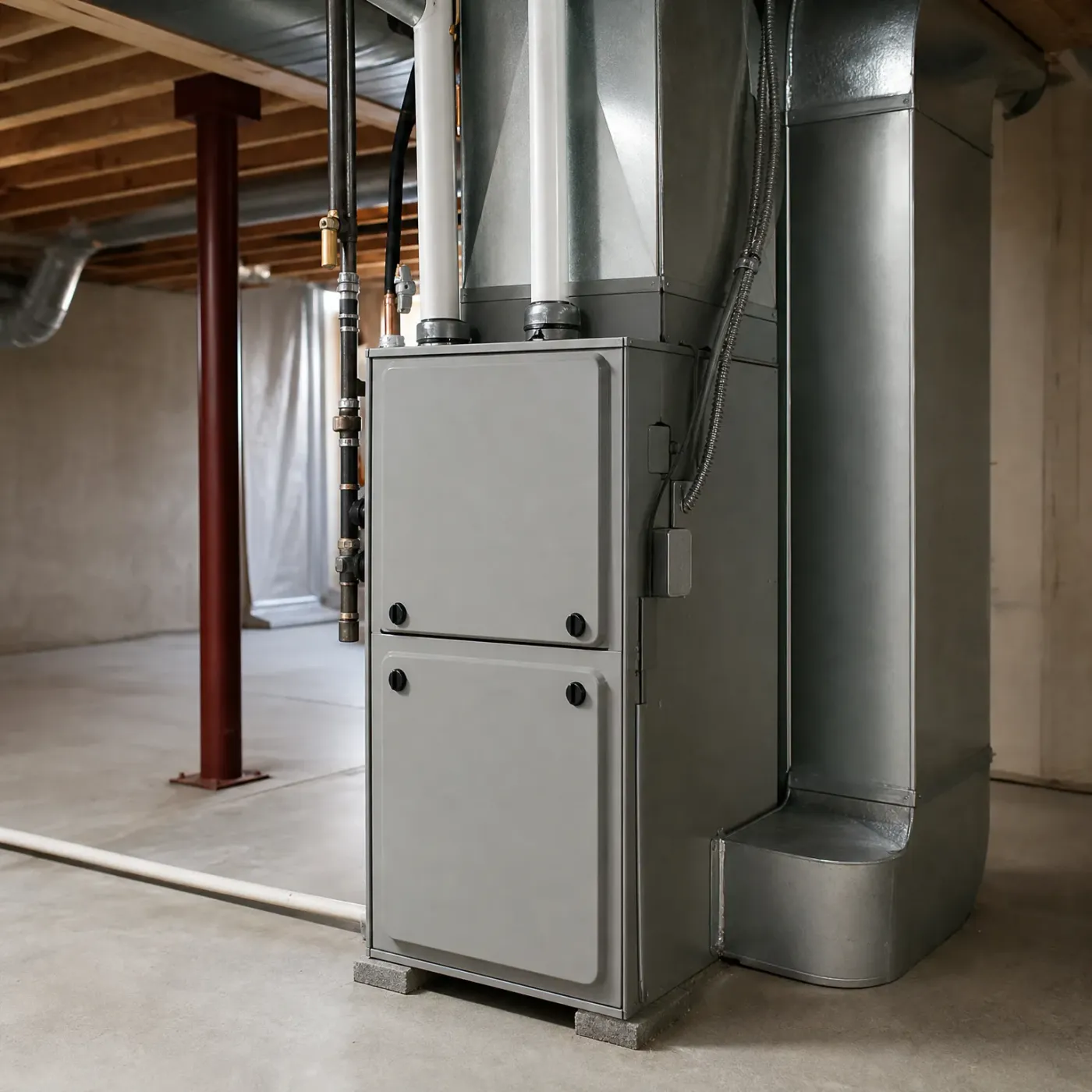
A gray high-efficiency furnace with two access panels stands on blocks in a basement, connected to sheet-metal ductwork, PVC vent pipes, flexible conduit, and gas and water piping, beside a red support column and exposed wood joists.

It's off your list after this

Skip calling around to set up a furnace tune-up.

Send the form, and lining up the furnace tune-up stops being yours to chase.

Skip calling around

There's no charge for the request.

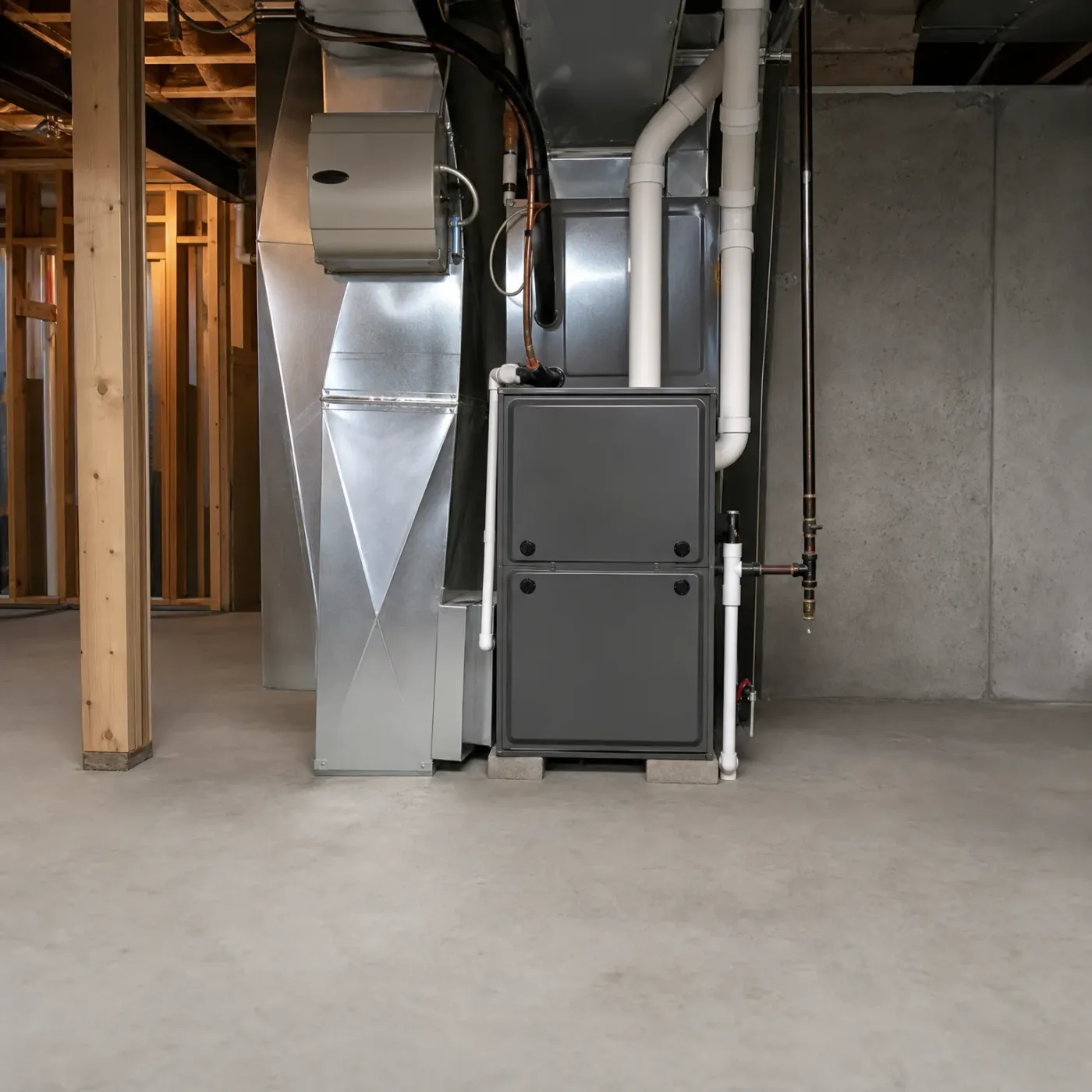
A gray high-efficiency furnace with white PVC venting pipes stands on blocks in a basement next to sheet-metal ductwork, with exposed wood framing on the left and a concrete wall and floor.
A clean filter lets the furnace pull air through at the rate the blower was built for, so every room gets its share of heat.
An older gas furnace with two white PVC vent pipes stands on a concrete basement floor beside galvanized sheet-metal ductwork, flexible conduit, and piping along a wall.
A clogged filter forces the blower to strain for air, and a furnace this old was already working against more resistance than a newer one.

The filter sits in a slot between the return duct and the blower, pulling dust out of the air before that air ever reaches the motor or the coil. The furnace itself has no way to tell how dirty it's gotten. There's no gauge watching the filter. The pressure switch and the limit switch only react once airflow has already dropped far enough to matter, and by then the blower has been straining for a while without anyone noticing. Static pressure builds slowly as the filter loads up, long before you'd feel any difference in the heat coming out of the vents. If it goes too far, the furnace can overheat and trip its high limit switch mid-cycle, shutting down rather than running against a blocked filter. The type of filter changes how fast this happens. A pleated filter holds more dust than a thin fiberglass one before it starts choking airflow, which is why it can go longer between changes at the same level of protection. Either way, the furnace won't tell you when it's time. That part is on you.
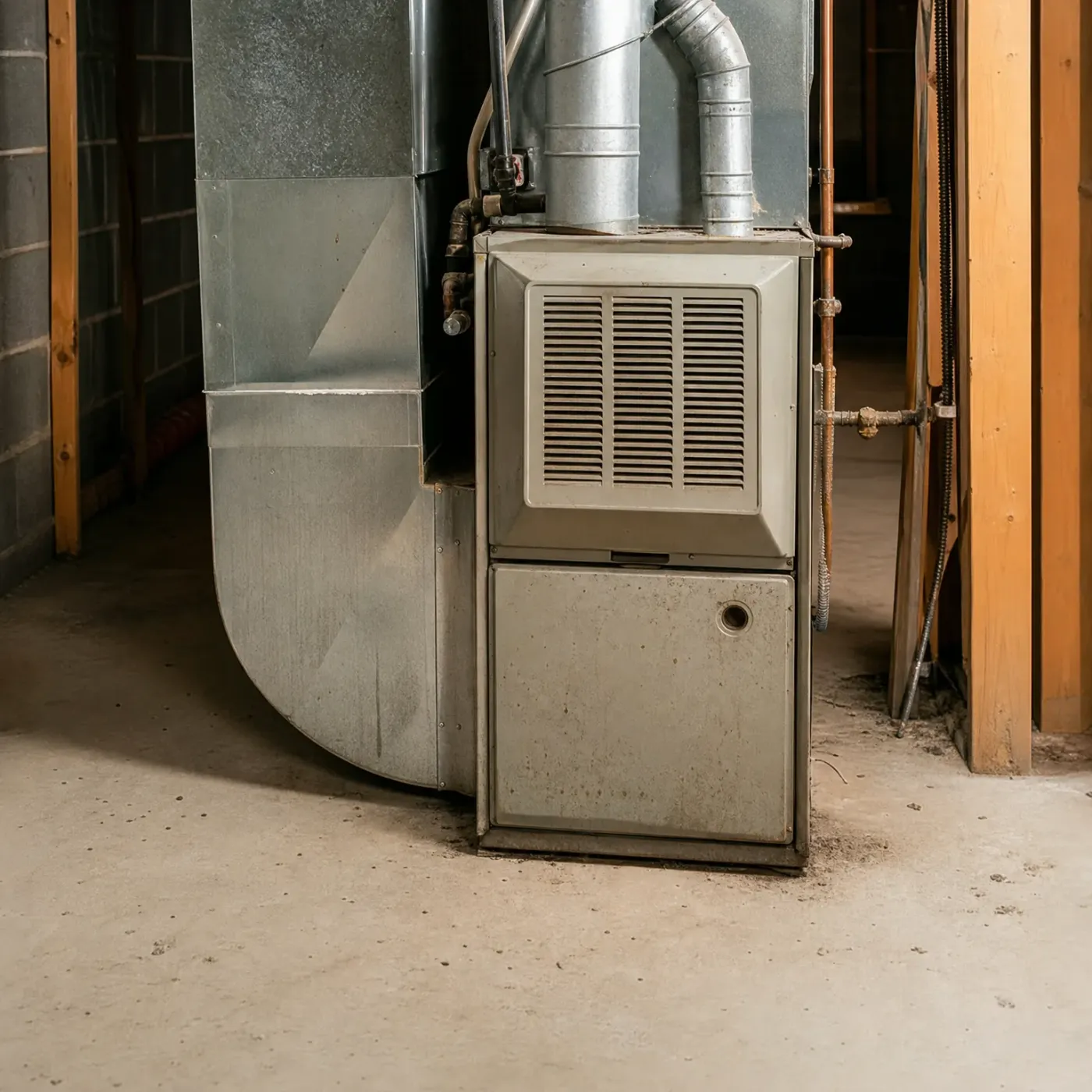
Where the filter sits and what it does

  • The filter sits in a slot between the return duct and the blower, usually behind a metal door on the cabinet.
  • Air gets pulled through the filter before it ever reaches the blower, so anything the filter traps never touches the motor or the coil downstream.
  • The furnace doesn't know how dirty the filter is; the pressure switch and limit switch only react once airflow drops low enough to matter.
  • A furnace that overheats because of a blocked filter can trip its high limit switch and shut itself off mid-cycle.
  • Static pressure builds slowly as a filter loads, so the blower is straining well before you'd notice a drop in heat.
  • Pleated filters hold more dust than the thin fiberglass kind, which is why they last longer between changes at the same airflow.
An older gas furnace with a louvered front panel stands on a concrete basement floor beside large sheet-metal ductwork, a metal flue pipe, copper piping and wood framing.
Before you get your furnace maintenance
A beige high-efficiency furnace stands on a concrete basement floor beside sheet-metal ductwork, with white PVC vent pipes, flexible conduit and copper and steel piping running up a concrete wall to an electrical box.
After you get your furnace maintenance

A 1-inch filter checked monthly and swapped every one to three months, a thicker filter good for six to twelve, gets your furnace through a Wisconsin winter without the blower straining and without the heat exchanger working against dirty air. That's the schedule. What changes month to month is how fast dust and pet hair fill that slot, and that's worth a look rather than a guess. If you'd rather not track filter sizes, furnace age and what a clogged one is doing to your blower on top of everything else winter asks of you, a maintenance visit covers the filter along with the rest of what keeps the furnace running right through to April. You already know what's coming once the cold sets in. Whether the filter is ready for it is the only part still open.


A gray-haired man with a beard in a blue button-placket shirt reclines on a couch with his eyes closed, beside a sunlit window with a green plant.
A woman in a cream knit sweater sits in an armchair with her eyes closed and head tilted back, beside a window showing orange autumn foliage and a wooden side table with a mug.

Stop chasing a furnace pro

Checking your filter on schedule keeps a Wisconsin furnace running the way it was built to, but finding someone to look at the rest of the system, the burner, the heat exchanger, the blower itself, is a different job. Instead of searching for contractors, calling around, and explaining the same thing twice, send the form once. From there, finding help isn't on you anymore. That's the weight this page takes off your plate, not the furnace work itself.

Fill out one form

One form instead of hunting for a pro who does furnace tune-ups.

You only hire the pro if you want to.