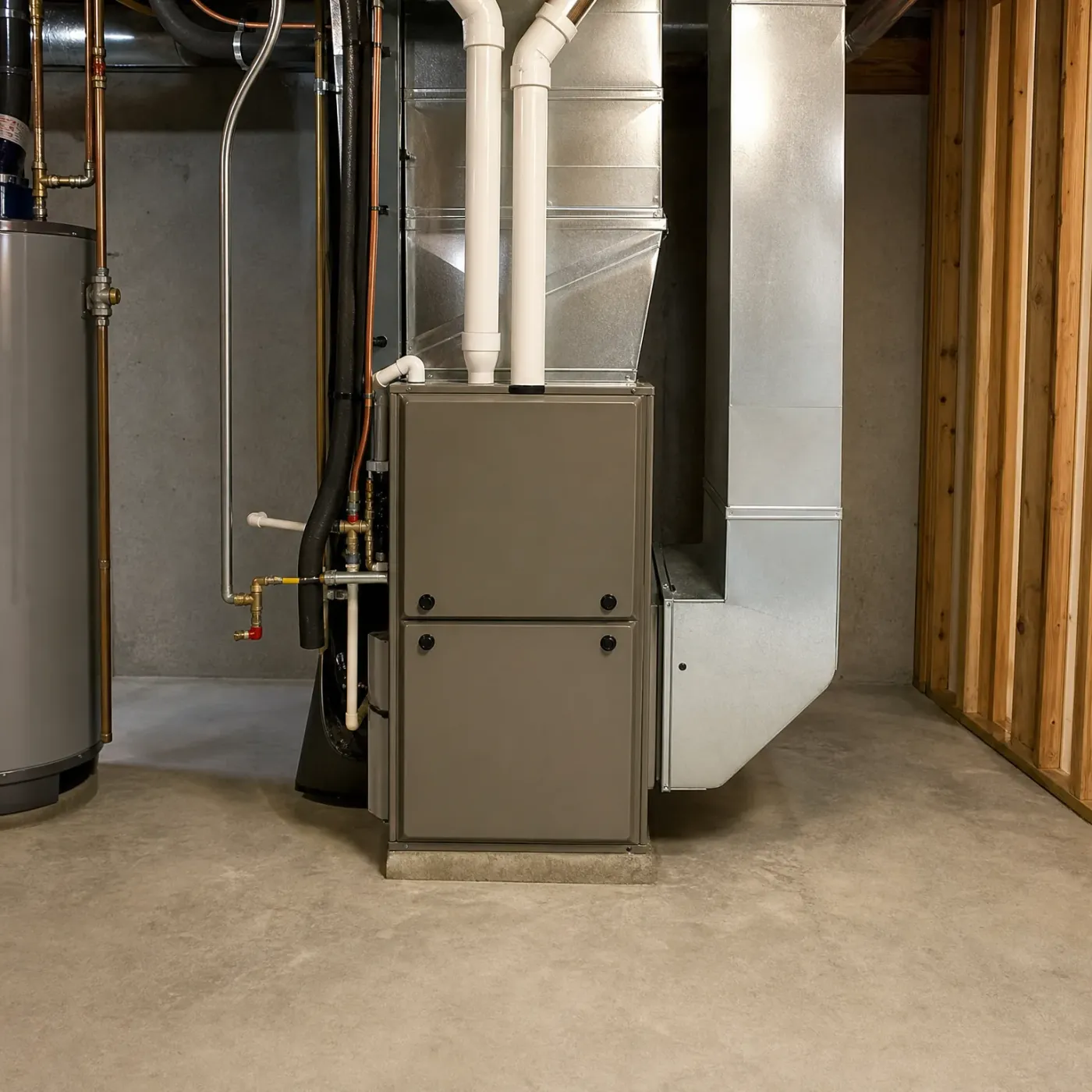
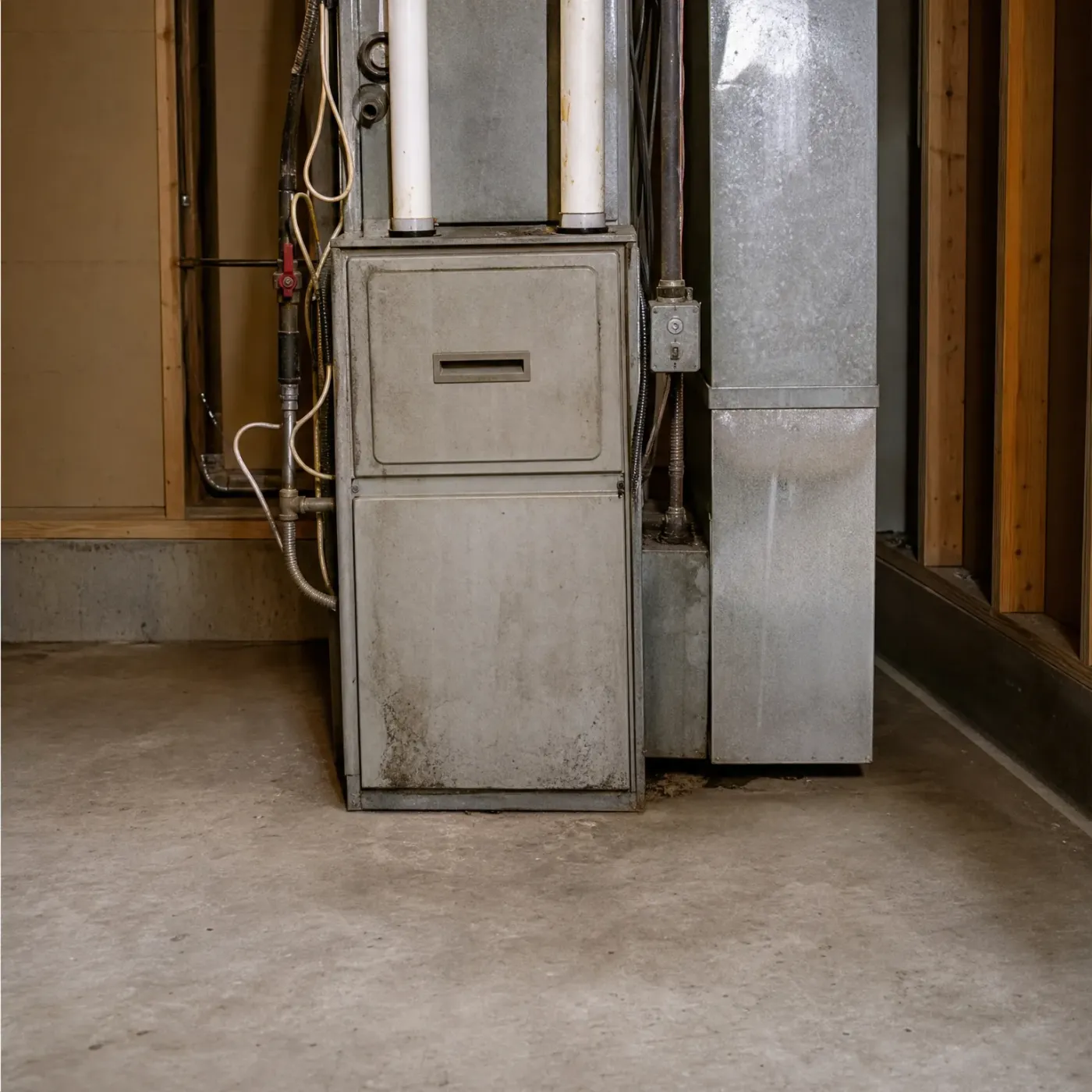
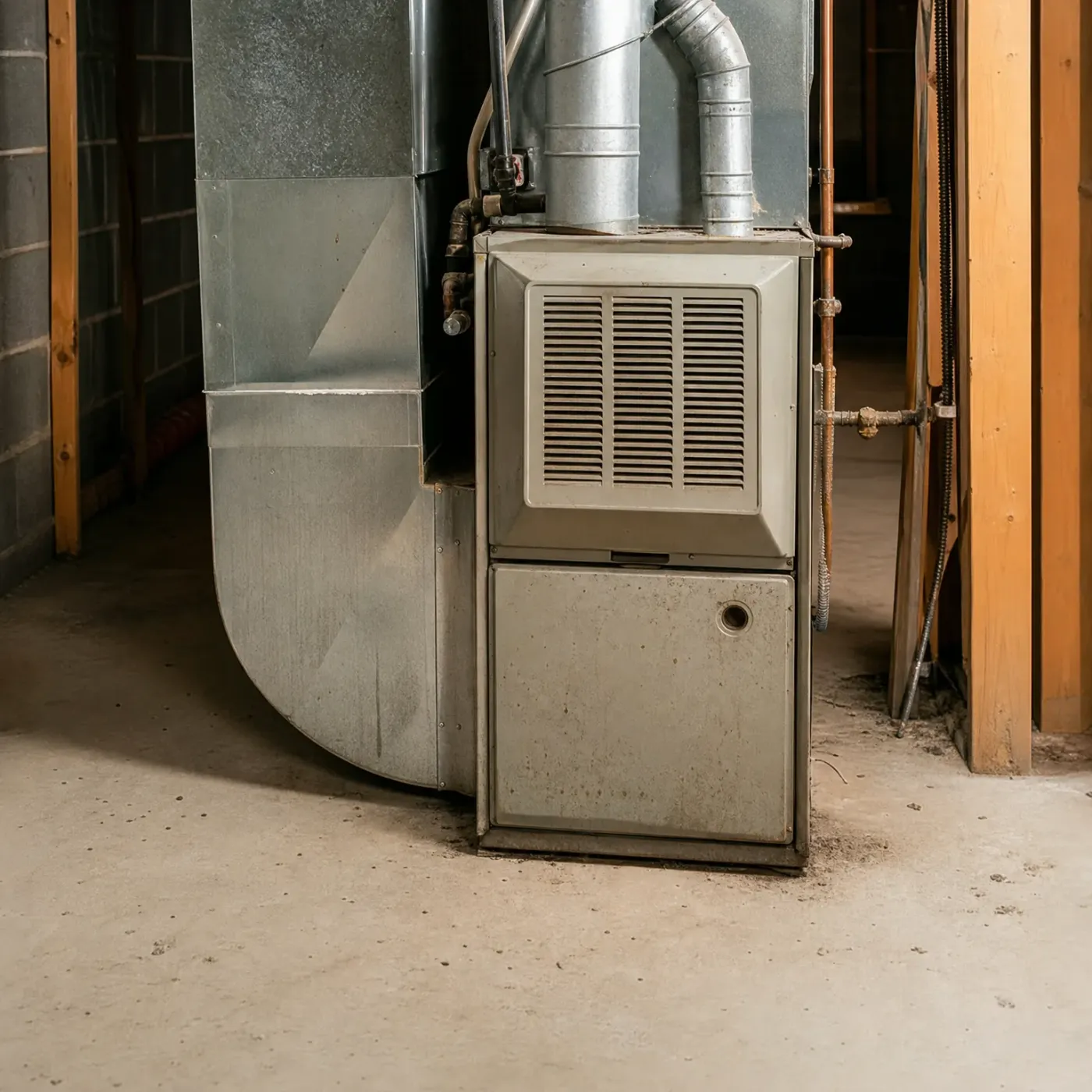
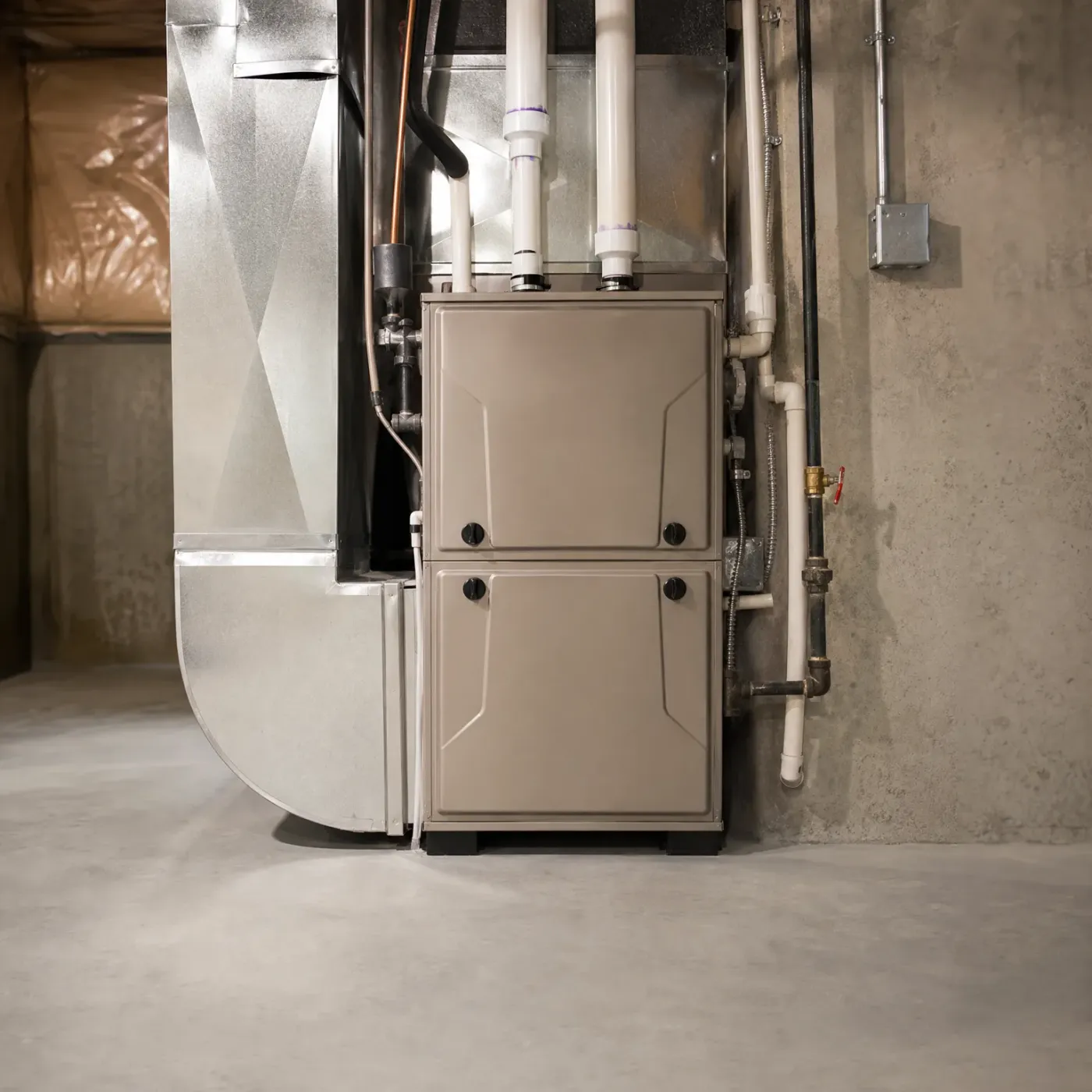
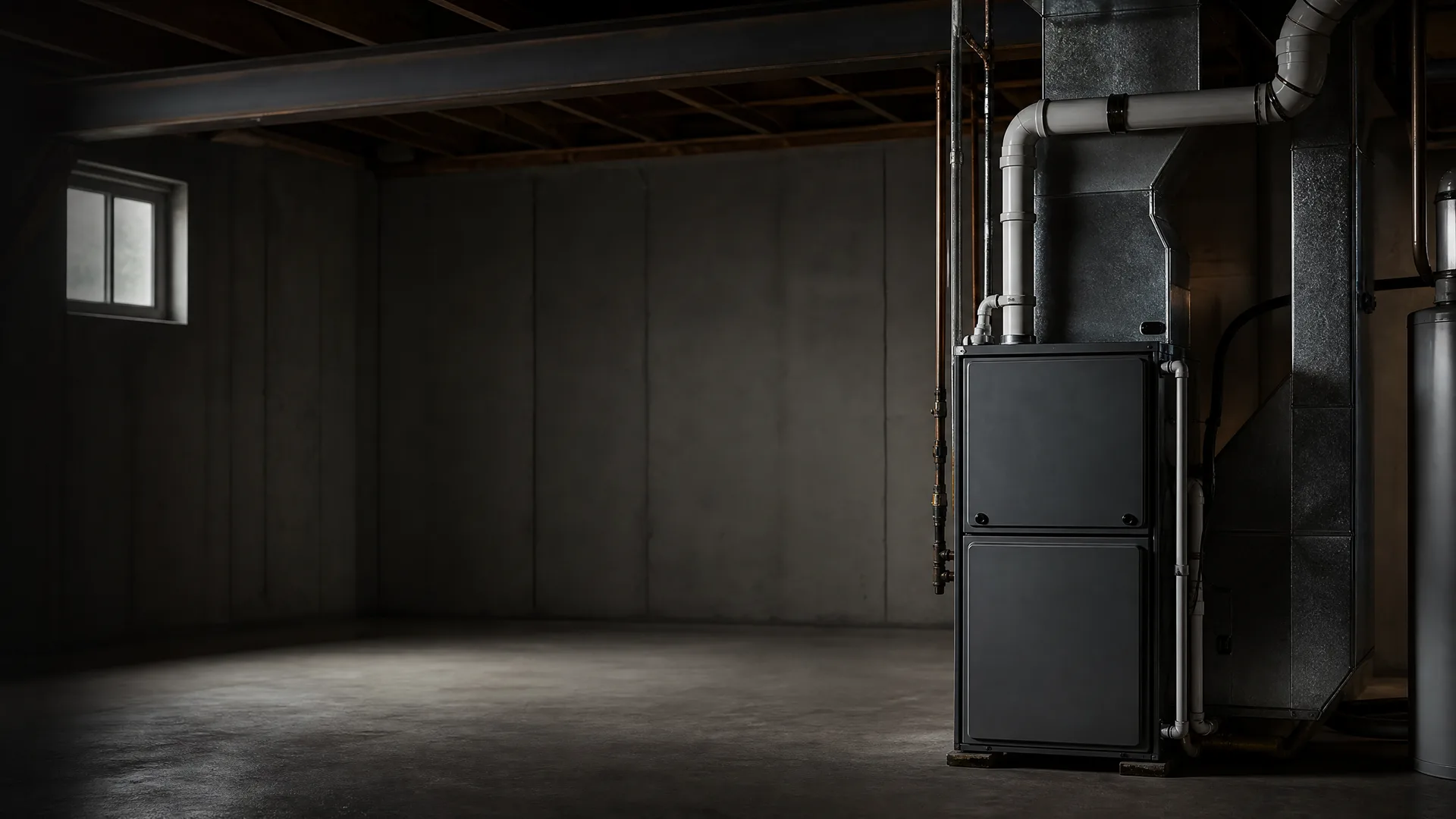
A gray high-efficiency furnace with two white PVC vent pipes stands beside galvanized sheet-metal ductwork in a dim basement with exposed joists and a concrete floor.

A pro who works on furnaces

Signs of a cracked heat exchanger in Wisconsin

A cracked heat exchanger is the one furnace problem you can't just wait out, since it means carbon monoxide can get into the air your furnace blows through the house. This page covers the signs to check for, from soot around the burner to a strange smell when the blower kicks on. If what you find matches, a licensed furnace contractor near you in Wisconsin can take a closer look.

Get matched

A cracked heat exchanger usually shows up as a smell, not a sound. A sharp, formaldehyde-like odor when the furnace kicks on is the clearest sign, along with soot streaks near the burner or a flame that flickers and leans instead of burning straight up. Some people notice headaches or nausea that ease when they leave the house and come back once the furnace cycles off. The crack forms from years of the metal heating and cooling every time the furnace runs, which in Wisconsin is most of the year since gas furnaces here carry the heat from October through April. Once the metal splits, carbon monoxide from the burner can mix into the air moving through your ducts instead of venting outside. A carbon monoxide detector near the furnace or in the hallway outside it will catch what you can't smell. If yours is sounding, or you've noticed any of these signs, don't run the furnace until someone checks the exchanger itself.

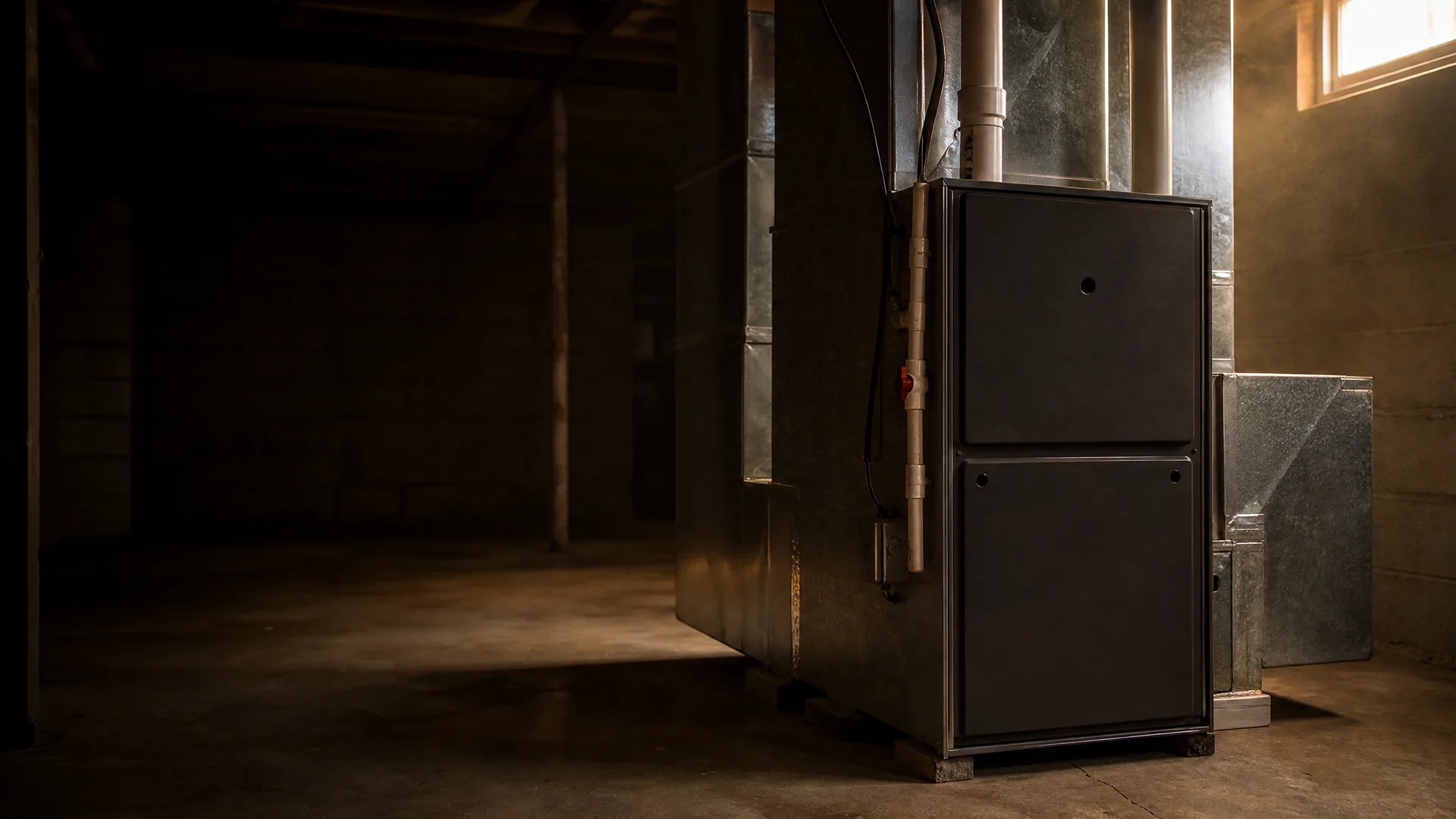
A dark residential basement with a concrete floor and block walls, containing a furnace with two access panels connected to galvanized sheet-metal ductwork and a white vent pipe, lit by a small window at upper right.

You go down to check the furnace after the thermostat clicks and nothing happens. It's dark down there, just the light from the stairs, and cold enough that you can see your breath near the vents. The furnace sits quiet, no hum, no flame. You crouch down by the burner compartment and catch it then, a sharp smell that wasn't there last week, and a thin haze hanging in the air like someone just blew out a match. Outside it's already below freezing, and upstairs the house is starting to feel it. You stand there a second, not touching anything, just deciding what to do next.
Wait It Out or Call Someone

Keep watching it

  • A cracked heat exchanger doesn't get better on its own, and a furnace with one shouldn't keep running until it's checked.
  • Soot near the burner or a flame that leans instead of standing straight is a sign the firebox isn't sealed the way it should be.
  • A carbon monoxide detector near the furnace catches what you can't smell yourself, since CO has no odor of its own.
  • If the smell only shows up after the furnace has run for a while, that's the heat exchanger expanding as it warms, which is part of how the crack opens up.
  • Waiting through a cold snap to see if the smell goes away just means more hours of a furnace pushing exhaust into the air it's heating.

Get it checked

  • A local contractor who works on furnaces all winter in Wisconsin has likely seen this exact problem more than once this season.
  • A licensed tech can run a combustion analyzer and a camera scope through the burner compartment, which tells you more than a smell ever could.
  • Matching with one contractor means one visit, not a string of calls from companies competing for the job.
  • If the exchanger is cracked, a tech can tell you whether the furnace is still under warranty before any repair starts.
  • Gas furnaces are common here, and a tech familiar with them knows what parts tend to fail first in this climate.
  1. Burner fires and heats the metal walls of the heat exchanger.

  2. A crack lets flue gas leak into the air stream instead of the vent.

  3. The blower pushes that leaked gas through the ducts into your rooms.

  4. A flame sensor or limit switch can shut the furnace down early.

What would you actually notice in your own house

You'd likely catch it first by smell, that sharp formaldehyde edge when the furnace cycles on, stronger if you're standing near a vent in a bedroom or the living room. You might notice a headache or feeling stuffy in a room with the furnace running, then feeling fine once you're outside or in the garage. Look at the furnace itself: soot trailing up from the burner area, or the flame through the little window leaning to one side instead of standing straight and blue. Some furnaces shut themselves off mid-cycle and won't restart, which is the limit switch doing its job. If anyone in the house has been getting headaches or feeling off only when they're indoors with the furnace running, that's not something to wait on.

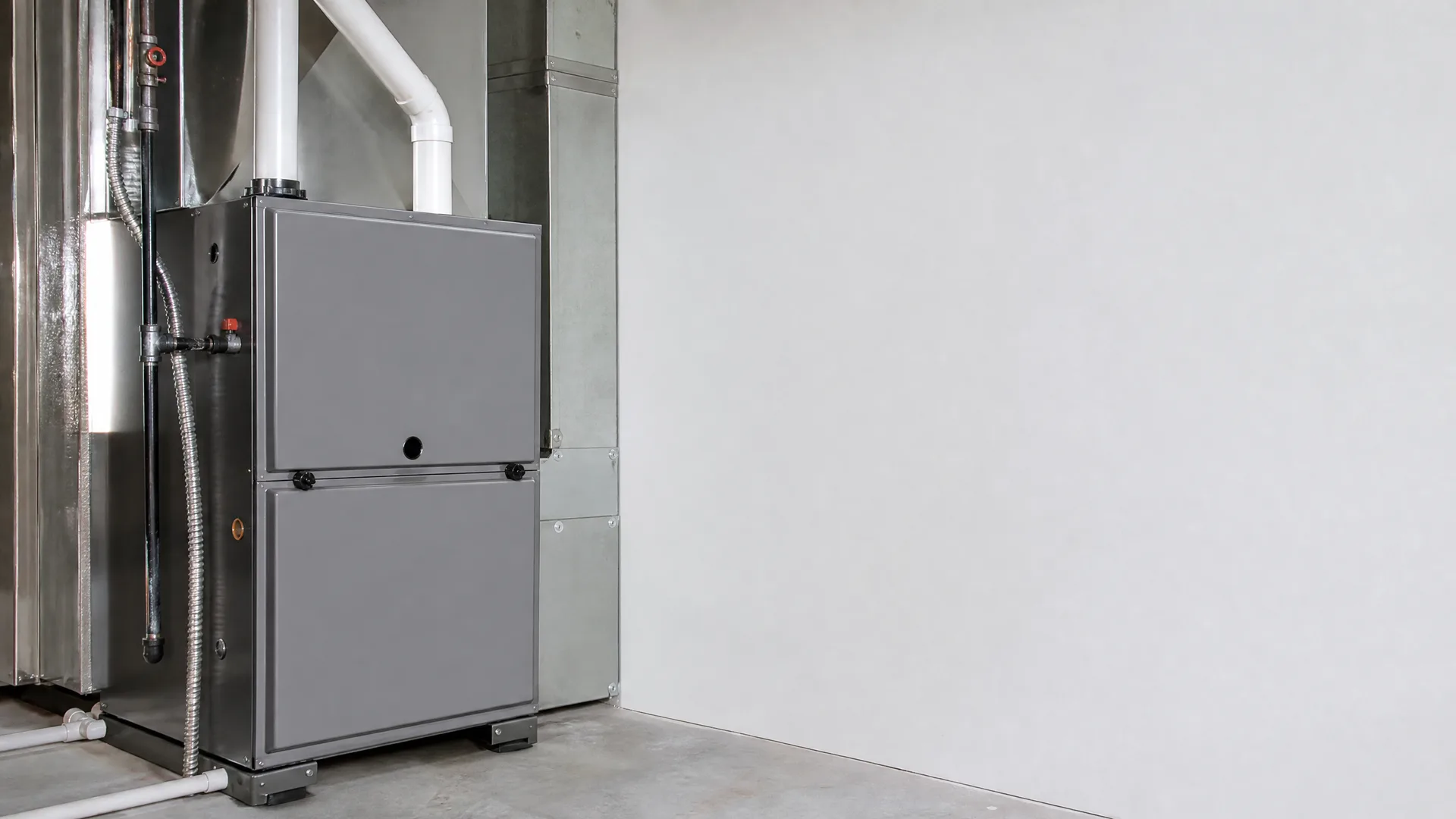
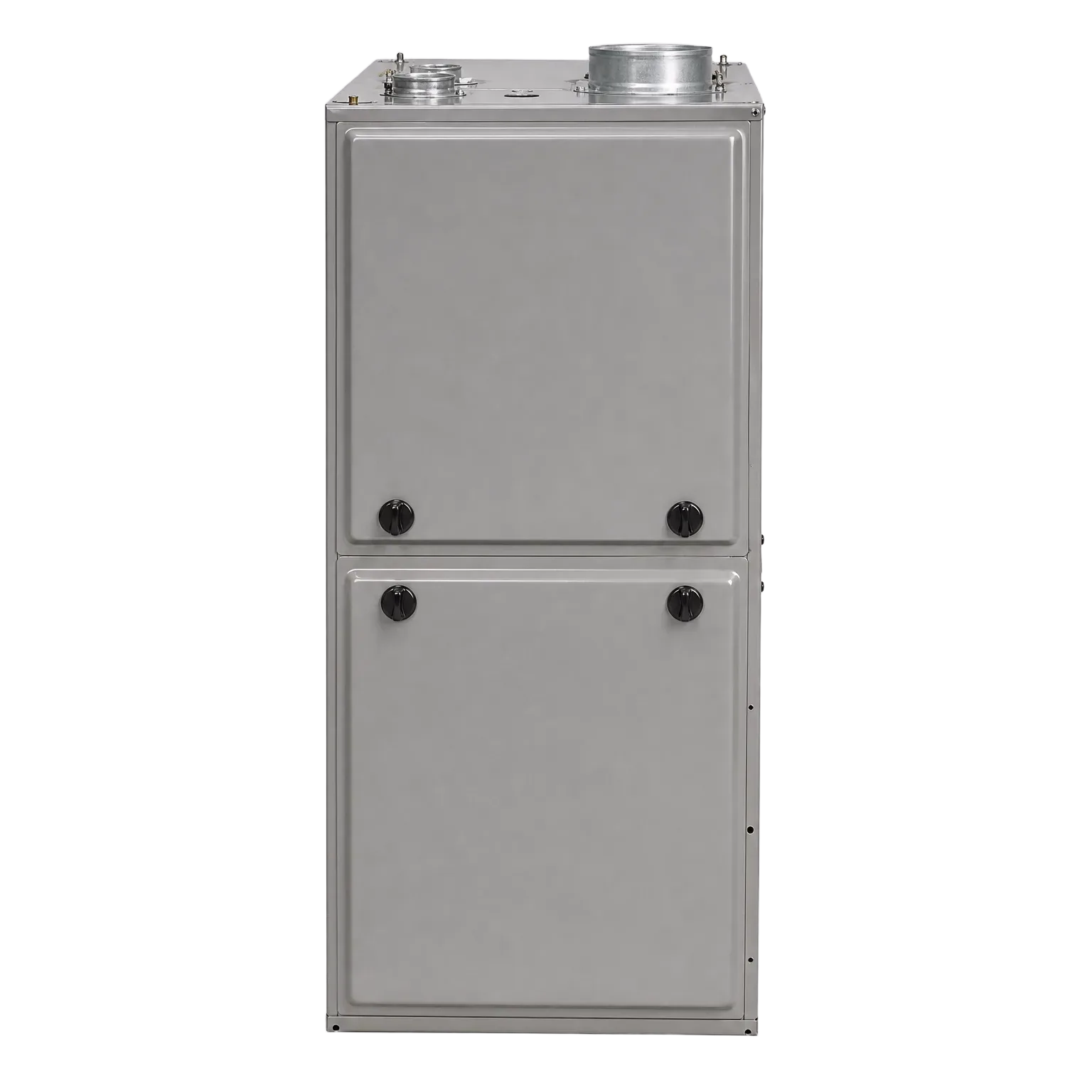
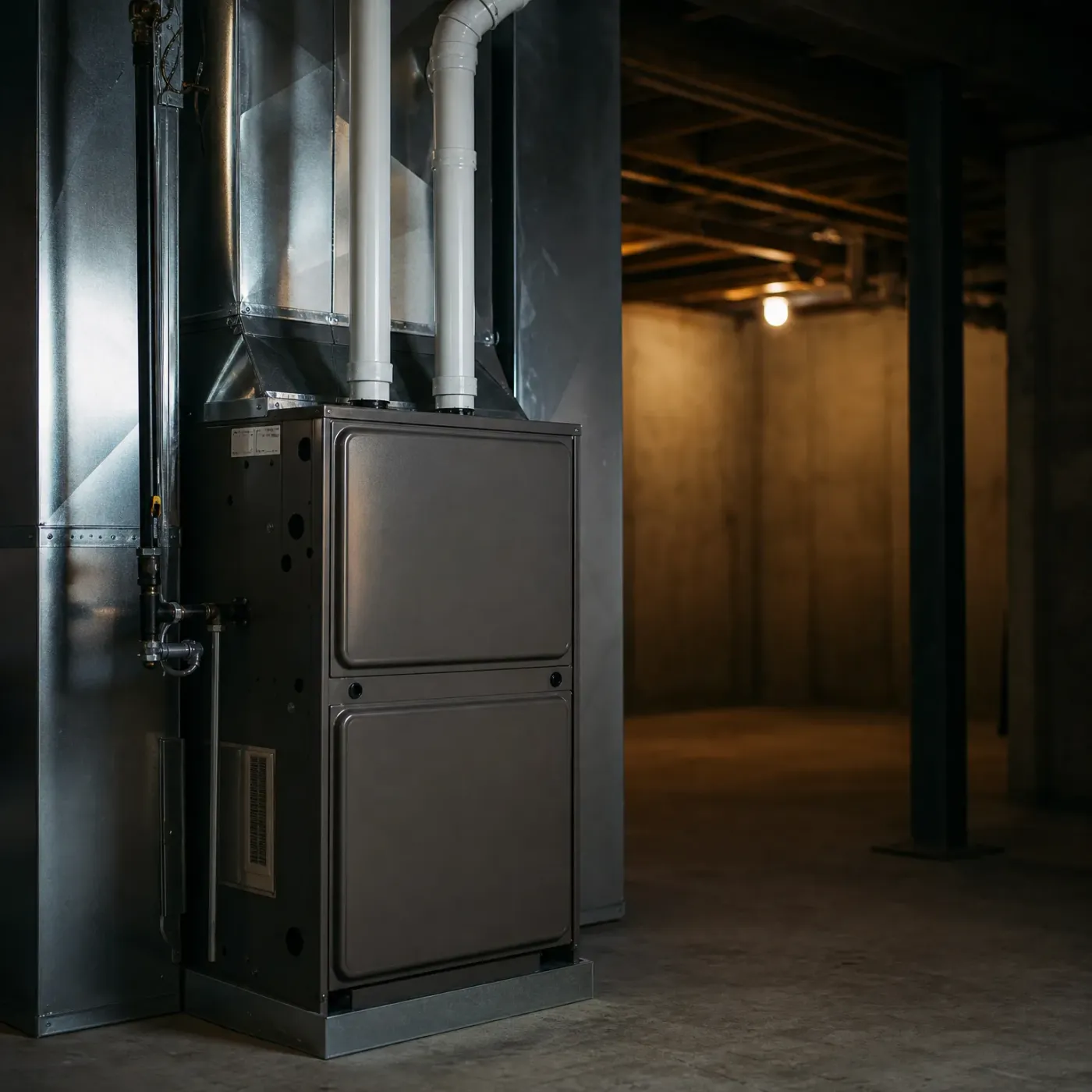
A gray high-efficiency furnace with two access panels stands in a bare basement corner, connected to sheet-metal ductwork, white PVC vent pipes, and flexible gas and electrical lines.

Why the metal fails there

A heat exchanger cracks from metal fatigue, the same way a wire snaps after you bend it back and forth enough times. Every cycle heats the metal up and lets it cool again, and that expansion and contraction over years is what opens the seam. A furnace that runs more cycles, which is what a Wisconsin winter asks of one from October through March, puts more of those flexes on the metal than the same furnace would see in a milder state.

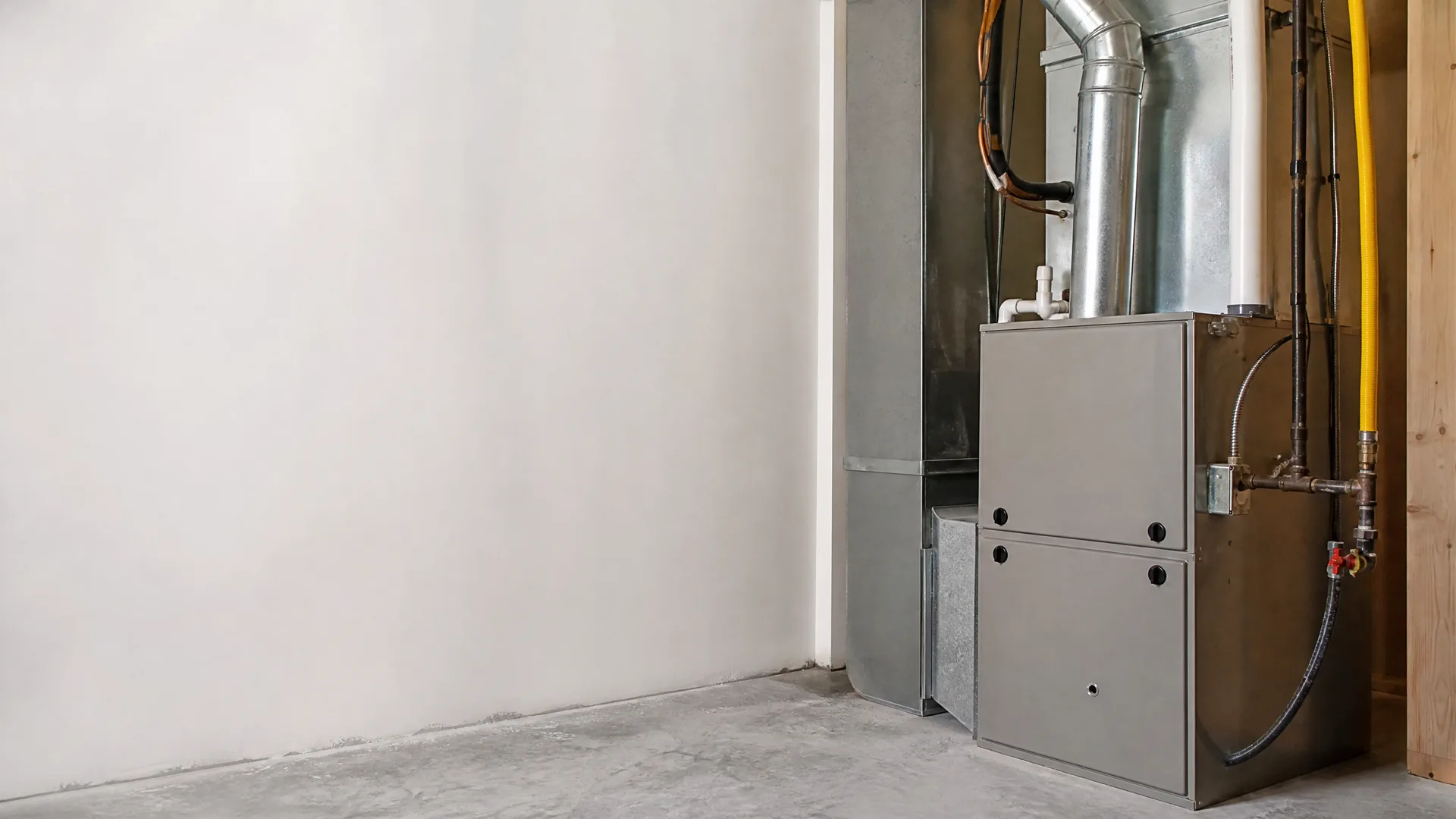
A gas furnace with metal ductwork, copper and yellow gas piping stands against a wall in an empty room with a bare concrete floor.

What the draft can hide

Basements here run colder than the rest of the house, and a strong draft near the furnace can carry a crack's smell away before you catch it standing at the top of the stairs. That's part of why soot streaks and a leaning flame matter as signs on their own, since you can see those without depending on your nose catching anything. A carbon monoxide detector near the furnace will pick up what a draft carries off before you can.

Winter nights average 13°F statewide

A Wisconsin winter night averages 13°F, so your furnace is firing most of the night just to hold the house steady. That's a lot of heating cycles racking up on an older heat exchanger, and each one flexes the metal a little more toward a crack.

NOAA nClimDiv 1991-2020 county normals weighted by homes

Run the furnace while you wait for someone to look at it, and you're betting that the crack stays small and the carbon monoxide stays low enough not to matter.

Shut the furnace off at the switch or breaker until it's checked, and you lose heat for a while but you're not pushing exhaust through the ducts in the meantime.

A woman with long wavy brown hair in a grey ribbed sweater sits on a couch indoors, looking toward a window, with a potted palm-like plant and fireplace behind her.
A woman with long brown hair wearing a green V-neck top and beige cardigan sits on a light sofa, looking off to the side, with a dining table, lamp and framed picture in the background.
A woman with long dark hair in a cream knit sweater sits on a beige sofa indoors, looking toward a bright window with a houseplant and framed picture in the background.
A woman with long dark hair in a green knit sweater sits on a couch indoors, smiling and looking toward a window with a blurred room behind her.
A gray high-efficiency furnace in a basement with PVC vent pipes, sheet-metal ductwork, copper and insulated pipes, a water heater at left, and an unfinished wood-stud wall at right.

What a sound heat exchanger looks like

The furnace sits clean on the pad, PVC flue pipes running tight and white, ductwork sealed and solid overhead. No soot anywhere near the burner. This is a furnace that's holding up and venting the way it's built to.

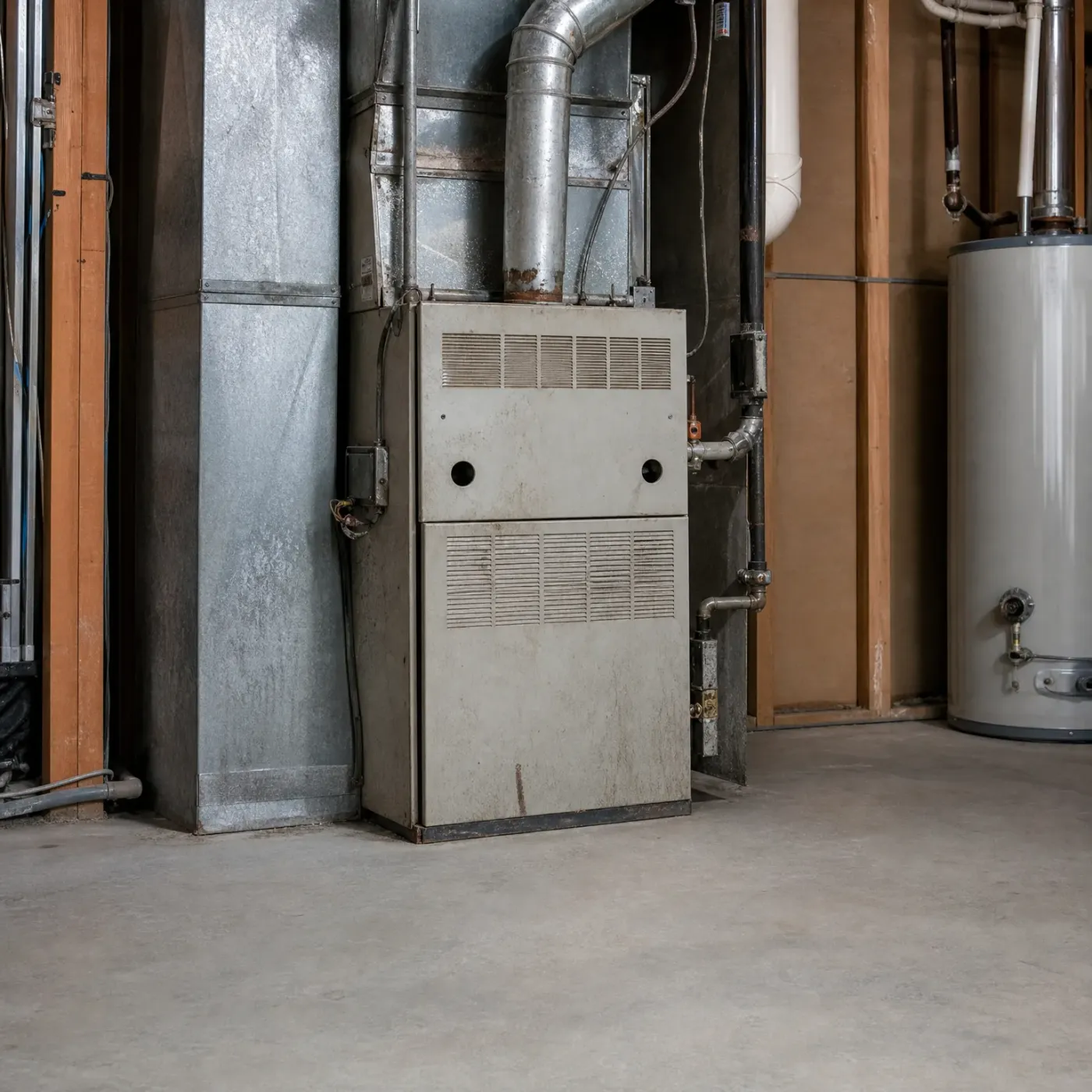
An older beige furnace with louvered front panels stands on a concrete basement floor beside galvanized ductwork, metal and plastic pipes, exposed wood framing, and a cylindrical water heater at right.

What a failing one looks like

Galvanized ductwork, an older cabinet, flue pipes that have been up there for years. Age alone doesn't crack a heat exchanger, but a furnace this old has put a lot of cycles through that metal. Worth a look if yours resembles this one.

A smiling older woman with gray hair in a cream knit sweater stands in a dimly lit kitchen beside a window showing snow outside, with a round loaf of bread on the counter in the foreground.
A woman and a child wrapped together in a thick knitted blanket on a sofa, both with eyes closed, with a lit table lamp and houseplant in the dim background.

Get your furnace to the right pro

Only one pro gets your request, so you hear from one company.

It costs nothing to send, and you don't have to hire anyone.

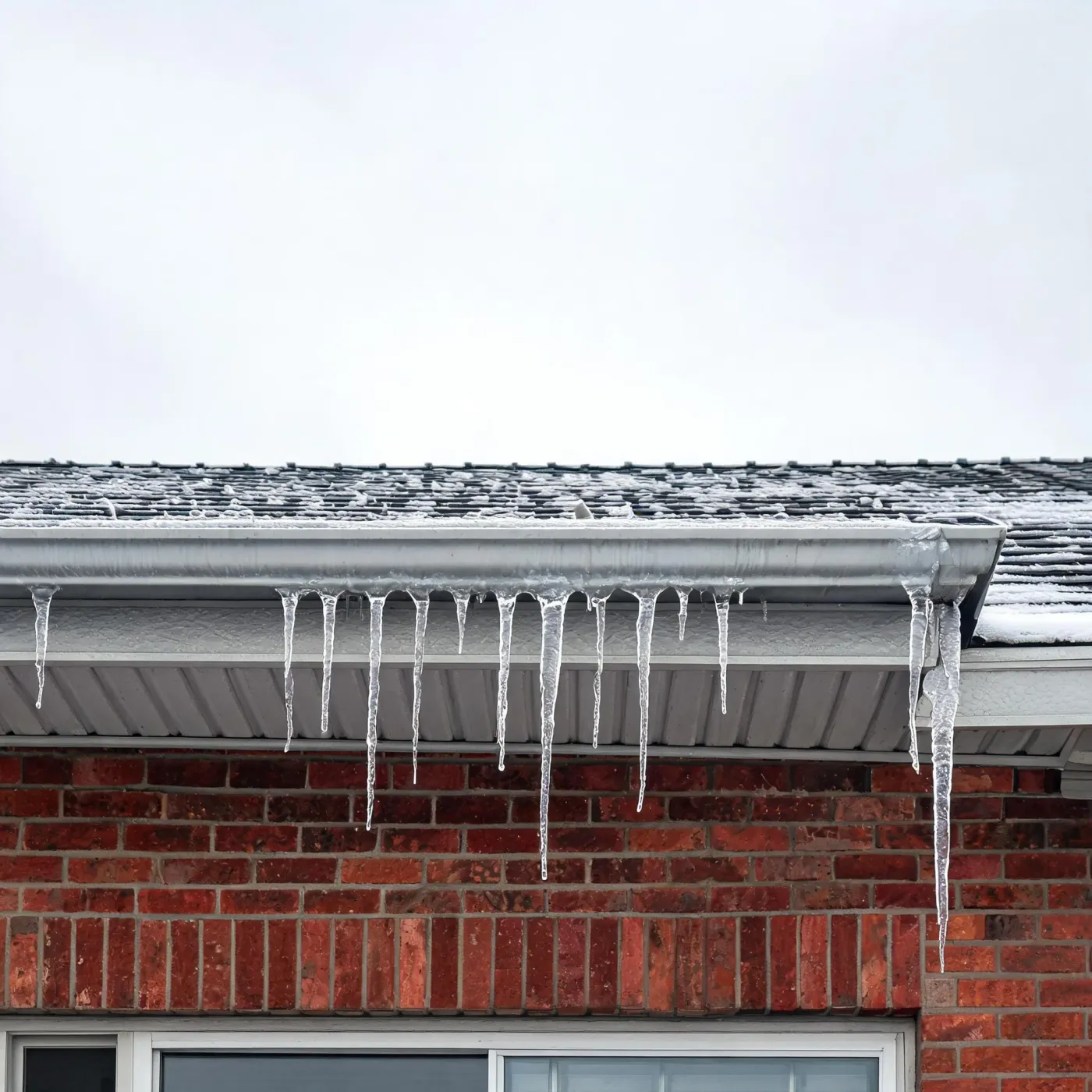
Icicles hang from a metal gutter along the eave of a red brick house with a snow-dusted shingle roof under an overcast white sky.

Winter nights in Wisconsin average 13°F statewide, per NOAA climate data. At that temperature your furnace isn't cycling on and off a few times an hour, it's running close to nonstop to keep the house at your thermostat setting. Each time the burner fires, the metal in the heat exchanger heats up and expands, then cools and contracts again when the cycle ends. A furnace that's already got a hairline crack gets pushed harder on nights like this, since there's more firing, more flexing, more chances for that crack to open further. If you've got an older furnace, a long cold snap is when a small crack tends to turn into one you can smell.

NOAA nClimDiv 1991-2020 county normals weighted by homes

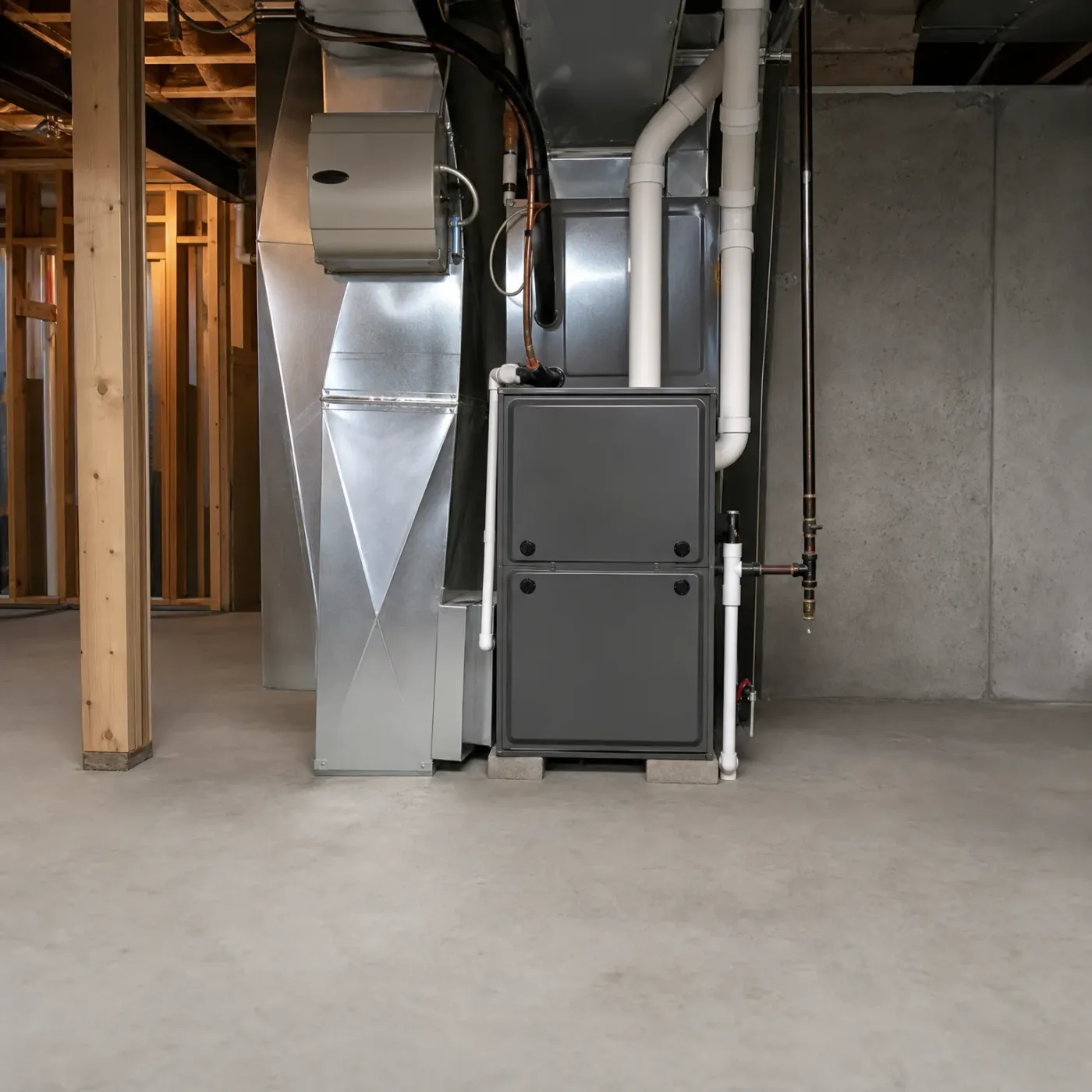
A gray high-efficiency furnace with white PVC venting pipes stands on blocks in a basement next to sheet-metal ductwork, with exposed wood framing on the left and a concrete wall and floor.
A furnace like this is doing what it should: clean burn, tight flue pipes, nothing leaking into the air it sends through your ducts.
An older gas furnace with two white PVC vent pipes stands on a concrete basement floor beside galvanized sheet-metal ductwork, flexible conduit, and piping along a wall.
An older cabinet like this one has had more years of heating and cooling cycles to flex the metal toward a crack.

Finding a crack isn't guesswork. A technician pulls the burners and runs a light inside the heat exchanger, then watches from the other side for any glow coming through metal that should be solid. A combustion analyzer backs that up, catching carbon monoxide levels that climb once the furnace runs a full cycle, even when nothing looks wrong by eye. That matters because some cracks only open once the metal's hot and expanded, so a cold inspection can miss what shows up twenty minutes into a cycle. Soot patterns inside the firebox give a technician a place to start, since gas leaking through a crack tends to streak the metal right around it. If your furnace has been shutting off partway through a cycle, that's often a flame sensor or limit switch doing exactly what it's supposed to, cutting power before things get worse. Once a crack's confirmed on an older furnace, expect a conversation about cost. Replacing the heat exchanger on a unit that's had a lot of winters behind it often runs close to what a new furnace costs, so a technician will usually lay out both paths before touching anything.

How a technician actually checks

  • A technician checks for a crack by pulling the burners and shining a bright light inside the heat exchanger while watching from the other side for light leaking through.
  • A combustion analyzer reading carbon monoxide above normal levels while the furnace runs a full cycle points to a breach even if nothing is visible to the eye.
  • Some cracks only open once the metal heats up and expands, so a heat exchanger can look sound cold and still leak once the burner's been firing a while.
  • A furnace that shuts itself off partway through a cycle may have a flame sensor or limit switch doing its job and cutting power before gas builds up further.
  • Soot pattern inside the firebox can point a technician toward which section of the heat exchanger to inspect first, since leaks tend to streak the metal near the crack.
  • Replacing a cracked heat exchanger on an older furnace often costs close to a new unit, so a technician will usually walk you through both options before starting work.
An older gas furnace with a louvered front panel stands on a concrete basement floor beside large sheet-metal ductwork, a metal flue pipe, copper piping and wood framing.
Before you get your furnace repair
A beige high-efficiency furnace stands on a concrete basement floor beside sheet-metal ductwork, with white PVC vent pipes, flexible conduit and copper and steel piping running up a concrete wall to an electrical box.
After you get your furnace repair

Keep running an older furnace

An older heat exchanger has had more winters of firing up and cooling down to flex the metal. That's more cycles behind it, and more chance a crack has already started.

Find a furnace pro

Get it checked before the cold sets in

A technician can pull the burners and look for light leaking through the metal before you're relying on that furnace through another Wisconsin winter.

Find a furnace pro
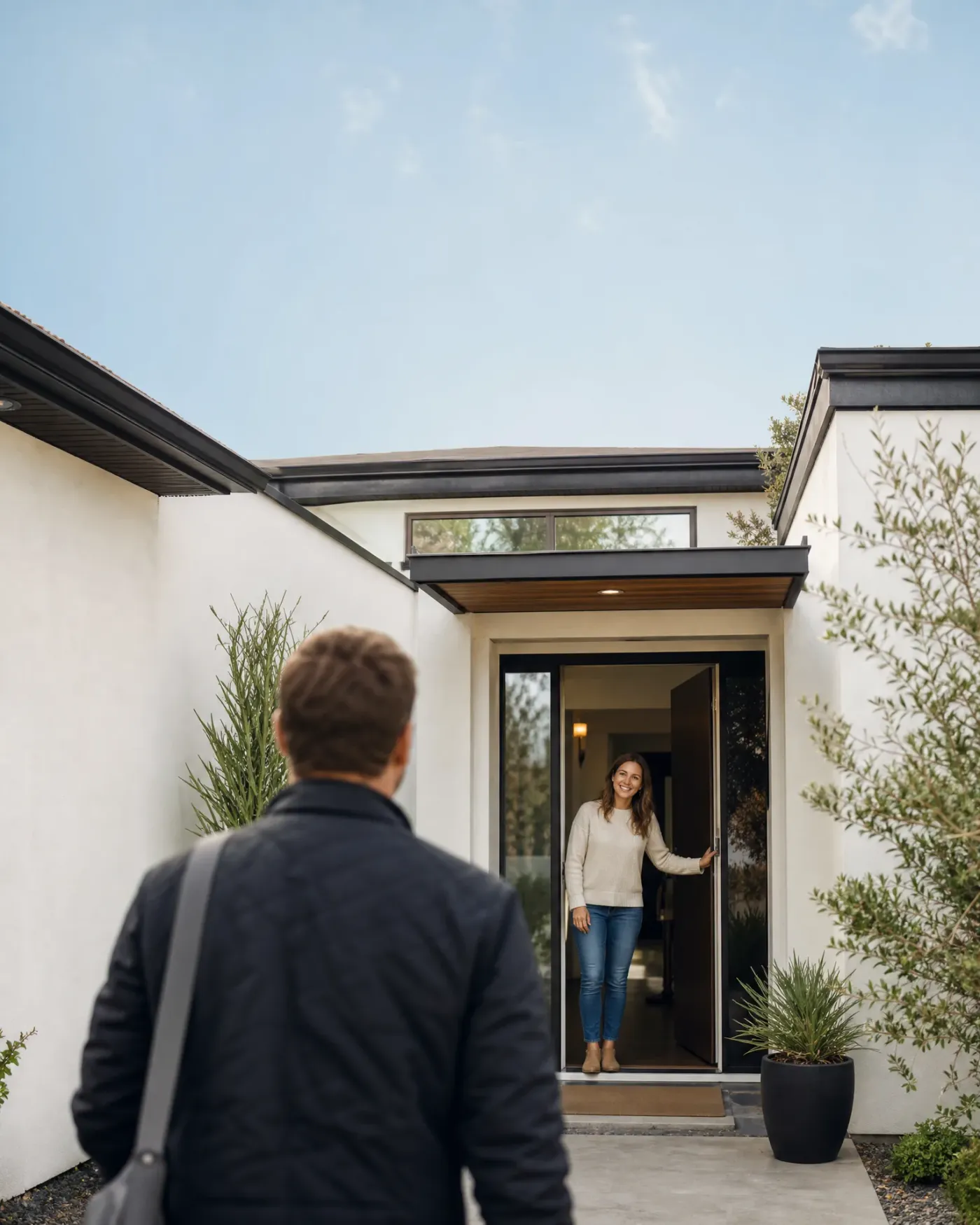
A woman in a cream sweater and jeans stands in the open doorway of a white stucco house, holding the dark door, while a man in a dark quilted jacket seen from behind walks toward the entry past potted plants.

A smell is reason enough to get it looked at

You don't need every sign to take this seriously. A sharp smell when the furnace kicks on, soot near the burner, a flame that leans instead of standing straight: any one of those is reason enough to have someone check it before you run the furnace again. Waiting for a second or third sign just means more nights of breathing whatever's getting into the air.

A technician who works on furnaces around Wisconsin all winter has pulled burners and checked heat exchangers plenty of times before, often on furnaces the same age as yours. A local match means one contractor calling you back, not a handful, and someone who already knows what a Wisconsin winter does to an aging heat exchanger before they ever get to your basement.

Interior corner with a beige sofa holding a dark green and a light cushion and a textured throw, a potted small-leaved tree beside a white-framed window, and a dark shallow bowl on a wooden coffee table in the foreground.
A dimly lit unfinished basement with concrete walls and floor, exposed floor joists, a small window at left, and a dark furnace with PVC venting and sheet metal ductwork at right.

Matched to your furnace job

Your request goes to one pro, not a list of companies.

Step 1 of 3: Equipment