Why your furnace is leaking water in Wisconsin

Step 1 of 3: Equipment

Water pooling near your furnace almost always means condensate that isn't draining the way it should. If you have a high-efficiency furnace, the kind most gas furnaces in Wisconsin are now, it produces condensation as a normal part of burning gas, and that water is supposed to flow out through a drain line into a floor drain or condensate pump. When that line clogs with sludge or algae, or the pump fails, the water backs up and finds its way out of the unit instead. A cracked drain tube or a condensate pump that's stopped kicking on will do the same thing. Less often, a clogged vent pipe forces exhaust gases to condense inside the furnace itself. Either way, this isn't something to leave alone. Water near a gas furnace can trip a safety switch and shut your heat down, and in a Wisconsin winter that's not something you want to find out about on a cold night.

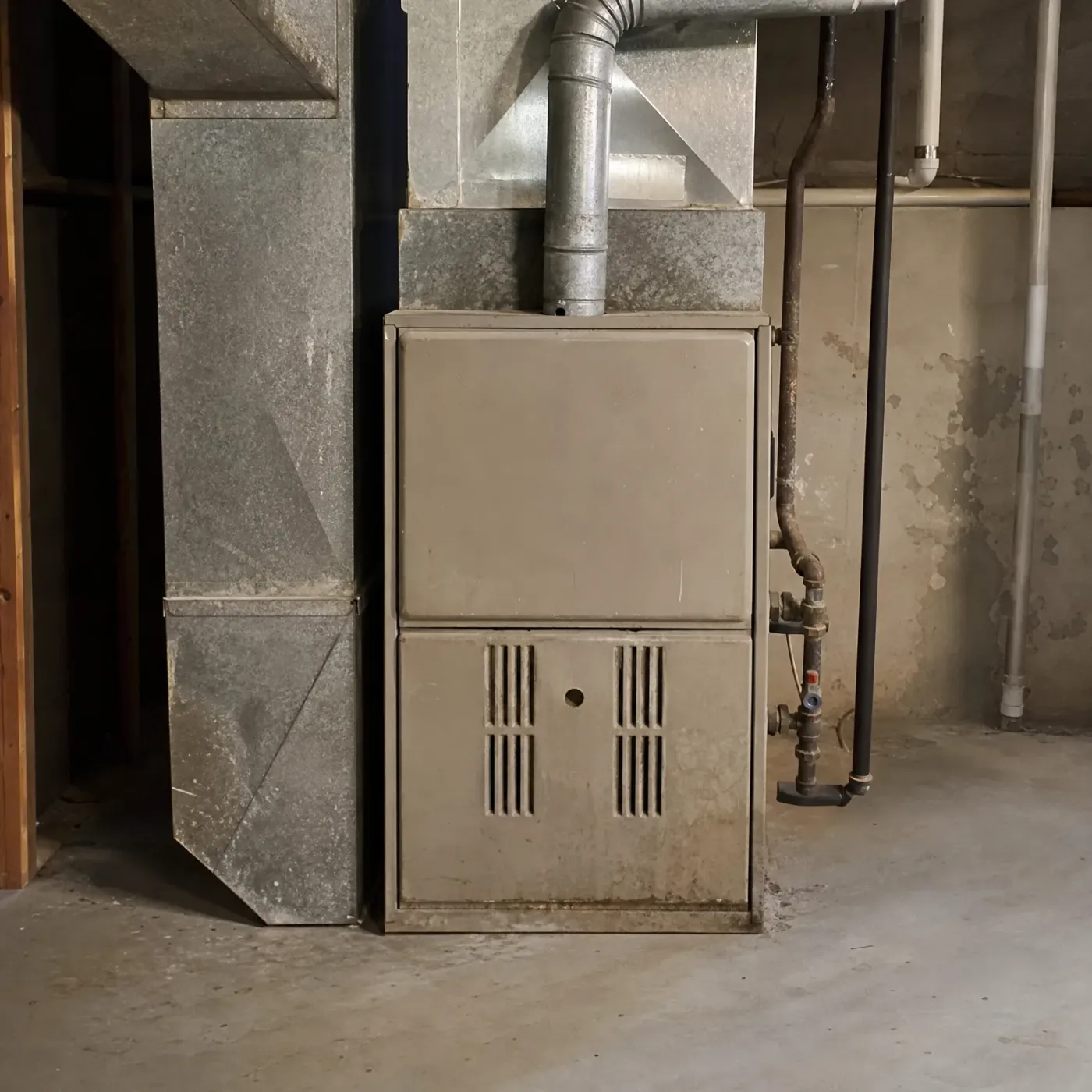
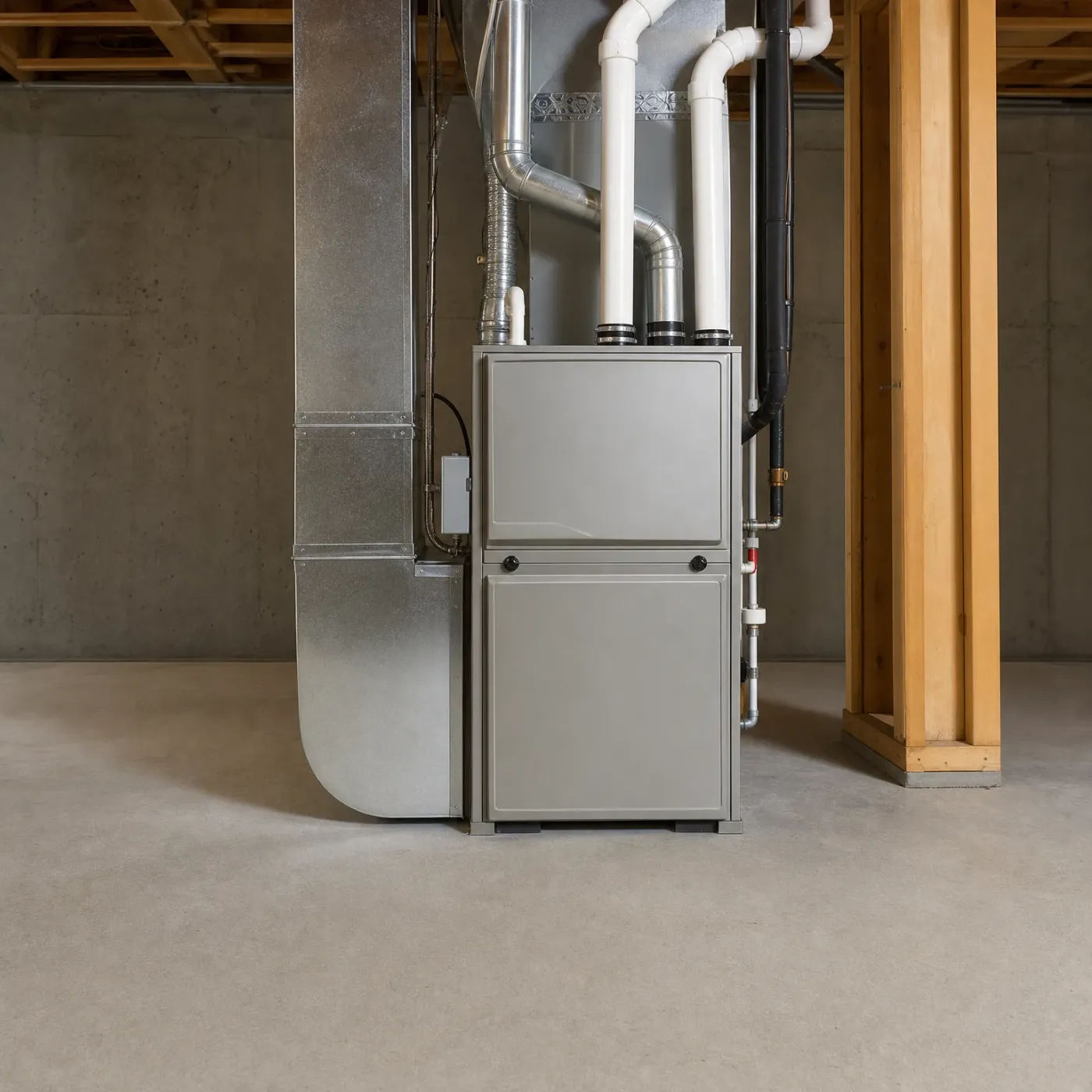
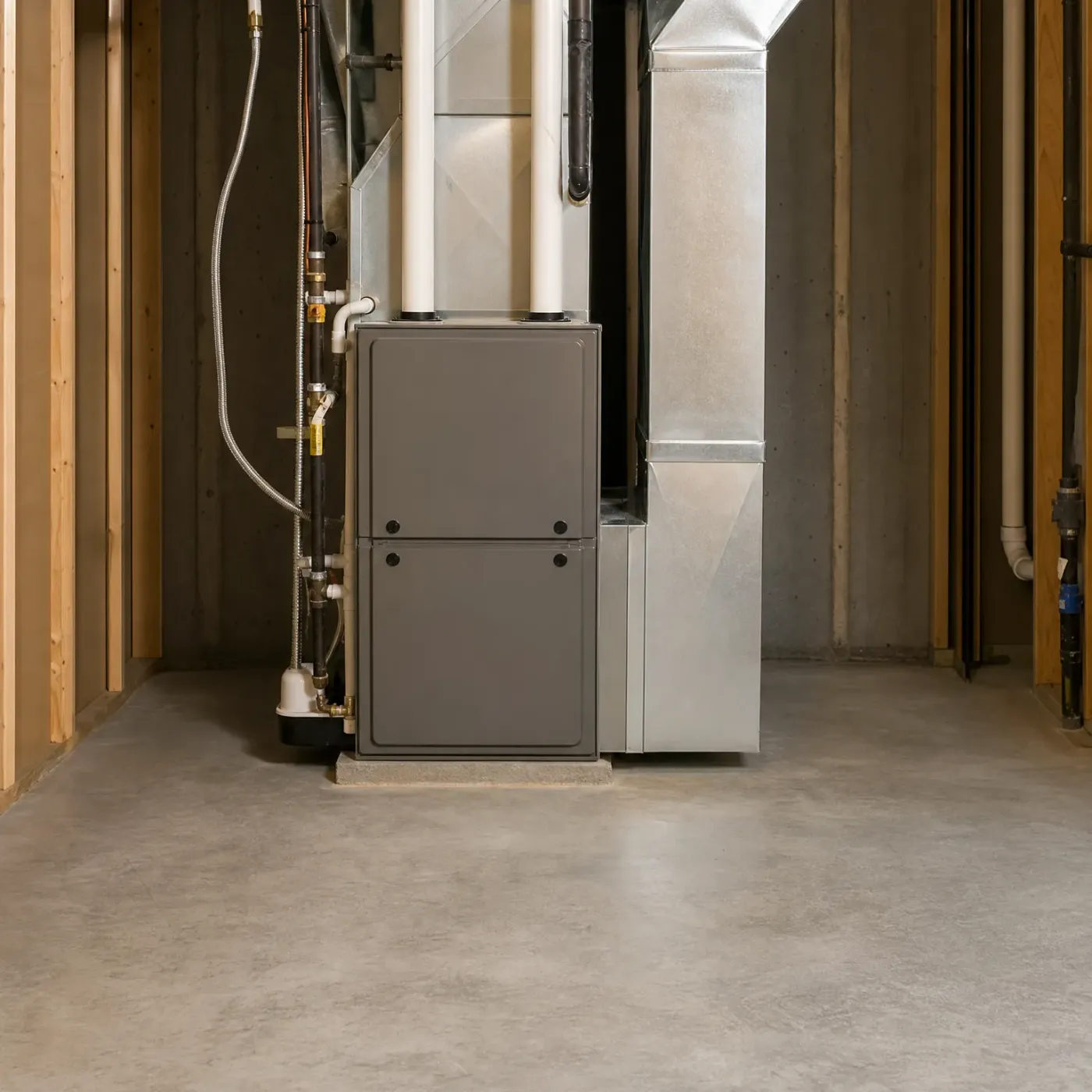
A gray high-efficiency furnace with white PVC vent pipes stands on a concrete pad in a basement, beside sheet-metal ductwork, copper piping and a poured concrete wall with wood framing at left.

The condensate line is doing its job

A high-efficiency furnace makes water every time it runs, and the PVC pipe carries it to a drain. When that line is clear, you won't see any water on the floor around the unit, even on the coldest nights of the year.

A beige gas furnace in a basement with a metal flue pipe, galvanized sheet-metal ductwork to its left, and gas and water pipes along the concrete wall to its right.

Water shows up when that path is blocked

A clogged condensate line, a cracked drain trap, or a failed condensate pump will back water up and send it onto the floor instead of down the drain. An older furnace with a rusted flue pipe can also leak at the seams where it vents.

A woman with dark hair in a bun wearing a cream knit sweater sits on a gray sofa in a bright living room, looking off to the side.
A woman wrapped in a knit blanket sits on a gray sofa in a living room, looking toward a bright window with houseplants and an armchair in the background.
A woman in a gray cowl-neck sweater sits on a light sofa with cushions, smiling and looking to the side, with a kitchen and window visible behind her.
A woman with dark hair in a bun, wearing a light linen shirt, sits on a sofa and looks to the side, with a window, houseplants and a kitchen with pendant lights blurred behind her.

Why the line clogs in winter

The condensate line carries slightly acidic water, and over a winter of steady runtime that water leaves behind a buildup inside the pipe. A furnace running most nights from November through March pushes a lot of condensate through a line that's often just half an inch wide. Algae and sediment narrow that opening further. Once it's blocked, the furnace either shuts itself down on a safety switch or the water backs up and finds the lowest point, which is usually the floor under or near the unit. A furnace that's twelve years old or more has had a lot of winters to build that buildup up.

The switch that's supposed to stop this

Most high-efficiency furnaces have a float switch sitting right on the condensate line or the drain pan underneath it. Its only job is to sense rising water and cut power to the furnace before it overflows onto your floor. When that switch is working, a clogged line shows up as a furnace that won't run at all, not a puddle. Water on the floor can mean the switch failed, or that whoever installed the furnace didn't put one in. Either way, a furnace leaking water while it still runs is telling you two things are wrong, not one.

Winter nights average 13°F statewide

At 13°F, your furnace is firing often and for long stretches to keep the house warm. That steady runtime means more condensate moving through the line each night, so a clog that would barely matter in a mild week shows up fast as water on the floor.

NOAA nClimDiv 1991-2020 county normals weighted by homes

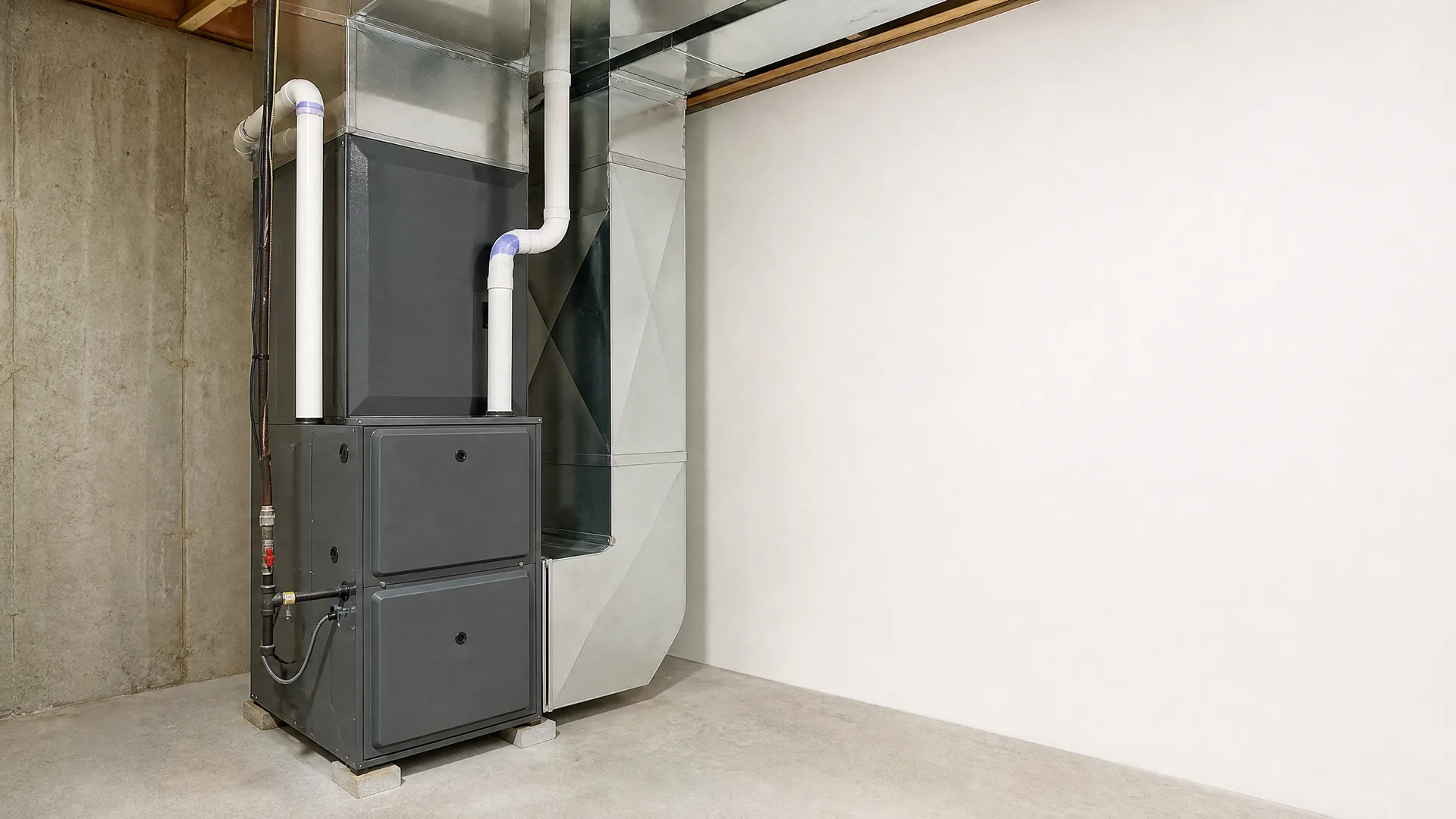
A dark gray high-efficiency furnace with white PVC vent pipes stands against a concrete basement wall, connected to sheet-metal ductwork running along the ceiling joists.

What a clogged line puts at risk

Furnaces have a float switch that shuts the burner off when the condensate pan fills past a certain point. That switch is there to stop water from overflowing onto your floor. When it works, you lose heat instead of getting a flooded utility room. When it's stuck or missing, the water has nowhere to go but out, and you can end up with a soaked carpet or warped flooring near the unit before anyone notices.

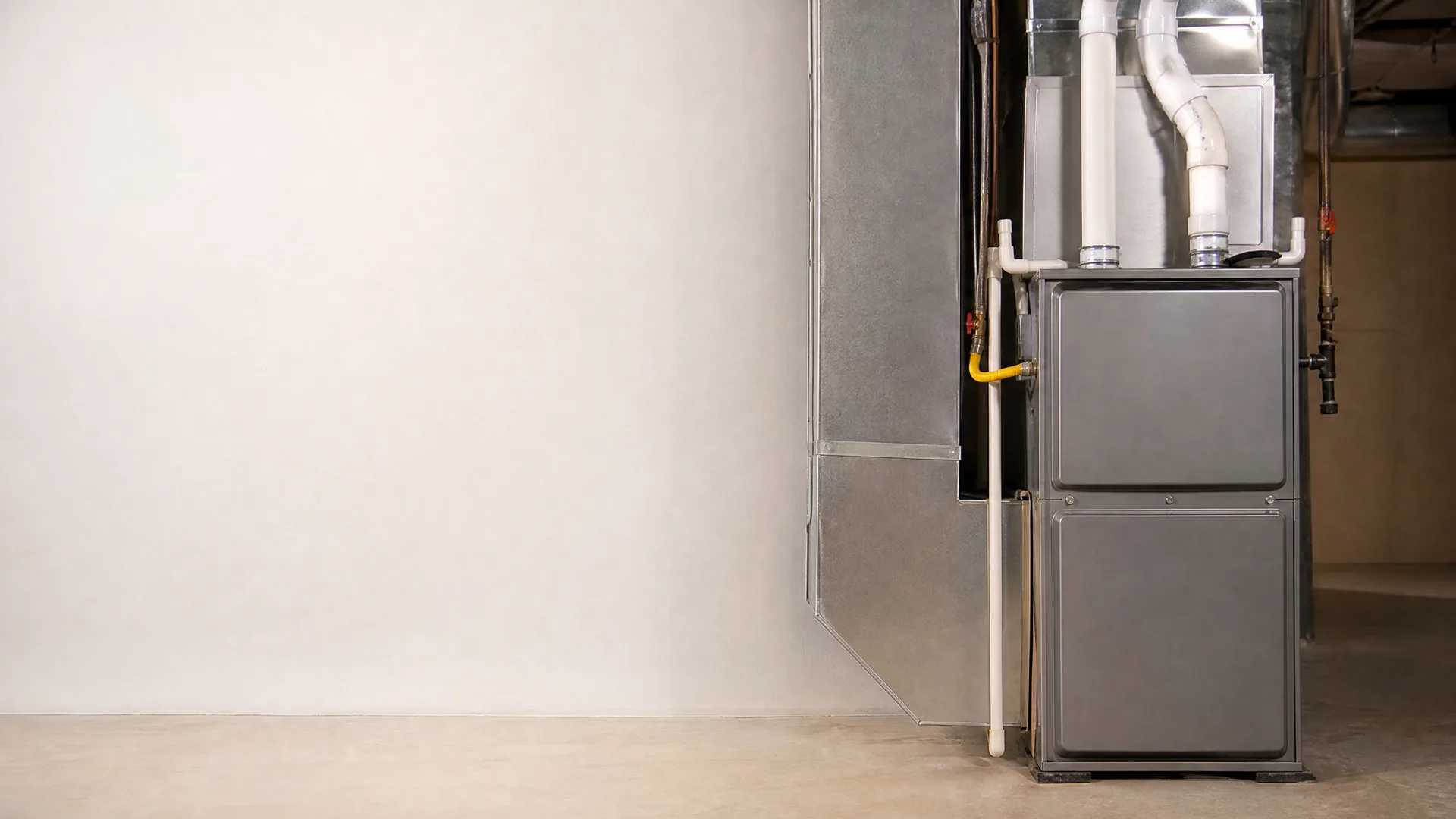
A gray high-efficiency furnace with white PVC vent pipes, a yellow gas line and metal ductwork stands against a plain light wall in a basement with a concrete floor.

What you'll notice first

Most households catch this because the furnace stops running, not because they spotted the water first. The house starts cooling down on a night when it's well below freezing outside, and whoever checks the furnace finds it dead and a puddle underneath. By the time you see standing water, the line has likely been partially blocked for days, slowly losing its ability to drain before it backed up completely.

A woman stands in the open front doorway of a single-story house with stone and wood siding while a man in a dark polo shirt and cap walks toward it along a concrete path.

What happens inside the trap

The condensate line doesn't run straight from the furnace to the drain. It passes through a small trap, a bend in the pipe that holds a bit of water at all times. That trapped water blocks exhaust gas from backing up through the drain line and into your house. It's not a filter or a sensor, just a bend shaped to hold water.

That bend is also the first place sediment settles when the line starts to clog, since the water sits still there instead of flowing through. A contractor who works on furnaces in Wisconsin all winter checks the trap first for that reason, before looking at anything else downstream. If you get matched with someone local, that's likely where they start, because they've opened enough of these traps in January to know what usually sits at the bottom.

A gray upholstered sofa with a beige cushion and knit blanket beside a curtained window, with a white mug and a book on a dark wooden table in the foreground and a lit lamp in the background.
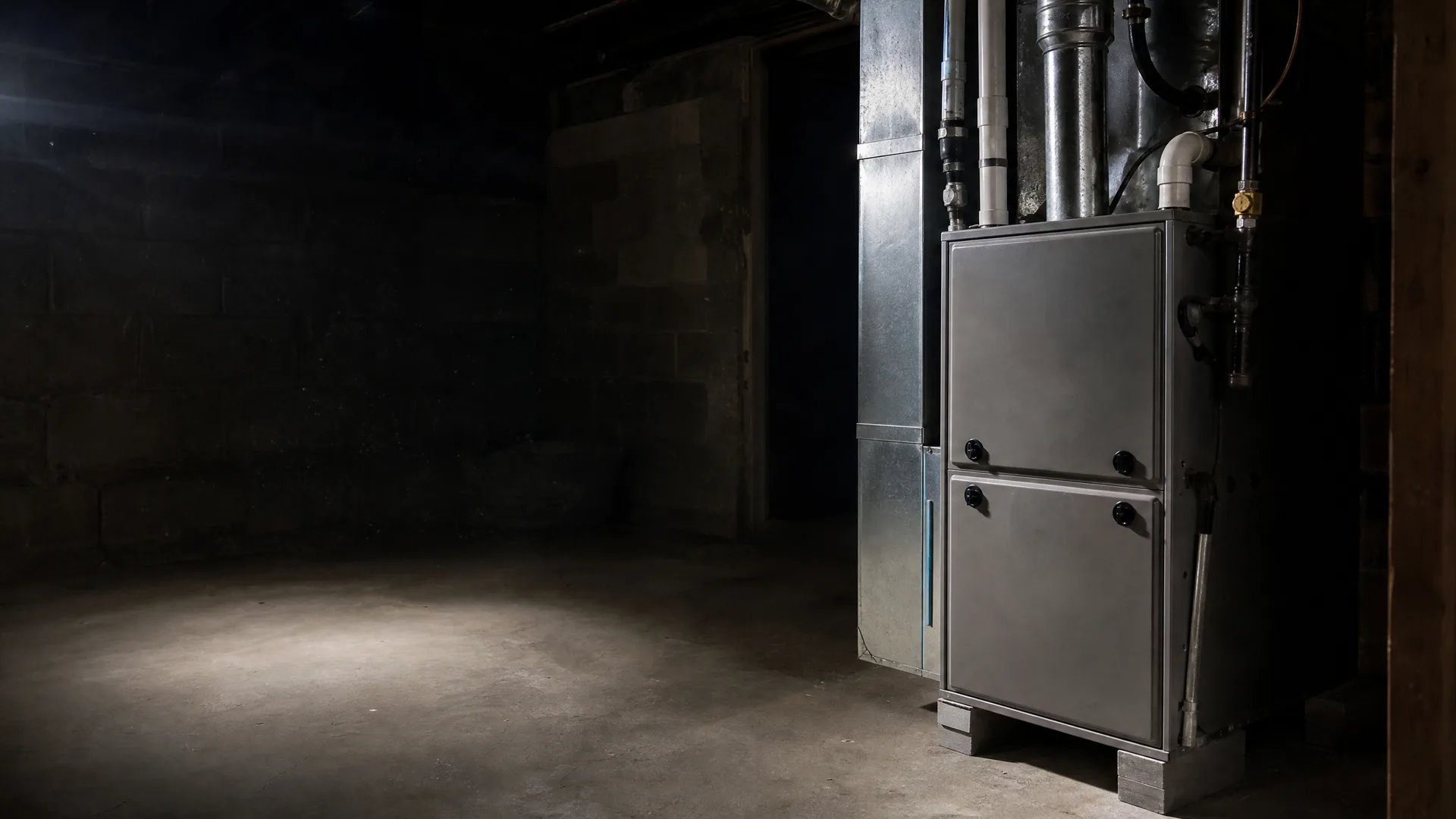
A gray furnace with ductwork and pipes stands against the wall of a dim concrete-block basement with a bare concrete floor lit by a single light.

You go down to check the thermostat setting and the basement is cold, colder than it should be. The furnace sits dark. No hum, no blower, nothing. A thin haze of dust hangs in the air near the cabinet, stirred up from somewhere. On the concrete by the unit there's a thin sheet of water, spreading toward the drain in the floor. It's November, and outside it's already down in the thirties. You crouch down and touch the floor to make sure you're not imagining it. You're not. Somewhere a switch did exactly what it was built to do, and now the house is going to get colder until someone who knows this furnace gets a look at it.

Get the right pro for your furnace

Your request goes to one pro, not a list of companies.

It costs nothing to send, and you don't have to hire anyone.

A frozen intake or exhaust pipe can back up condensate just like a clogged trap does, and it only happens when the outside pipe runs through an exterior wall and sits exposed to the cold.

A clogged trap or drain line happens regardless of how the furnace is vented, and it's the more common reason water shows up on the floor through a Wisconsin winter.

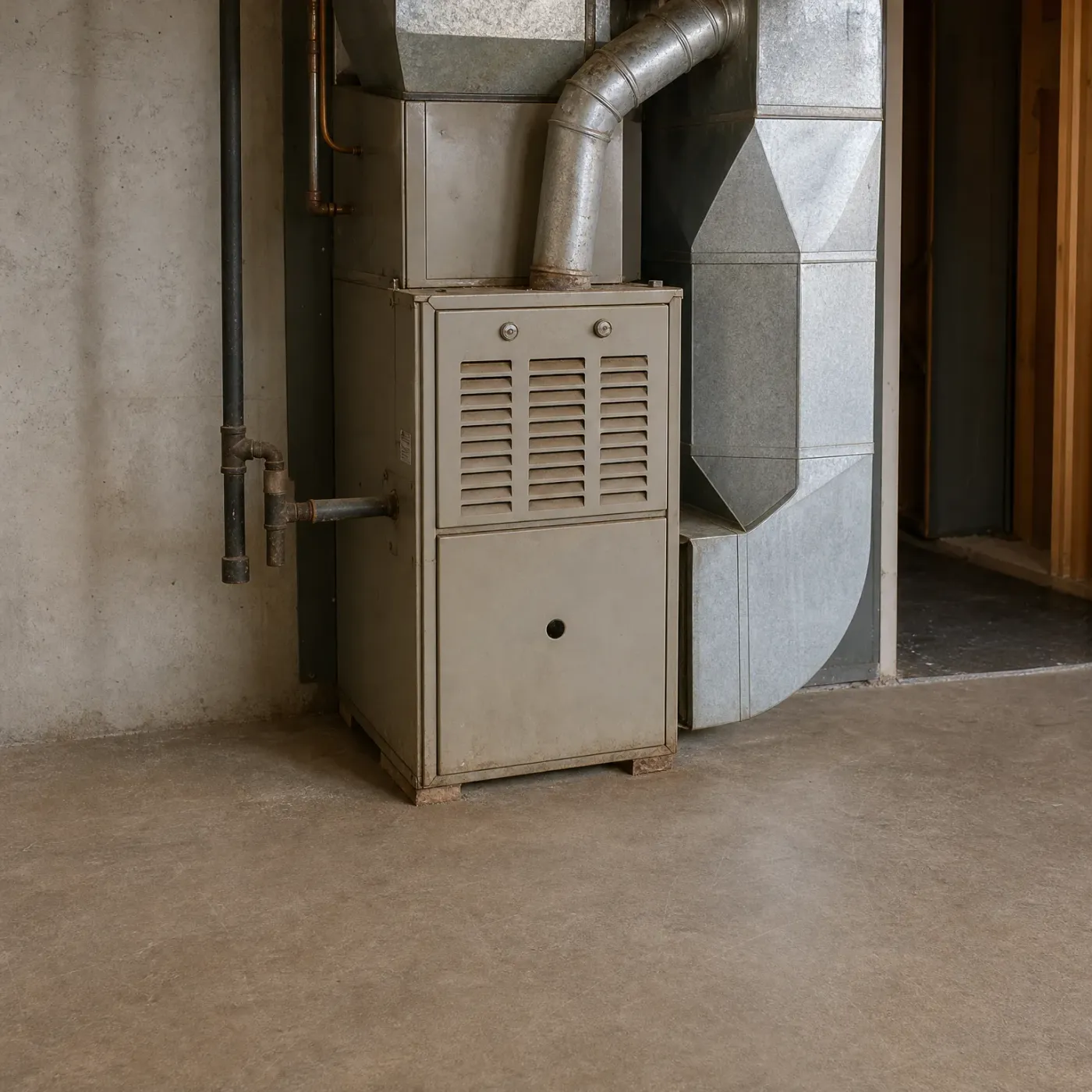
A beige metal furnace with a louvered front panel stands on a concrete floor against a concrete wall, connected to galvanized sheet-metal ductwork and a metal pipe.
Before you get your furnace repair
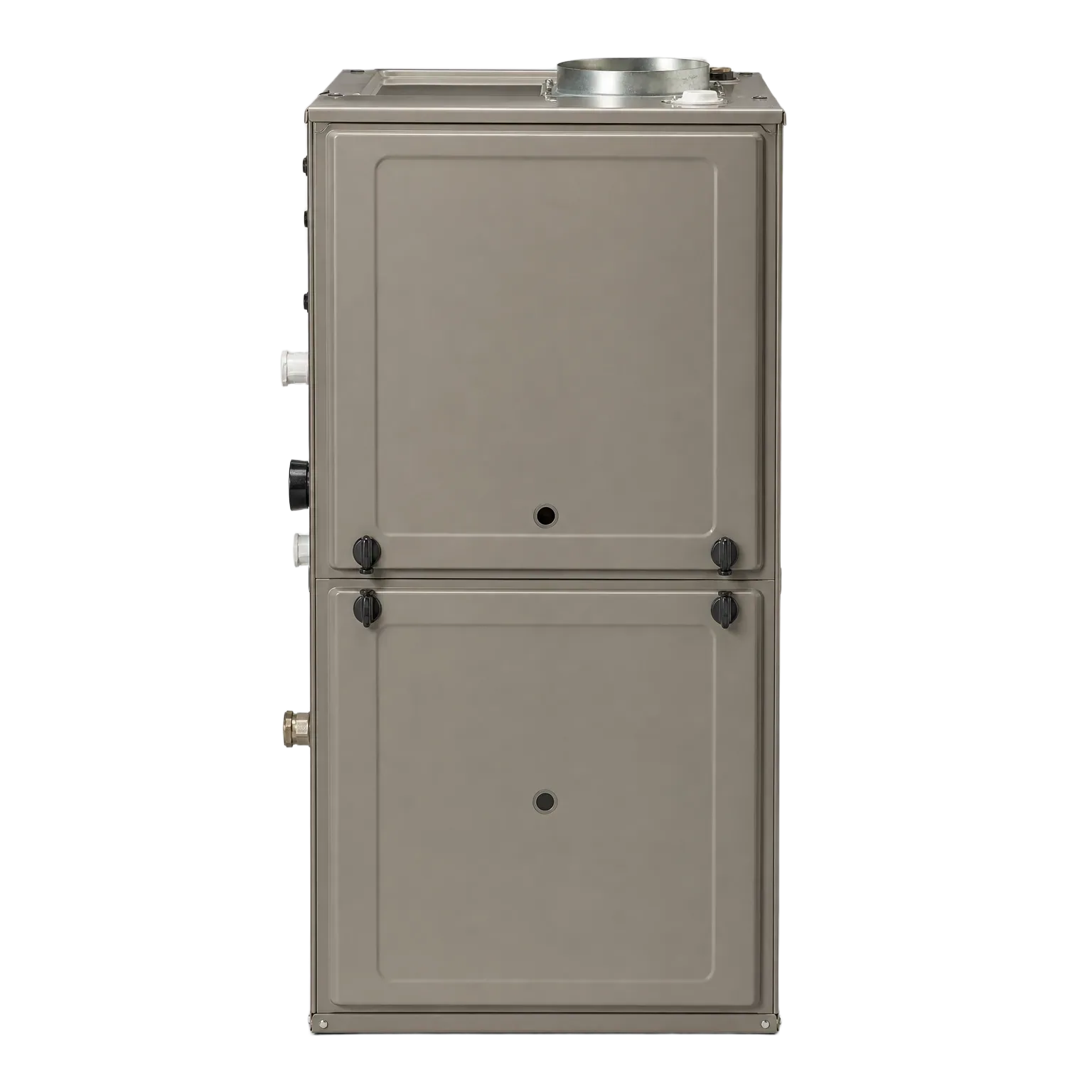
A gray high-efficiency furnace stands on a concrete basement floor beside sheet-metal ductwork, with white PVC vent pipes and a black flexible line running up to exposed wood floor joists, next to a wood-framed post against a concrete wall.
After you get your furnace repair
  1. Gas burns and the heat exchanger pulls out the extra moisture as condensate.

  2. Condensate drips down into the collector box at the bottom of the furnace.

  3. A drain line carries that water from the collector box toward the trap.

  4. The trap holds standing water that blocks exhaust gas from pushing back up the line.

Clear It Yourself or Call It In

Clear it yourself

  • A wet-dry vacuum at the outside end of the line can pull a simple clog free if the line is accessible and not frozen.
  • Pouring a cup of hot water mixed with vinegar down the line once a month during winter keeps some buildup from forming in the first place.
  • The float switch resets on its own once the pan drains, so clearing the clog may bring the furnace back without any other work.
  • You won't know if the clog is in the trap, the line, or further down near the drain until you've already opened something up.
  • If the exterior pipe is frozen shut, nothing you pour down the inside line will reach it, and the water keeps backing up.

Have it diagnosed

  • A contractor who services furnaces all winter in Wisconsin knows whether a given clog, freeze, or float switch failure is the common one for your furnace's age and setup.
  • Checking the heat exchanger and the trap for cracks or buildup catches a problem a vacuum and some vinegar can't reach.
  • One contractor means one visit instead of several companies calling about the same job.
  • If the float switch itself failed rather than just doing its job, that's a part to replace, not clear.
  • A local contractor can tell you if your exterior pipe needs insulating or rerouting so the same freeze doesn't happen again next cold snap.
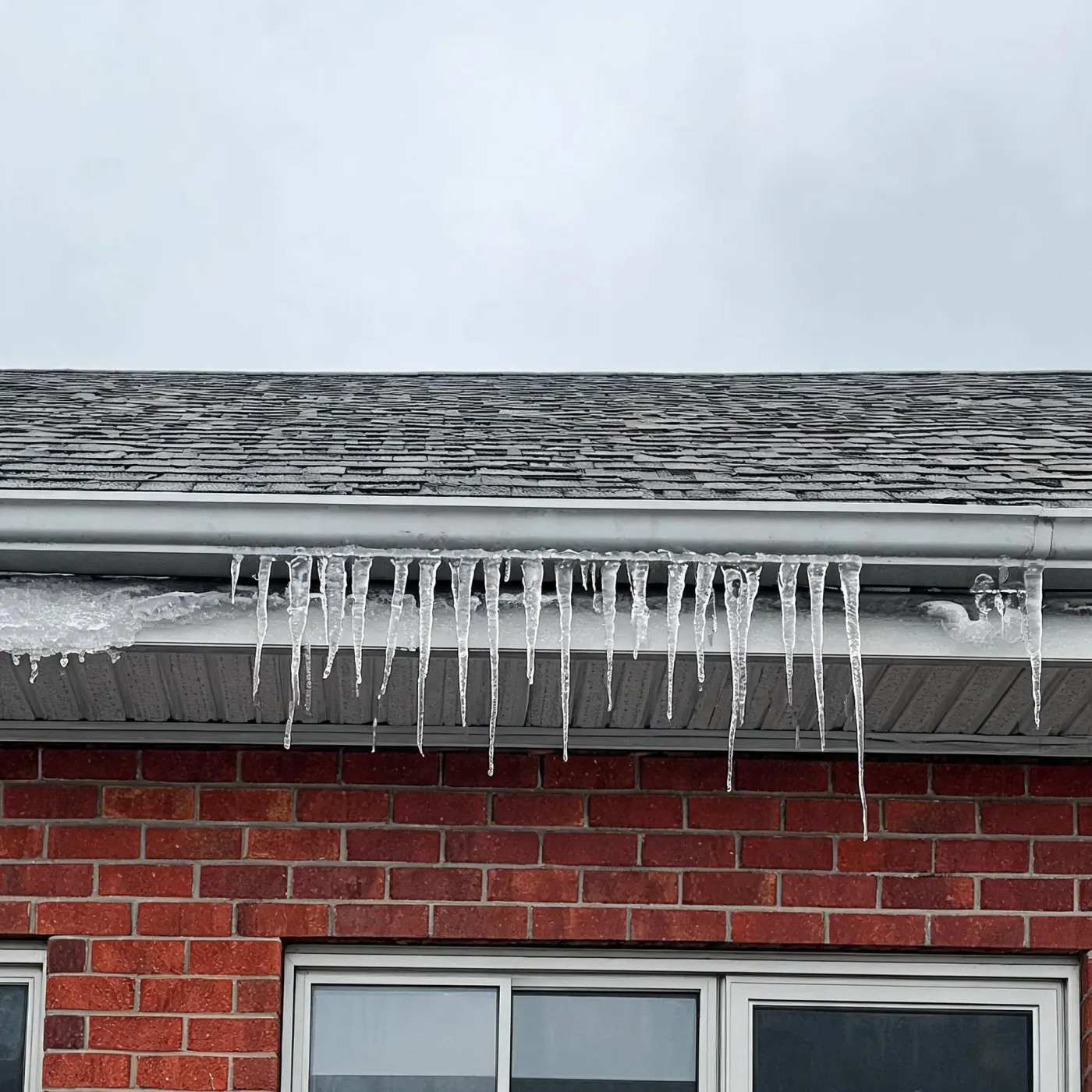
Icicles hanging from a white gutter along the edge of an asphalt-shingle roof on a red brick house, with a window below and overcast sky above.

Winter nights statewide average 13°F, according to NOAA climate data for Wisconsin. At that temperature your furnace isn't cycling on and off, it's running long stretches just to hold the house steady. Each one of those stretches sends more condensate down the line to the trap and the drain. A line that's narrowing from buildup has to carry more water on a night like that than it does in October, and that's when you'll see it stop keeping up. Water on the floor by the furnace, or the furnace shutting off and the house going cold, tends to show up on the coldest nights for exactly this reason.

NOAA nClimDiv 1991-2020 county normals weighted by homes

What are you seeing near your furnace right now

A puddle on the concrete by the cabinet, maybe just a damp ring that keeps coming back no matter how many times you wipe it up. Sometimes it's a drip you can hear, water hitting the floor every few seconds while the furnace runs. You might notice a musty smell building in the area if the water's been sitting a while, or a rust-colored stain spreading out from the base of the unit. If the furnace has shut itself off and won't restart, that's the float switch doing its job, and it means the water problem has been going on long enough to fill the pan. Left alone, standing water near the furnace can damage the flooring underneath it and invite mold in a space your family spends time in.

An older woman with short gray hair in a cream cable-knit turtleneck sweater smiles while looking to the side in a wooden kitchen, with a round loaf of bread on a board in the foreground and a lit candle by a dark window.
A woman with dark hair in a bun sits on a sofa with a child resting his head on her shoulder, both wrapped in a cream knit blanket, with a lit lamp and bookshelf in the dim background.

Where the water is coming from

  • Water near your furnace almost always traces back to the condensate line, the trap, or the float switch, not the furnace itself failing outright.
  • A clogged line or frozen exhaust pipe shows up fastest on the coldest nights, when the furnace runs longest to keep up.
  • The float switch shutting the burner off is doing what it's supposed to do, even though it leaves you without heat.
  • A local contractor who works on furnaces all winter has usually seen the same clog, trap, or frozen pipe cause the leak before.
  • Matching you with one licensed contractor near you means someone who already knows what tends to fail in Wisconsin winters looks at your furnace, not a string of callers you have to sort through.
  • Knowing which of these three spots is wet tells you most of what you need to know before anyone opens up the furnace.

Water by your furnace has a small set of likely sources: the condensate line, the trap, the float switch, or a frozen intake or exhaust pipe. It's rarely the furnace breaking down on its own. Cold nights make the problem visible sooner, because a furnace running long stretches to hold the house at temperature pushes more condensate through the line, and a line that's slow to drain or already narrowing with buildup backs up faster under that load. The float switch doing its job, shutting off the burner before water overflows, is the system working as designed, even though what you feel is a cold house and a furnace that won't fire.

None of this takes special tools to narrow down. Where the water shows up, right at the trap, along the line, or pooling under the switch, points to which part is behind it, and that's worth noting before anyone looks at the furnace.

What helps most after that is who shows up to look. A contractor who works on furnaces through a Wisconsin winter has run into this same clog, the same frozen pipe, the same worn trap, more than once. You're matched with one licensed contractor local to you, not a handful of companies competing for the job, so the person who calls you back already has a sense of what tends to fail in weather like this and what to check first. That's the difference between someone guessing at your furnace and someone who's seen this exact leak before.

Sunlight falls across a beige upholstered sofa with a textured woven cushion and a chunky knit throw, beside a dark wood cabinet holding a ceramic vase with green leafy branches, near a white-framed window.
A sunlit corner of a room with a wooden side table holding a ceramic vase of green foliage and a wooden bowl, beside a light upholstered sofa with a knit throw and rust-colored pillow, with window shadows cast on a beige wall.
A sunlit room corner with beige walls, a white-framed window with sheer cream curtain, wood floor with a light rug, and a woven basket holding a knit blanket.
A beige ceramic vase holding a leafy green branch sits on a wooden cabinet in a corner, with sunlight through a sheer curtain casting leaf shadows on the wall.
A grey upholstered sofa with a rust-orange velvet cushion and a textured throw sits beside a window with linen curtains, next to a wooden side table holding a pale ceramic vase of olive branches.

A pro who works on furnaces

The pro who reaches out is licensed in Wisconsin.

Match me with a pro

No charge to send it. You decide if you hire them.