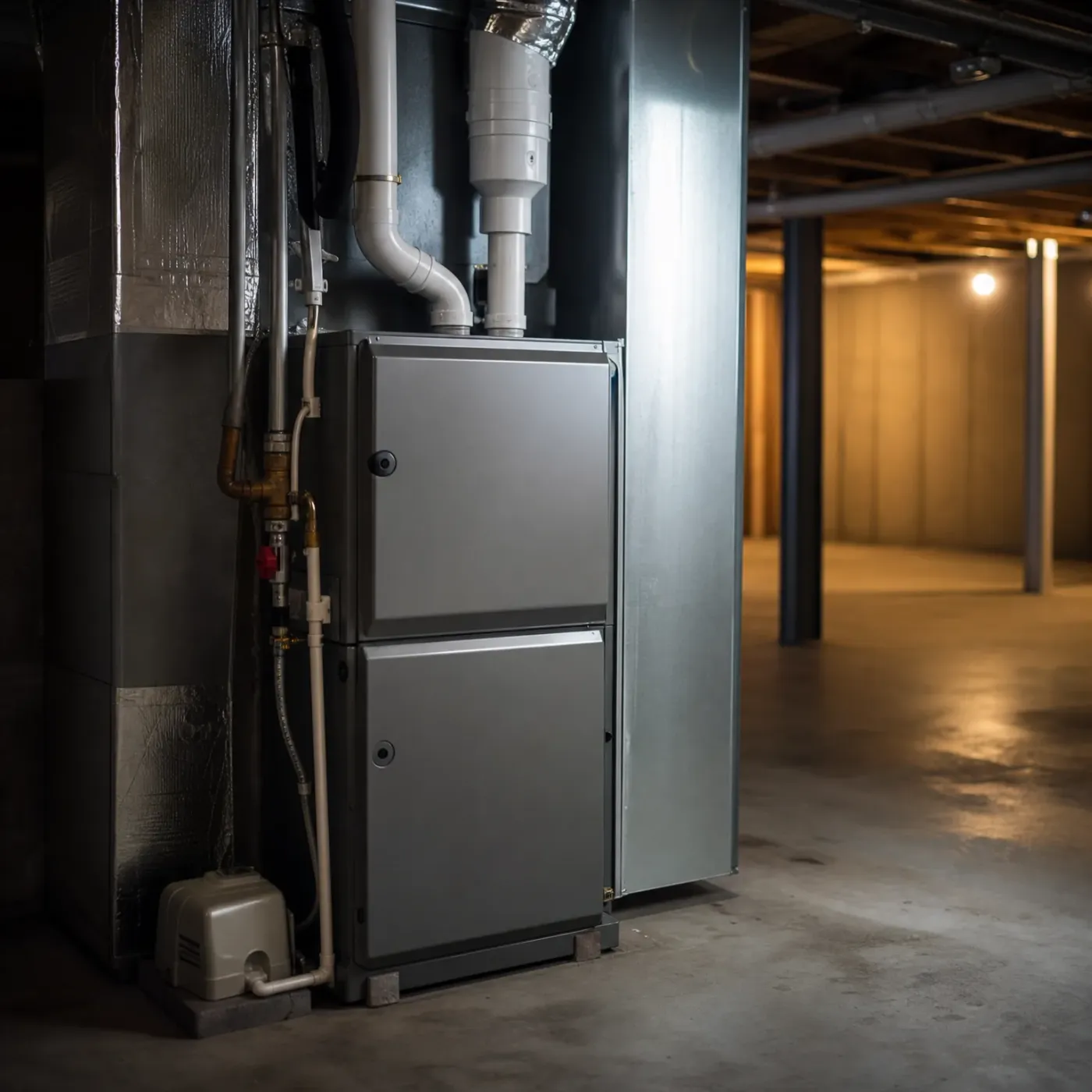





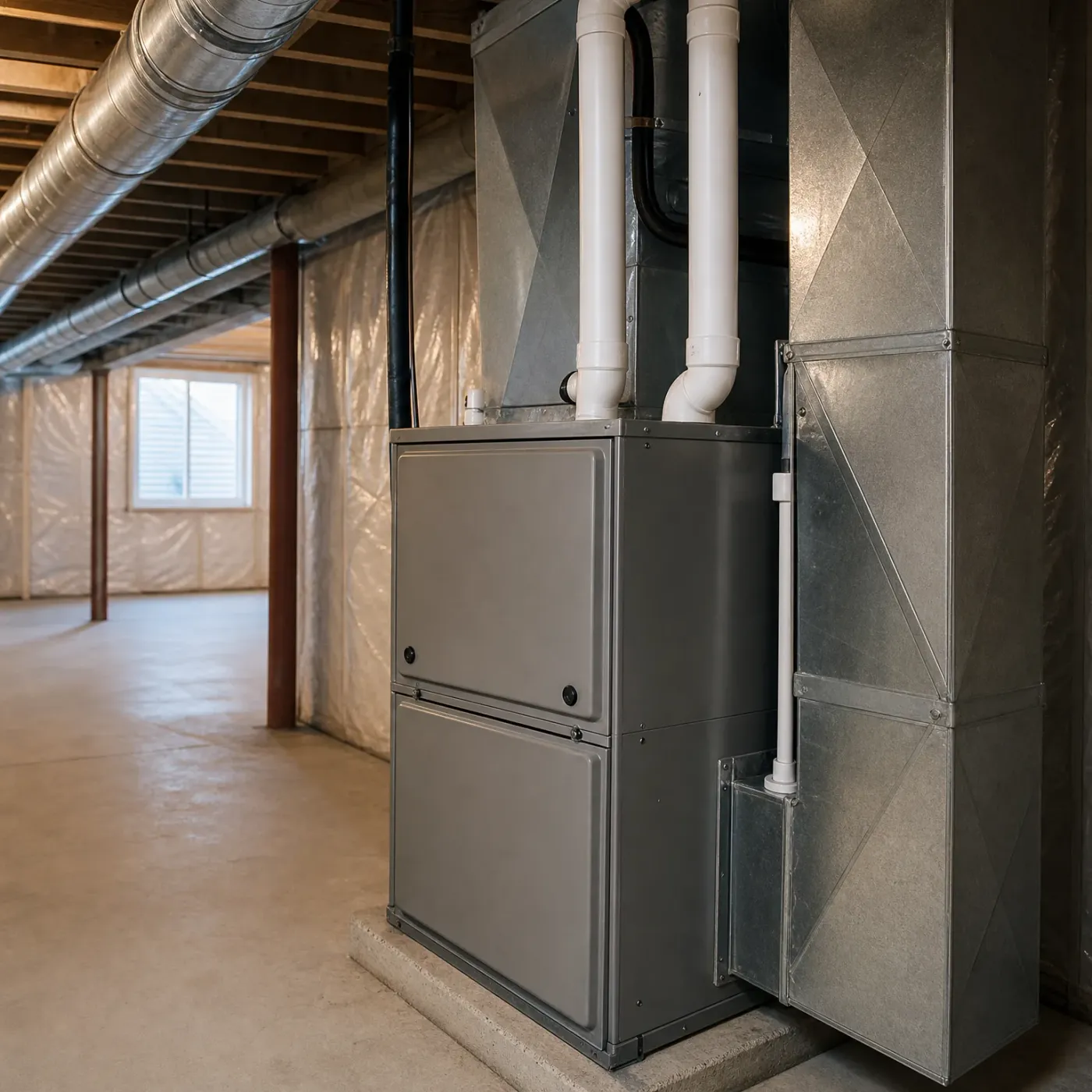

A gray high-efficiency furnace with PVC venting, copper and plastic piping, and a condensate pump sits beside sheet-metal ductwork in a concrete-floored basement.

Hand off the furnace problem

Why your furnace keeps turning on and off in Wisconsin

A furnace that clicks on, runs a few minutes, then shuts off again usually has a reason behind it, something in the cycle not finishing the way it should. This page walks through what causes that in Wisconsin winters. Skip the search for who to call: send the form and a contractor takes it from there.

Hand off the search

A furnace that keeps turning on and off, cycling every few minutes instead of running a normal stretch, is almost always shutting itself down early on purpose. That's the limit switch or the flame sensor telling the system something is wrong, and the furnace stopping rather than risk overheating or burning gas it can't vent right. A dirty flame sensor is one of the most common causes. So is a clogged filter that's choking airflow until the heat exchanger overheats and trips the limit switch. A furnace running flat out through a Wisconsin winter puts more hours and more strain on these parts than it would in a milder climate, so the parts that cause short cycling wear into trouble faster here. Left alone, short cycling means your house never quite gets warm, your furnace works harder for less heat, and the part causing it tends to get worse, not better, until something fails outright in the middle of a cold stretch.

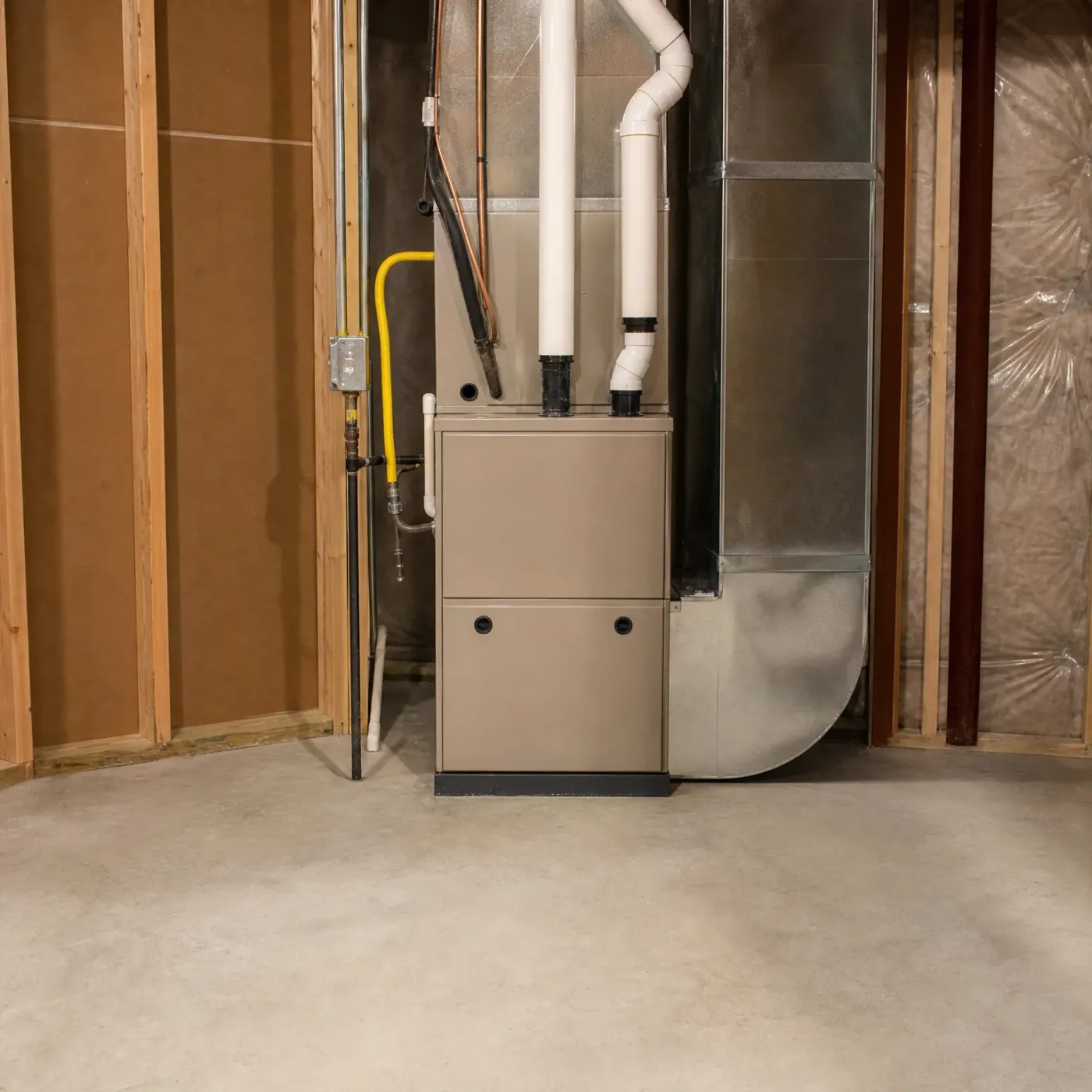
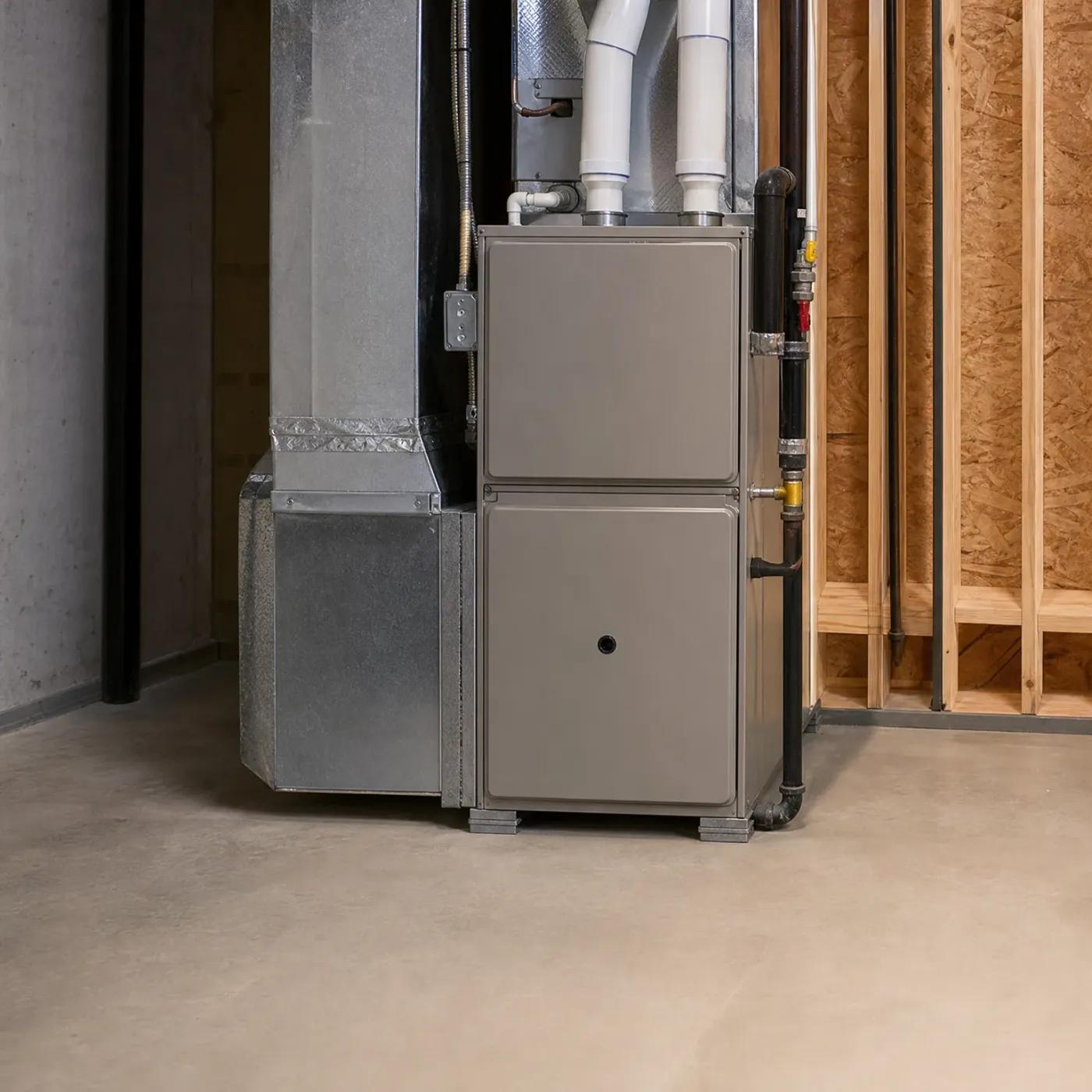
A beige high-efficiency furnace in an unfinished basement, with white PVC vent pipes, a yellow gas line, metal ductwork, and exposed wood framing on a concrete floor.
A furnace like this is drawing air through a clean filter and venting through the PVC pipe without trouble, so it runs its full cycle and shuts off only when the house is warm.
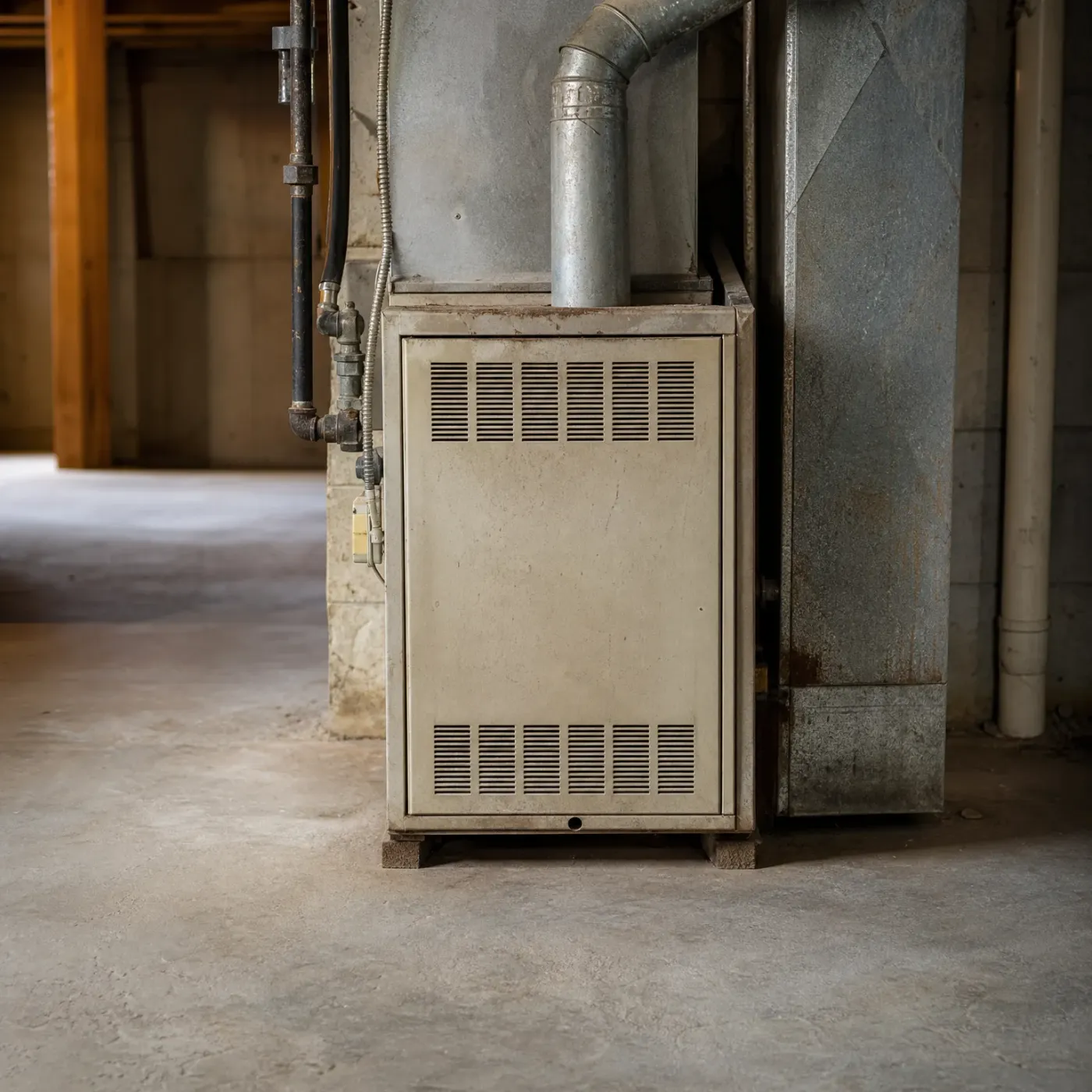
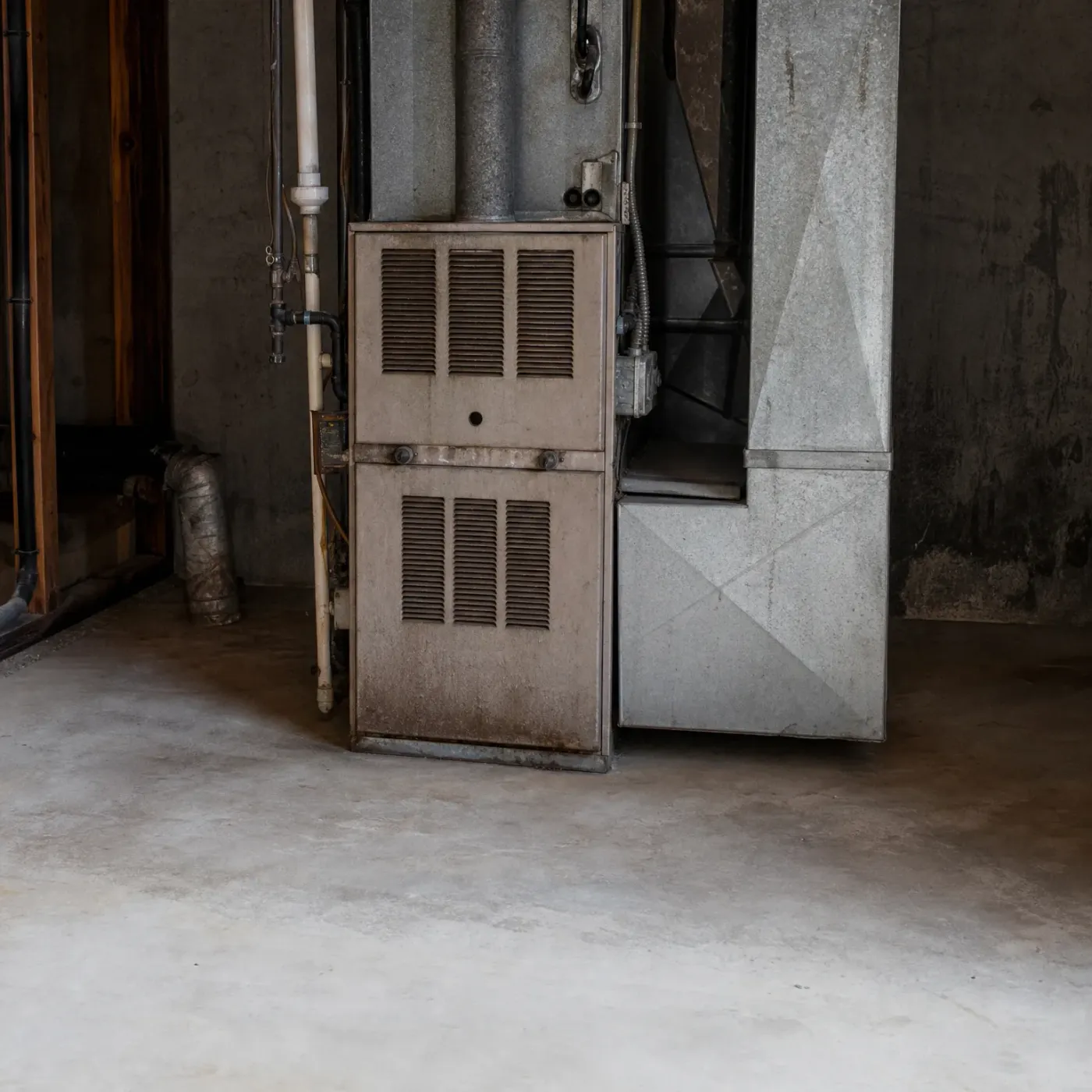
An older beige furnace with two louvered vent panels stands on a concrete basement floor, connected to galvanized ductwork and a metal flue pipe, with gas piping and flexible conduit on the wall behind.
A furnace like this, older and running on iron gas pipe, is more likely to short cycle as a cracked heat exchanger or a weak flame sensor forces it to shut down early.
A smiling man in a navy long-sleeve shirt sits at a wooden table in a kitchen and dining area, with a ceramic mug, a potted plant, and a sliding glass door behind him.
A smiling bearded man in a green henley shirt stands at a kitchen island with a gray mug, looking off to the side, with a dining area and shelves blurred behind him.
A smiling bearded man in a navy sweater sits at a white kitchen island with a ceramic mug, with open shelves, potted plants and a range hood behind him.
A smiling man in a dark olive long-sleeve shirt sits in a kitchen beside a counter with a dark mug, with a dining table, sideboard and hallway visible in the blurred background.
A closed silver laptop and a glazed ceramic mug on a wooden table, with a blurred kitchen counter, potted plant, cutting board and window in the background.

A furnace short-cycling in January is a bigger problem than one in October

In October you might not notice. The house holds heat, outside temperatures aren't brutal, and a furnace that cycles every few minutes still keeps up. By January, with wind chill outside and the thermostat set against it, that same short cycling means the house never fully warms. You'll feel it as rooms that stay cool near the windows, a furnace that sounds like it's always starting up, and a gas furnace working harder for less heat delivered. On electric backup or electric resistance strips kicking in to compensate, that shows up on the bill too, and power here isn't cheap.

The other risk is wear. Every start draws more from the igniter and the blower motor than a steady run does. A furnace cycling on and off all day is starting up many more times than one that runs its full length and shuts off clean, and that adds up over a Wisconsin winter. Catching it now, instead of running it through to February, is the difference between a repair and a breakdown at the worst time to be without heat. Send the details once and skip calling around to find someone who can look at it.

Interior corner of a dining room with a round wooden table, a ceramic vase holding olive branches, a dark spindle-back chair near a curtained window, and a sideboard with a lamp against beige walls.
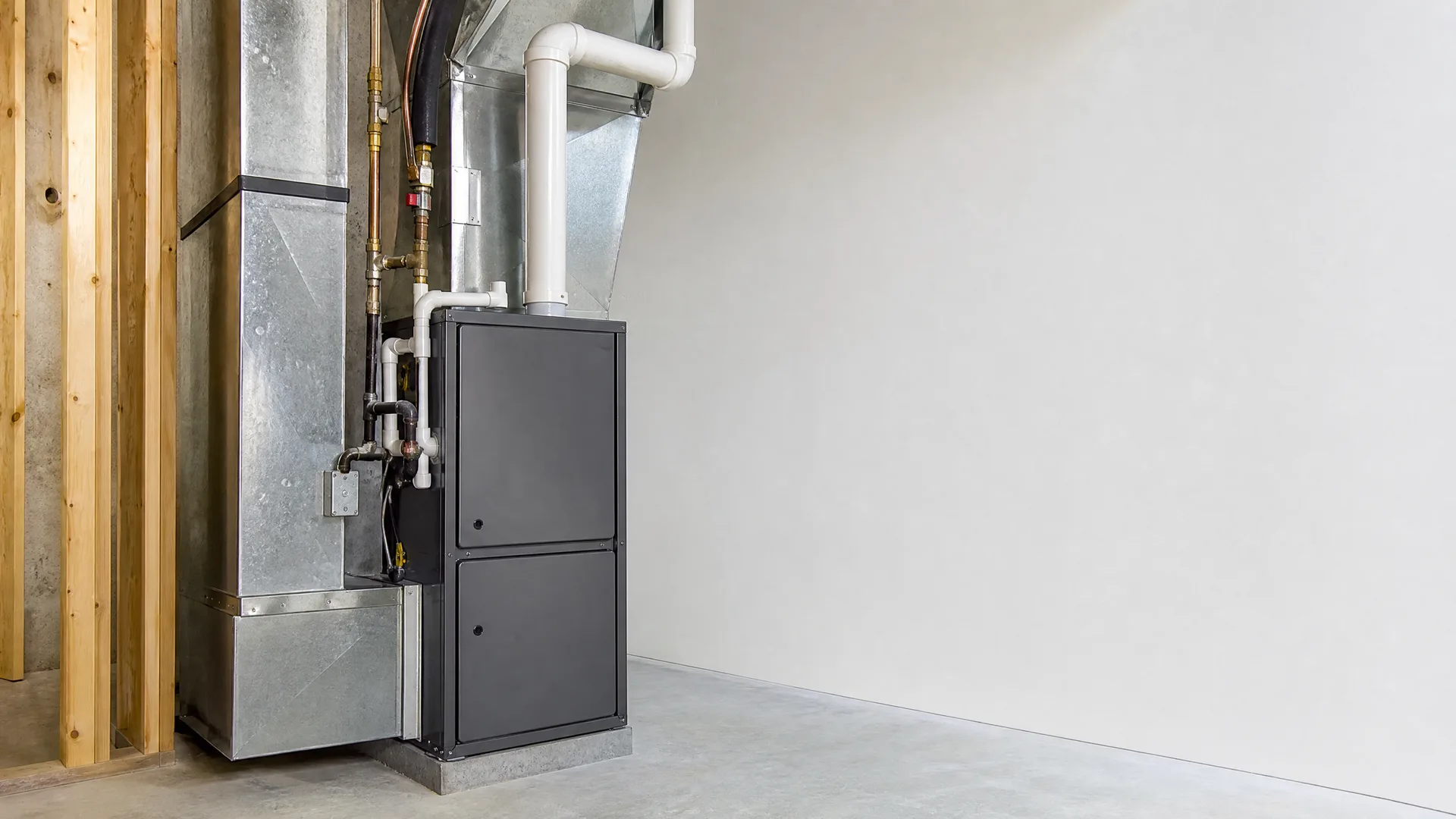
A dark gray furnace connected to galvanized sheet-metal ductwork, white PVC vent pipes and copper piping, standing against a plain light wall in a room with a bare concrete floor and exposed wood framing at left.

What the limit switch is doing

The limit switch sits near the heat exchanger and reads its temperature. When the exchanger gets hotter than it should, the switch cuts power to the gas valve and shuts the burners off, even though the thermostat is still calling for heat. The blower often keeps running to pull that heat out of the cabinet. A furnace with restricted airflow, from a clogged filter or a duct problem, heats up faster than it can shed that heat, and the limit switch trips again and again. That's one way a furnace ends up cycling every few minutes instead of running a normal stretch.

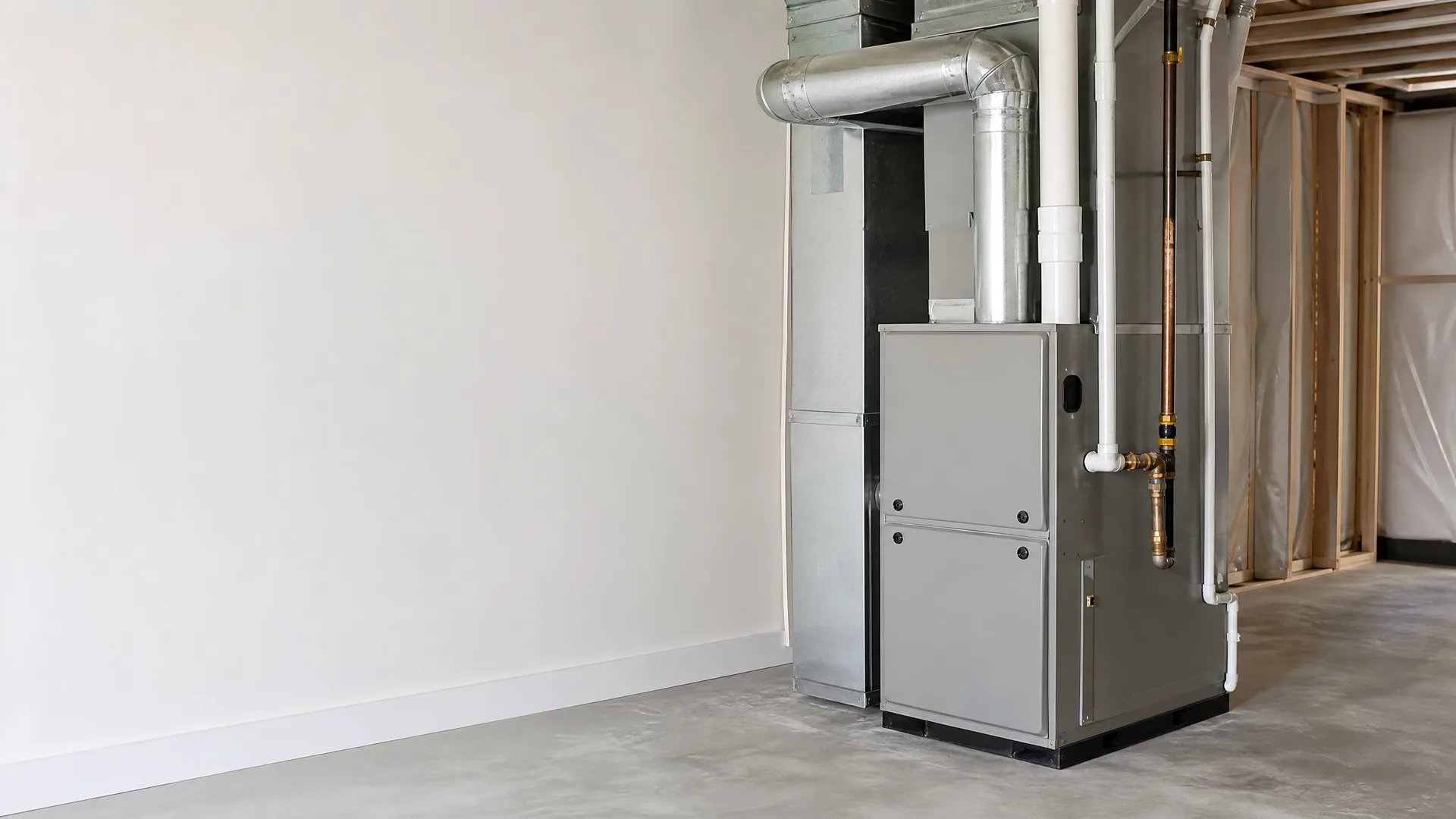
A gray high-efficiency furnace with sheet-metal ductwork, white PVC vent pipes and copper piping stands against a wall in an unfinished basement with a concrete floor and insulated wood stud framing at right.

What the flame sensor is doing

The flame sensor is a thin metal rod sitting in the burner flame. It proves to the control board that gas is actually burning, not just flowing. If the rod builds up a coating, a thin layer that forms over time, it can't read the flame reliably, and the board shuts the gas valve down within seconds of ignition, even with a good flame in front of it. That reads to you as the furnace firing up, running briefly, then stopping, over and over through the night.

What you're noticing around the house right now

You've probably caught yourself counting. The furnace kicks on, you hear the burners catch, then a few minutes later it's quiet again, and a few minutes after that it starts over. Some rooms feel warm while others stay cold, because the system never runs long enough to push heat through the whole house. You might notice the air coming out of the vents feels cooler than it used to. The thermostat shows the temperature creeping down overnight even though the furnace sounds like it's working. None of this fixes itself. Left alone through a Wisconsin winter, a furnace that won't finish a normal cycle runs more often, pulls more power each time it starts, and still leaves the house colder than it should be.

An older gas furnace with two louvered front panels stands on a concrete basement floor beside galvanized sheet-metal ductwork, pipes, and a weathered concrete wall.
Before you get your furnace repair
A gray high-efficiency furnace in a basement, connected to sheet-metal ductwork on the left and white PVC vent pipes above, with black gas and drain piping and an exposed wood-stud wall with OSB sheathing on the right.
After you get your furnace repair
A gray high-efficiency furnace on a concrete pad in an unfinished basement, with white PVC vent pipes, galvanized sheet-metal ductwork, insulated walls and a small window in the background.

Finding a pro stops being your job

Explain the job once and skip repeating it on every call.

Send the request today and let a furnace pro reach out to you.

Send my request

No fee to send it, and nothing to sign.

Fix It Now or Let It Ride

Keeps cycling

  • The furnace will keep shutting itself off early until whatever is tripping the limit switch or flame sensor gets fixed.
  • A dirty filter or a blocked vent hood makes the heat exchanger run hotter than it should, and that's what the limit switch is reacting to.
  • Short cycling wears out the parts doing the extra work, the igniter and the inducer motor, since they start up more times than a normal heating cycle calls for.
  • Every restart burns gas without finishing a full cycle, so the furnace works harder to hold the house at temperature.
  • In January, with wind chill working against the house, a furnace cycling every few minutes may not keep up the way it did in October.
  • Left alone, the same fault that causes the shutdowns can get worse, not better, as the gas furnace keeps running this way through winter.

Gets repaired

  • A contractor can check the limit switch and flame sensor against what they're actually reading and find which one is cutting power early.
  • Clearing whatever is blocking airflow, a dirty filter or a blocked PVC vent, often stops the exchanger from overheating in the first place.
  • Once the furnace runs a full cycle again, it shuts off because the house is warm, not because a safety switch forced it to.
  • The igniter and inducer motor stop taking the extra wear that comes from restarting every few minutes.
  • You stop checking the thermostat and counting how long the furnace has been running or quiet.
  • Sending one form means you're not the one calling around, explaining the cycling to each contractor, and comparing quotes yourself.
A smiling man in a dark blue T-shirt sits on a light gray sofa in a living room with a wooden shelf and window behind him, with a laptop edge visible in the foreground.
A bearded man in a plaid flannel shirt stands indoors looking out a frost-covered window, with a steaming dark blue mug on the wooden sill and snow-covered trees outside.
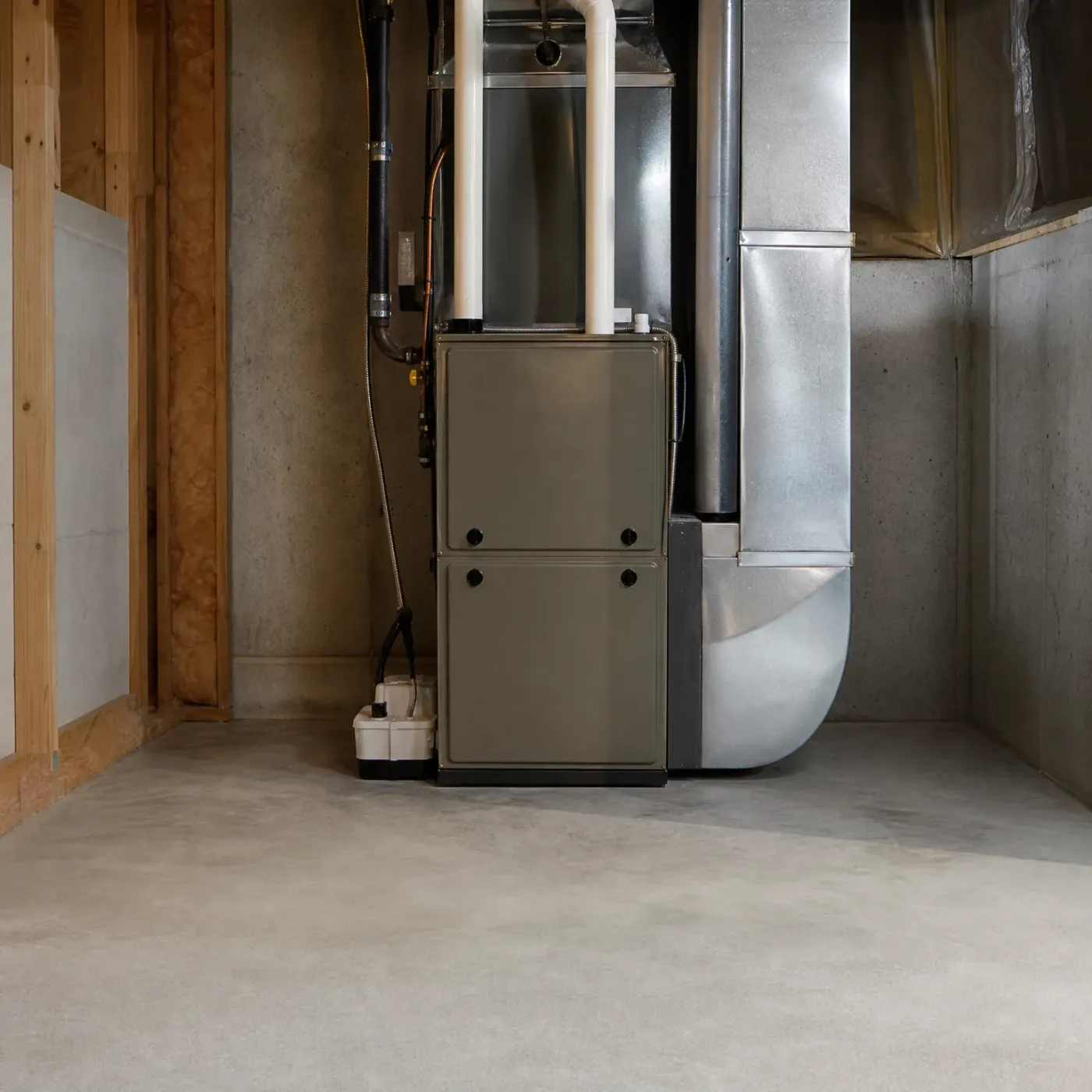
A gray high-efficiency furnace with white PVC vent pipes stands against a concrete basement wall beside sheet-metal ductwork, a small condensate pump on the floor, and exposed wood framing at left.

Airflow moving the way it should

This furnace is drawing through a clean filter and venting out the PVC pipe without resistance. The condensate pump clears water as it forms, so the heat exchanger stays at a normal temperature and the burners run a full cycle before shutting off.
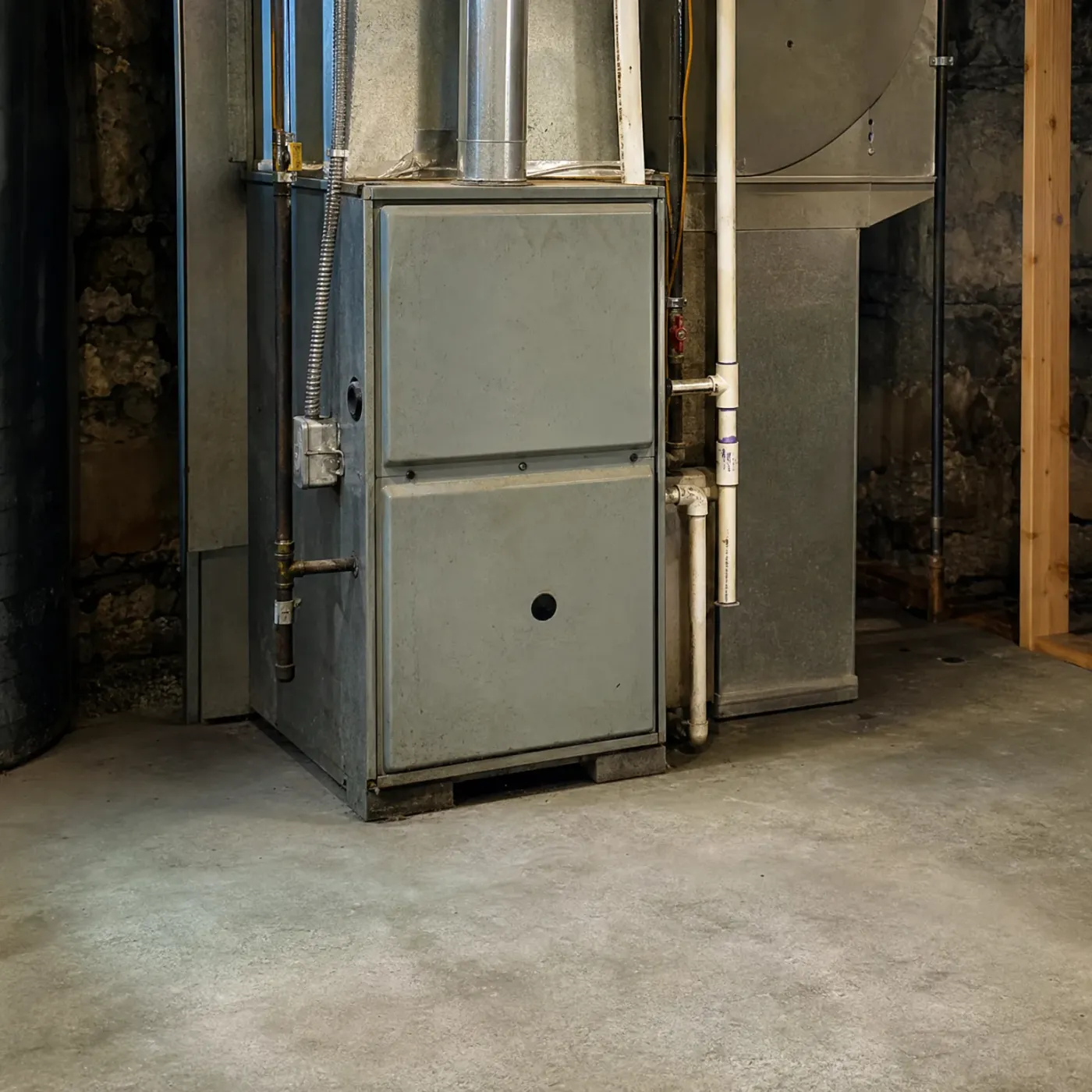
A gray sheet-metal furnace with flue pipe and adjacent ductwork stands against a stone basement wall on a concrete floor, with white PVC and metal pipes running nearby.

Airflow fighting something in the way

This furnace is older, running iron gas pipe and flexible tubing into a stone and block foundation. A blocked vent, a clogged filter, or a condensate line backing up makes the heat exchanger run hotter than it should, and the limit switch starts cutting the burners short.

Winter nights average 13°F statewide

At 13°F, a furnace that short-cycles isn't just annoying, it's losing ground. Each early shutoff means another cold stretch before the burners catch again, and on a night that cold, your house doesn't have much time to spare before it's noticeable.

NOAA nClimDiv 1991-2020 county normals weighted by homes

Where this leaves you

  • Short cycling is the furnace shutting itself off early, almost always the limit switch or flame sensor reacting to heat or a bad flame signal.
  • A dirty filter, a blocked vent hood, or a cracked flame sensor are the usual causes, and each one needs a different fix.
  • The problem doesn't go away on its own, and every cycle it skips is heat your house doesn't get on a cold night.
  • A contractor can check the filter, the vent, the flame sensor, and the limit switch itself to find which one is tripping.
  • Once you send the request, you're done calling around and explaining the problem to one company after another.
  • What's true in January isn't always true in October, so the same short cycling means more at 13°F than it did in fall.

A furnace that shuts off every few minutes is protecting itself from something, whether that's a dirty filter choking the heat exchanger, a blocked vent hood, or a flame sensor that's stopped reading the burner right. None of those fix themselves. The furnace will keep cutting the cycle short, night after night, until the actual cause gets found and corrected, and in a Wisconsin January that means real cold creeping into the house between cycles instead of just a noisy system in October.

Finding which of those four or five things is actually happening takes someone checking the filter, the vent run, the flame sensor, and the limit switch itself, in person, with the furnace running. That's not a guess you make from the thermostat. It's a contractor's job, and it's the kind of thing you've probably already caught yourself listening for, counting the minutes between the burners catching and the house going quiet again.

What changes once you send the request is the part that has nothing to do with the furnace. No calling three companies and repeating the same description of what it's doing. No comparing quotes against each other while the house keeps cycling cold air. You send it once, and finding someone who can actually look at the limit switch and the flame sensor stops being something you have to manage yourself. The furnace still needs the repair. But you're not the one tracking down who does it.

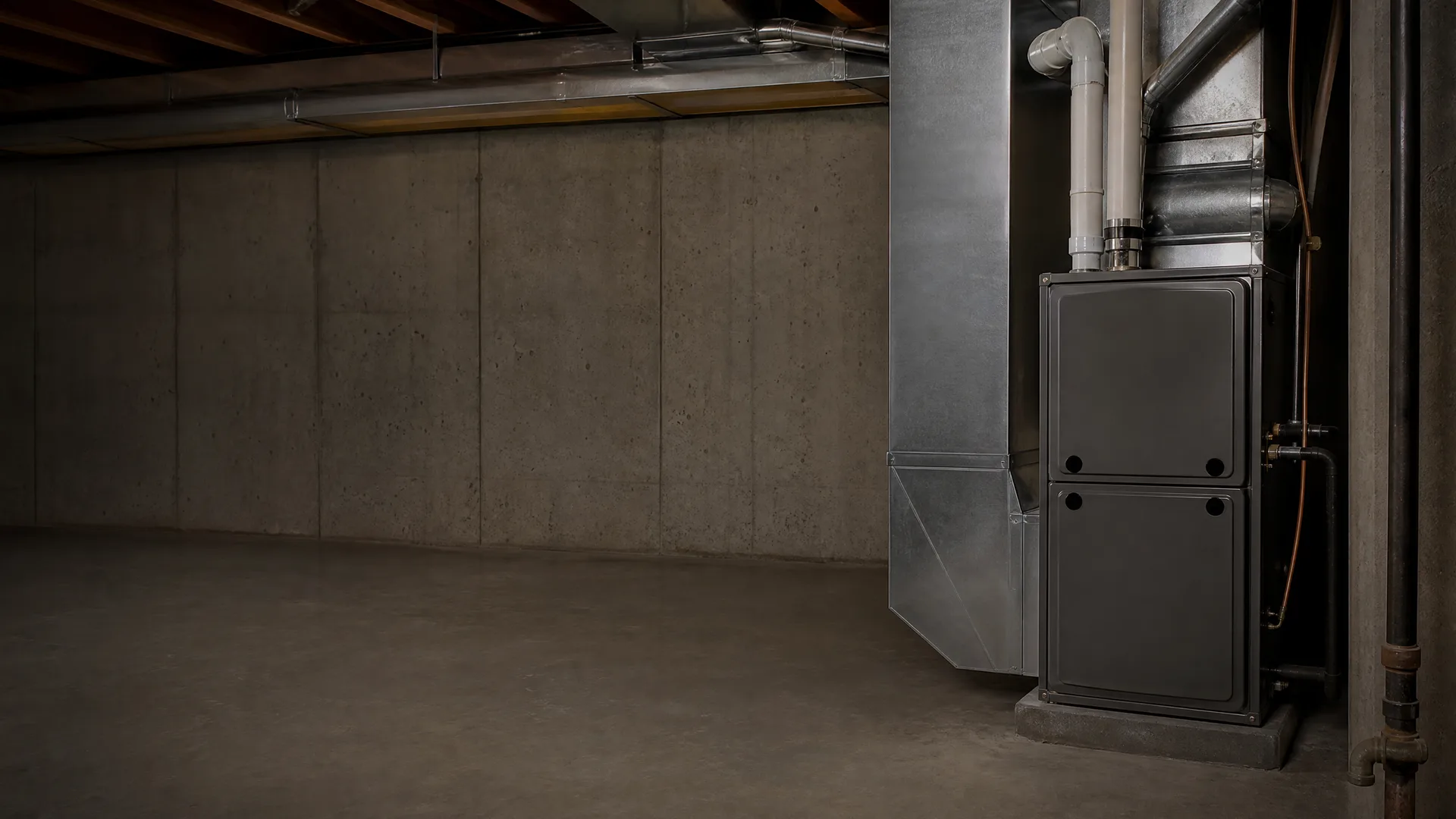
An empty basement with bare concrete walls and floor, exposed wooden joists and pipes overhead, and a dark furnace with sheet-metal ductwork and vent pipes in the right corner.

Let someone else find the pro

Skip searching for a furnace pro and answer a few questions instead.

Step 1 of 3: Equipment