



Profile view of a bearded man wearing a black baseball cap and a dark gray T-shirt against a plain light background.

Why your furnace won't turn on in a Wisconsin winter

Step 1 of 3: Equipment

A furnace that won't turn on in the middle of a Wisconsin cold snap usually comes down to one of a few things: a thermostat not calling for heat the way it should, a flame sensor or igniter too dirty or worn to light the burners, a clogged filter choking airflow until the furnace shuts itself down, or a safety switch tripped because something downstream isn't right. Gas furnaces are built to stop rather than run unsafely, so when something is off, the furnace's answer is to do nothing at all. That's protective, but it leaves you without heat on a night when the temperature outside makes that a real problem fast. A furnace that won't start isn't something to leave for a few days and see if it sorts itself out. Pipes freeze, the cold creeps into every room, and a small problem sitting unfixed tends to turn into a bigger one.

A smiling man in a gray long-sleeved shirt stands in a kitchen looking to the side, with open shelves of dishes, a white mug on the counter, a potted plant, and a view through a doorway into a living room.
A smiling bearded man in a green sweater sits at a white marble kitchen island with a mug, potted plant and bowl of fruit, in a bright white interior with open shelving and an arched doorway.
A smiling man with dark curly hair and a beard, wearing a dark green knit sweater, stands at a white marble kitchen counter with a dark blue mug, with open shelving, pendant lights and a houseplant behind him.
A smiling man in a green ribbed sweater stands behind a wooden table holding a ceramic mug of coffee in a kitchen with white subway tile, shelves of potted plants, and a bowl of fruit.

Your furnace runs through a sequence before gas ever reaches the burners, and it only takes one weak link to stop the whole thing cold. First the thermostat has to send a call for heat, and if it's reading the room wrong, that call never goes out. Next the draft inducer motor has to prove it's moving air through the vent before the control board will open the gas valve at all. Then the igniter has to get hot enough to light the burners, something a hairline crack will stop even if everything else works. Once the burners are lit, a flame sensor checks that they're actually burning, and a thin layer of soot on it is enough to make the board think there's no flame and shut things down. A clogged filter cuts off airflow the same way, and the furnace will cut out rather than risk overheating the heat exchanger. And none of it runs if a breaker tripped or a fuse blew somewhere along the way.

What's Actually Happening Inside

  • A thermostat set to heat but reading the wrong temperature can keep the furnace from ever getting a call to start.
  • The igniter has to glow hot enough to light the gas, and a hairline crack in it will keep the burners from firing at all.
  • A flame sensor coated with a thin layer of soot can't tell the control board a flame exists, so the system shuts itself down for safety.
  • A clogged filter starves the furnace of airflow, and many units will cut off rather than let the heat exchanger overheat.
  • The draft inducer motor has to prove it's pulling air through the vent before the gas valve is allowed to open.
  • A tripped breaker or blown fuse cuts power to the control board even when the gas supply and pilot are fine.
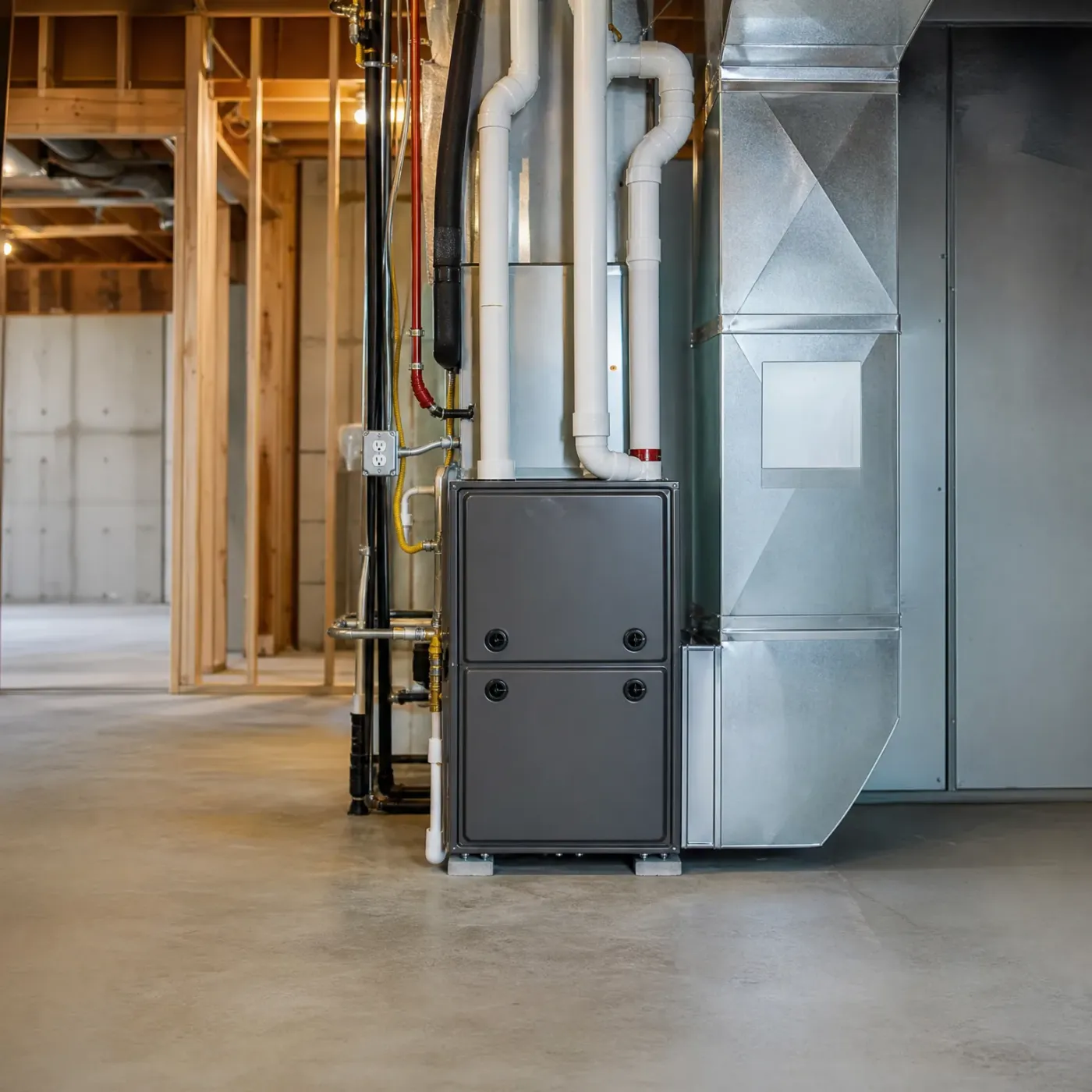
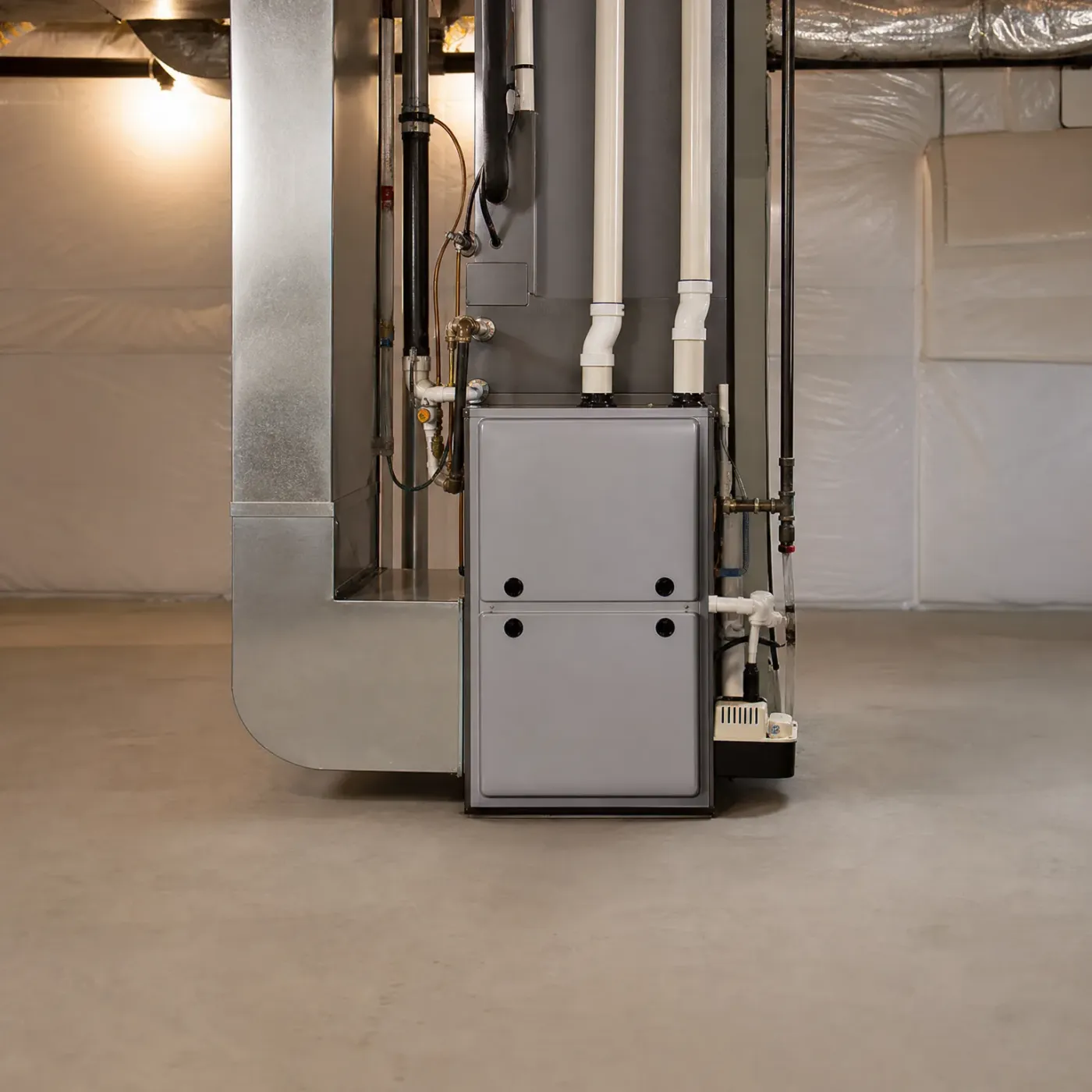
A gray high-efficiency furnace stands on a concrete basement floor beside galvanized sheet-metal ductwork, with white PVC vent pipes, gas and water lines, and unfinished wood framing behind it.
Air moves steadily out of every vent and the burner flame holds a strong, even blue.
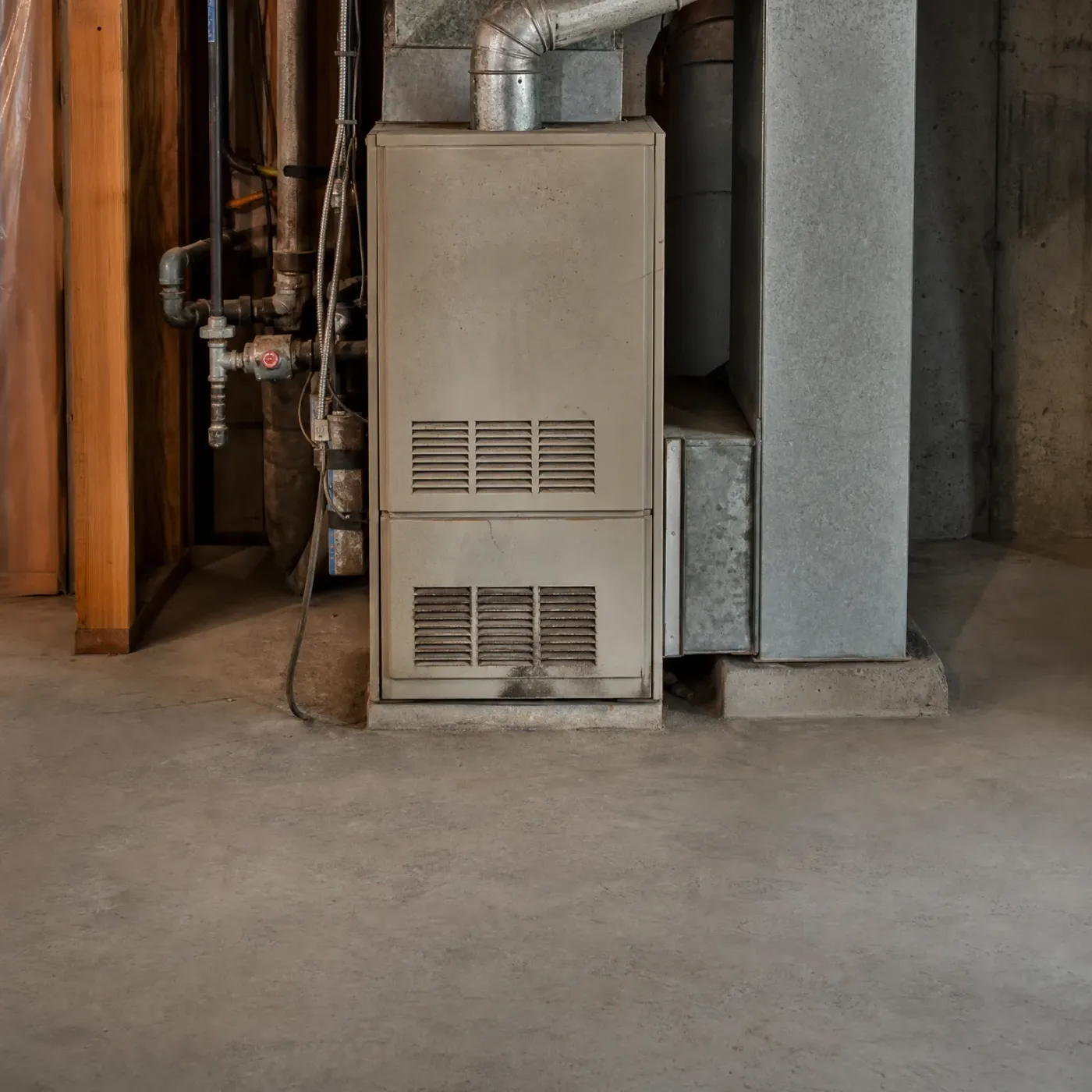
A beige furnace with two louvered front panels stands on a concrete basement floor beside galvanized ductwork, metal pipes, and a wooden post.
The burners won't fire, or the blower hums but no warm air ever reaches the ducts.

Is your house slowly losing the fight against the cold?

You bump the thermostat and nothing kicks on, or the blower runs but the air coming out is barely warm. Maybe you hear a click and a few seconds of silence where the burners should catch. Rooms farthest from the furnace start feeling it first, then the whole house settles a few degrees cooler than you set it. Water left in a cup might cool faster than it should. With Wisconsin temperatures outside, a furnace that can't hold a steady burn leaves pipes in exterior walls at risk of freezing if the problem drags on, and it leaves a heating system working harder than it should for the warmth you do get.

A gray high-efficiency furnace in a basement with white PVC vent pipes, sheet-metal ductwork, copper and black piping, a condensate pump, and insulated walls above a concrete floor.

Running the way it should

Warm air comes out of every register at full strength. The burners light on the first try, every time you call for heat. The flue and condensate lines are doing their job quietly in the background, and you don't think about any of it until spring.
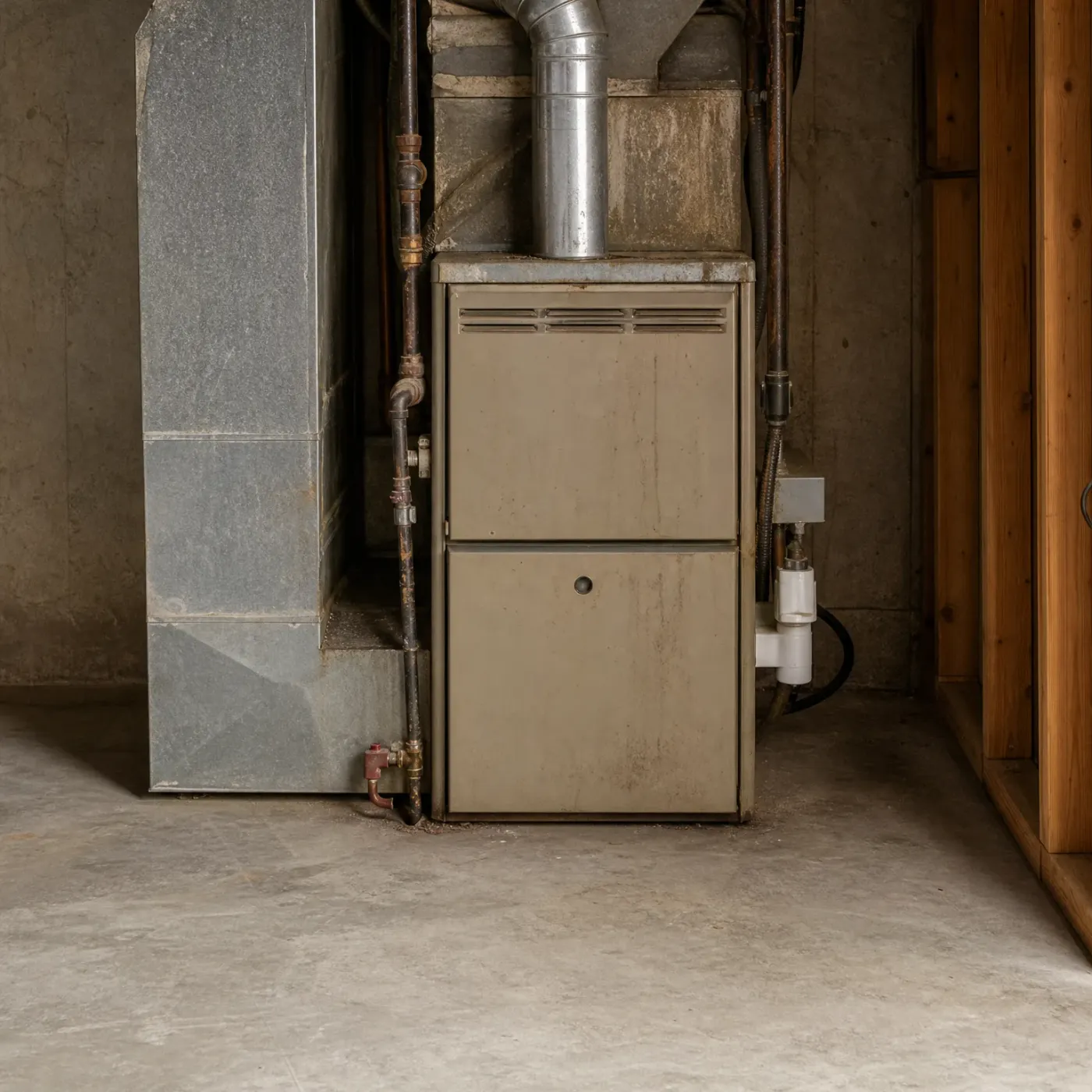

A beige residential furnace stands on a concrete basement floor beside galvanized sheet-metal ductwork, a round flue pipe, copper gas piping, and a PVC condensate line, with a wood-paneled wall at right.

Struggling to keep up

The furnace is older and it shows, with grime on the panels and a flue that's seen years of service. It may still run, but a worn igniter or a dirty sensor can leave it unable to start on a night when Wisconsin needs it most.

A smiling man with dark curly hair in a navy t-shirt sits on a gray couch indoors, with a large-leafed plant and a window in the background.
A bearded man in a plaid flannel shirt stands in a kitchen looking out a window toward snow-covered shrubs, with a steaming mug on the windowsill and potted plants on a shelf behind him.

Hand off the furnace problem

A dead furnace at ten below is not something to sort out over a few evenings. You could start pulling the filter, checking the thermostat batteries, watching the igniter through the sight glass, but a cracked igniter or a failed control board takes a trained eye and the furnace stays cold while you look. Calling around for someone licensed to work on gas furnaces in Wisconsin, waiting on callbacks, explaining the same clicking noise three times to three different shops, all of that takes hours you don't have when the house is already losing heat. Send the request through this page and that search becomes someone else's job. One contractor gets your information and the house, the thermostat, the noise it's making, and they take it from there. You stop checking the forecast and wondering how long the pipes can take it, and start waiting on someone who already knows what a furnace in this cold needs.

How the Startup Sequence Works

  • The sequence starts with the thermostat calling for heat, then the inducer motor spins up before anything else happens.
  • A pressure switch has to detect that the inducer is pulling air through the flue before the gas valve is allowed to open.
  • If that switch doesn't close, the furnace will often just sit there, inducer running, burners never lighting.
  • Once the igniter glows and the flame sensor confirms a flame, the gas valve stays open and the blower kicks in a short while later.
  • That delay before warm air reaches the vents is normal and isn't a sign anything is wrong.
  • A control board runs this whole sequence and will shut the furnace down rather than let gas flow without a confirmed flame.

A furnace doesn't just light up when you bump the thermostat. There's an order to it, and a break anywhere in that order means no heat. First the thermostat sends a call for heat to the control board. The board starts the inducer motor, a small fan that pulls air through the flue to clear it before any gas is allowed near a flame. A pressure switch is watching that airflow. Only when it senses the inducer is doing its job does it close and let the control board open the gas valve. Skip that step and the furnace stalls right there, inducer running, nothing else happening, no error you can see from across the room. Once the valve opens, the igniter has to get hot enough to light the gas, and the flame sensor has to confirm a flame is actually burning. No confirmed flame, no gas stays flowing. The board cuts it rather than risk gas building up unburned. Only after all of that holds does the blower switch on to push warm air into the ducts, and that blower waits a short stretch on purpose, giving the heat exchanger time to warm up first. So the pause between the furnace starting and warm air hitting the vents is built into the design. It's a lot of steps, and a failure at any one of them looks the same from the thermostat: nothing happens, or something happens and then stops.

Winter nights average 13°F statewide

At 13°F, a furnace isn't just keeping you comfortable, it's standing between your pipes and a hard freeze. That's the average overnight low across a Wisconsin winter, not the extreme, so your furnace is built for it. When it won't fire on a night like that, there's little room to wait it out.

NOAA nClimDiv 1991-2020 county normals weighted by homes

  1. Thermostat calls for heat and sends power to the control board.

  2. Inducer motor spins up to clear the heat exchanger and flue.

  3. Pressure switch confirms draft before letting gas valve open.

  4. Igniter heats up enough to glow and ignite the burners.

A closed silver laptop and a ceramic mug of dark coffee sit on a wooden table in front of two chair backs, with a kitchen counter, tiled backsplash, wooden cutting boards, a vase of greenery and a potted plant by a window behind.

A furnace that won't fire is a part, not a mystery

Somewhere in that sequence from thermostat to burner flame, one part stopped doing its job. A pressure switch that won't close, an igniter too weak to glow, a flame sensor coated with residue. That's what's keeping your house cold tonight, and it's fixable.

Finding that out on your own means pulling the furnace apart in the cold, then still not knowing who to call once you've found the problem. Send the form instead, and you're done with the part where this is your job to solve. No searching for a contractor who answers in winter, no calling around to compare who can come tonight, no explaining the clicking and the cold rooms over and over to whoever picks up. Someone licensed to work on gas furnaces takes it from here.

Interior corner of a room with a window and sheer curtain at left, a gray upholstered sofa with a cushion at right, and a round wooden table holding stacked books and a round vase with an olive branch.
A dark wood cabinet with a paneled door and a ceramic pot of green foliage on top stands in a beige-walled room with white baseboard, a window at left, hardwood floor, and a patterned area rug.
A dark wood glass-front cabinet holding folded towels, woven baskets and a ceramic vase stands in a bathroom corner beside a window, with a potted fern and stacked towels on top and a freestanding tub partly visible at left.
A woven basket holding a green cushion and a cream fringed knit throw sits on a wood floor in a room corner beside a window and a dark wooden cabinet.
Corner of a room with a dark wood cabinet topped by a round vase, a linen curtain at a window, white baseboard, oak plank flooring with sunlight patches, and a woven jute rug in the foreground.
A dark wood sideboard against a pale wall holds a shallow stone bowl and a round ceramic vase with leafy branches, with sunlight from a curtained window falling across the wall, wood floor and woven rug.

Send one request and you're done looking

Explain the job once and skip repeating it on every call.

Send my request

It costs nothing to send, and you don't have to hire anyone.