Tell us about the job
Takes about a minute. No obligation.
A contractor quoting a furnace install in Lincoln County has to account for what the heating system will actually run against, not just the square footage of the house. 99 severe weather events were recorded in Lincoln County, Wisconsin between 2015 and 2024. At that rate, severe weather is a standing condition here, and it bears directly on how a system is sized, where ductwork is sealed, and how much margin a contractor builds into the equipment spec. A furnace that fits the catalog but not the climate leaves the homeowner absorbing whatever the gap costs later.
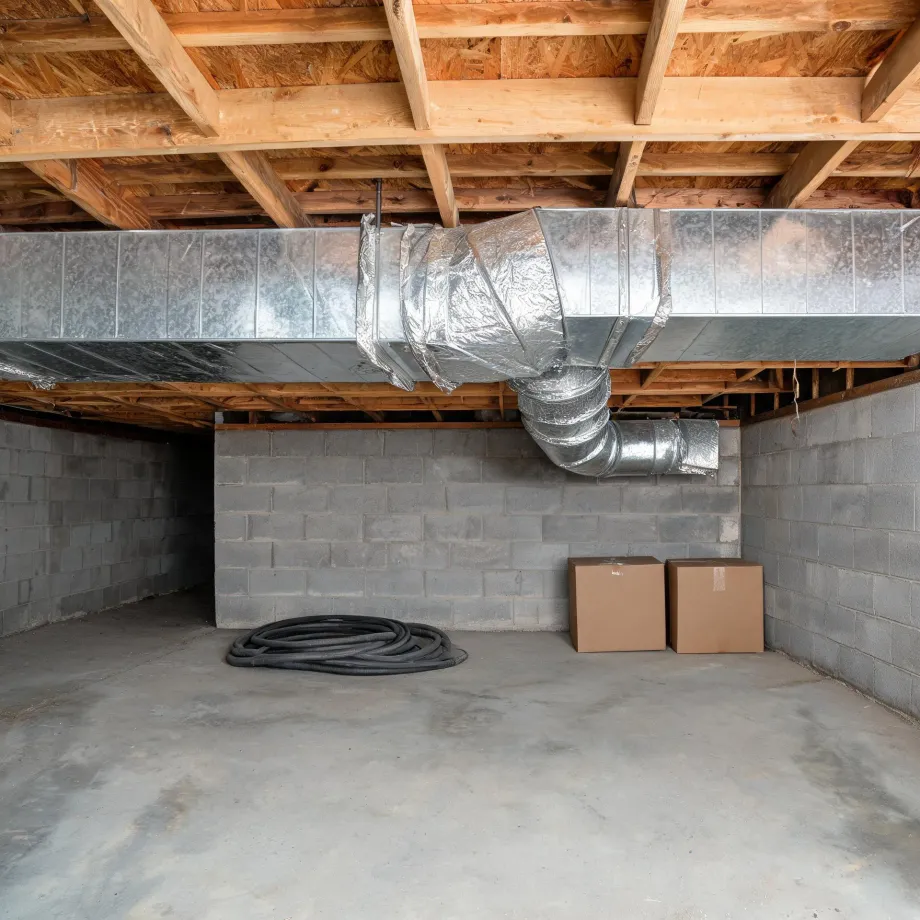
Ductwork laid down for an earlier generation of heating equipment carries assumptions about airflow, branch sizing, and return placement that a new furnace will expose on day one. Half the homes in Lincoln County, Wisconsin were built in 1975 or earlier (2020-2024 ACS 5-year). A contractor sizing and fitting a replacement furnace in stock like this has to evaluate what the existing duct system will actually deliver before the equipment choice makes sense. Sheet metal that served one system for decades may restrict airflow enough to undercut the efficiency rating on any new unit installed into it. The electrical service matters too, since draw requirements on current furnace models can differ from what the original rough-in anticipated.
What Gets Installed With a New Furnace
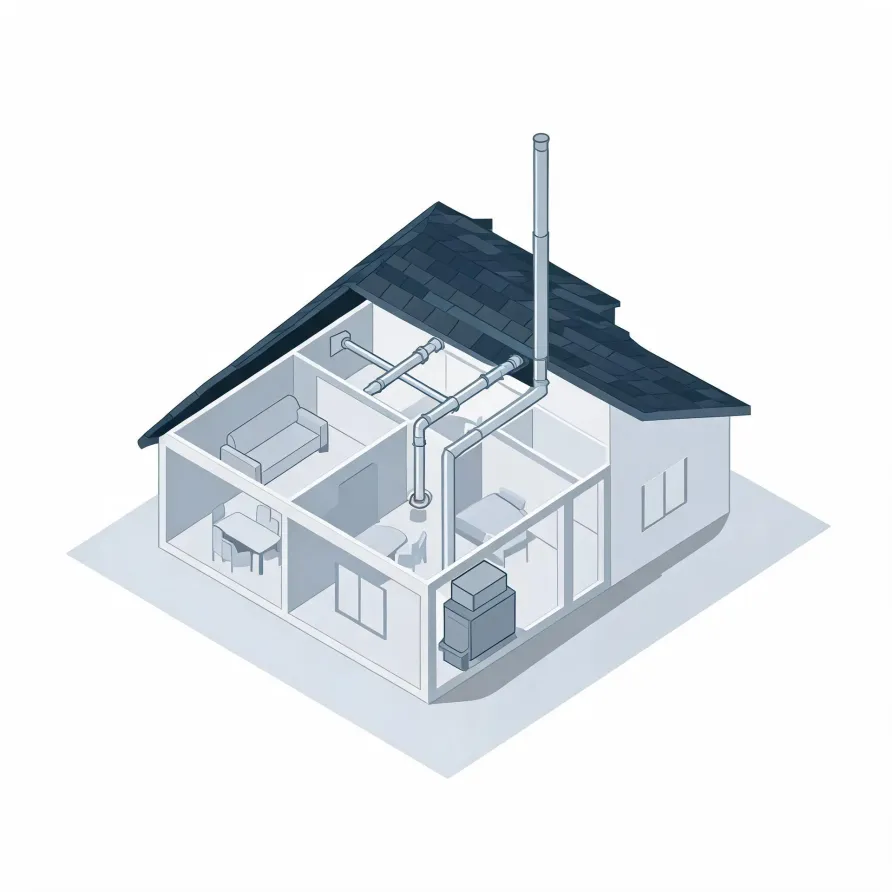
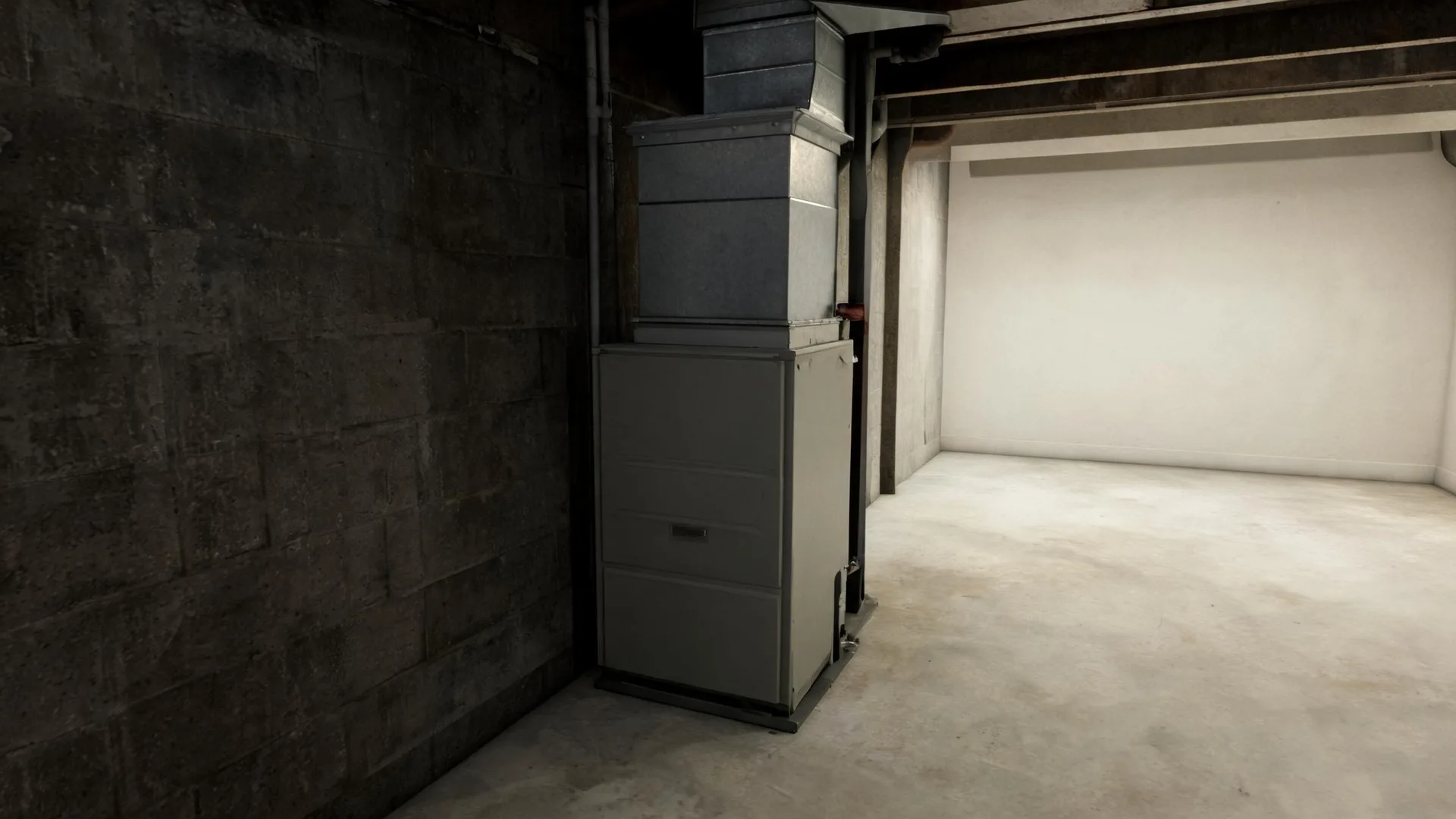
The furnace itself sits in the basement, utility room, or closet and is the heart of what you are buying. A gas valve, heat exchanger, and blower motor all live inside that cabinet. The heat exchanger is where combustion heat transfers to moving air, and the blower pushes that air out into the house.
The flue pipe runs from the furnace up and out of the house, carrying exhaust gases away from the living space. Alongside the furnace, a contractor installs a new thermostat on an interior wall and connects it to the unit so the system has something to respond to.
The drawing shows a typical layout, and a licensed contractor determines exactly what applies to your house and its existing setup.
Get matched in Lincoln CountyLincoln County, Wisconsin, by the numbers
99 severe weather events were recorded in Lincoln County, Wisconsin between 2015 and 2024.
NOAA National Centers for Environmental Information, Storm Events Database, bulk CSV export, events 2015-01-01 through 2024-12-31.Half the homes in Lincoln County, Wisconsin were built in 1975 or earlier (2020-2024 ACS 5-year).
U.S. Census Bureau, 2020-2024 American Community Survey 5-Year EstimatesLincoln County, Wisconsin holds 16,327 housing units (2020-2024 ACS 5-year).
U.S. Census Bureau, 2020-2024 American Community Survey 5-Year EstimatesOwners occupy 79.5% of the occupied homes in Lincoln County, Wisconsin (2020-2024 ACS 5-year).
U.S. Census Bureau, 2020-2024 American Community Survey 5-Year EstimatesFurnace Installation Rules for Lincoln County, Wisconsin6 codes, standards, and laws
What the Installation Actually Looks Like
Non-weatherized gas furnaces manufactured on or after November 19, 2015 must reach 80.0 percent AFUE.
Non-weatherized oil-fired furnaces manufactured on or after November 19, 2015 must reach 83.0 percent AFUE.
Mobile home gas furnaces manufactured on or after November 19, 2015 must reach 80.0 percent AFUE.
Non-weatherized gas furnaces manufactured on or after December 18, 2028 must reach 95.0 percent AFUE, up from the 80.0 percent minimum that applies to units manufactured before that date.
Licensing and Legal Requirements in Lincoln County, Wisconsin
A Wisconsin business that employs a certified HVAC qualifier is a certified HVAC business, and no city or county may require it to hold a local certification or licence on top of that.
Wisconsin requires a state HVAC contractor registration: no person or business may install or service heating, ventilating or air conditioning equipment, or offer to, without one.
Severe Weather Events in Lincoln County
Lincoln County's climate puts real load on heating equipment, and how hard a furnace works over its life is shaped by what the weather here actually does. That makes local storm history relevant to sizing and installation decisions, not just a backdrop.
99 severe weather events, 2015–2024. Source: NOAA National Centers for Environmental Information, Storm Events Database.