Tell us about the job
Takes about a minute. No obligation.
A contractor quoting a furnace install in Marathon County has to size for what this climate actually demands, not for what a catalog suggests as a regional default. 174 severe weather events were recorded in Marathon County, Wisconsin between 2015 and 2024. At that rate, severe weather is a standing feature of operating here, and a system that is undersized or poorly sealed at the plenum will show the strain within a few heating seasons. A contractor who knows this area sets tighter tolerances on duct connections and combustion air supply than a standard spec sheet calls for, because the load those components carry here makes loose work fail faster.
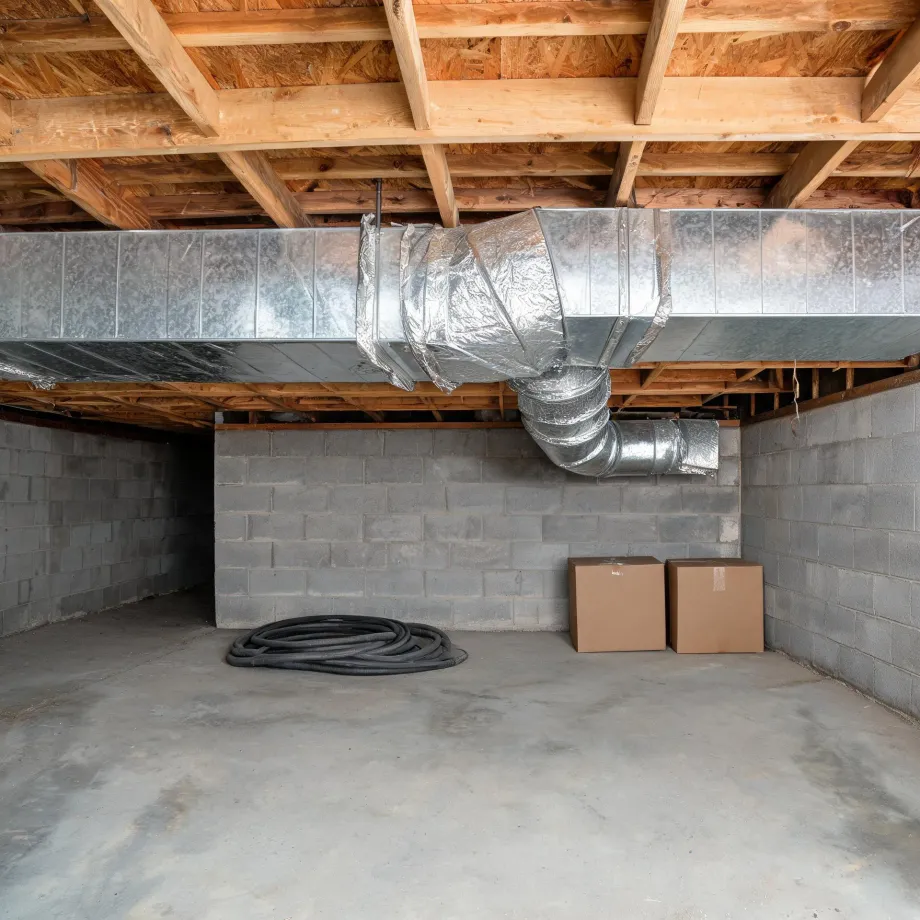
Older ductwork routed for the equipment of its day is what a contractor has to assess before a furnace installation in Marathon County can be priced accurately. Half the homes in Marathon County, Wisconsin were built in 1978 or earlier (2020-2024 ACS 5-year). Duct runs laid out for a different generation of equipment carry specific dimensions, and a new furnace may move air in ways the existing layout was never built for. The electrical supply tells a similar story. A contractor measures both before the new unit is ever ordered.
What Gets Installed With a New Furnace
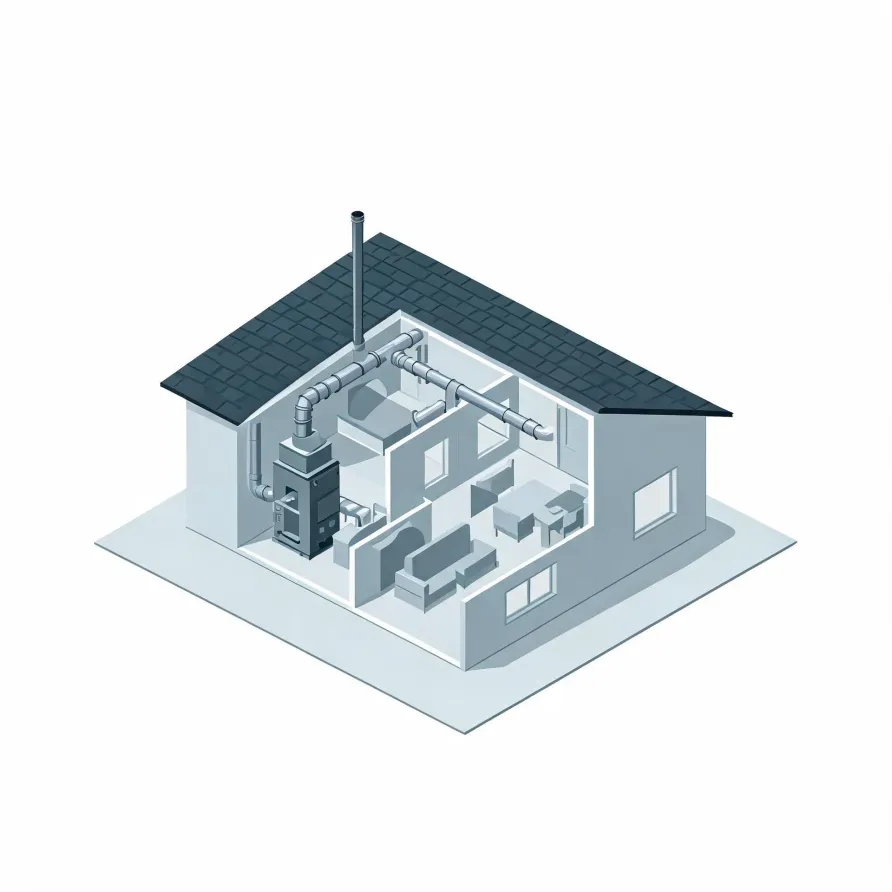
The furnace itself sits in a mechanical room, basement, or utility closet and is the piece that produces the heat. A flue pipe runs from the furnace to an exterior wall or through the roof, carrying combustion gases out of the house. The filter housing attaches directly to the furnace cabinet and holds the filter that screens the air before it enters the unit.
The thermostat mounts on an interior wall and is the control point the homeowner touches every day. A new furnace also calls for a fresh set of supply and return connections at the unit itself, and in many houses a new condensate drain line if the furnace is a sealed-combustion model. The gas line ties in at the furnace cabinet and must be sized and secured to code.
The drawing alongside shows the general layout of these components, and a licensed contractor determines exactly what applies to your house.
Get matched in Marathon CountyMarathon County, by the Numbers
174 severe weather events were recorded in Marathon County, Wisconsin between 2015 and 2024.
NOAA National Centers for Environmental Information, Storm Events Database, bulk CSV export, events 2015-01-01 through 2024-12-31.Half the homes in Marathon County, Wisconsin were built in 1978 or earlier (2020-2024 ACS 5-year).
U.S. Census Bureau, 2020-2024 American Community Survey 5-Year EstimatesMarathon County, Wisconsin holds 60,910 housing units (2020-2024 ACS 5-year).
U.S. Census Bureau, 2020-2024 American Community Survey 5-Year EstimatesOwners occupy 73.3% of the occupied homes in Marathon County, Wisconsin (2020-2024 ACS 5-year).
U.S. Census Bureau, 2020-2024 American Community Survey 5-Year EstimatesFurnace Installation Rules for Marathon County, Wisconsin6 sourced standards and codes
What the installation actually looks like
Non-weatherized gas furnaces manufactured on or after November 19, 2015 must reach 80.0 percent AFUE.
Non-weatherized oil-fired furnaces manufactured on or after November 19, 2015 must reach 83.0 percent AFUE.
Mobile home gas furnaces manufactured on or after November 19, 2015 must reach 80.0 percent AFUE.
Non-weatherized gas furnaces manufactured on or after December 18, 2028 must reach 95.0 percent AFUE, up from the 80.0 percent minimum that applies to units manufactured before that date.
What Marathon County, Wisconsin Requires for HVAC Installation
A Wisconsin business that employs a certified HVAC qualifier is a certified HVAC business, and no city or county may require it to hold a local certification or licence on top of that.
Wisconsin requires a state HVAC contractor registration: no person or business may install or service heating, ventilating or air conditioning equipment, or offer to, without one.
Severe Weather in Marathon County
Weather extremes put real demand on furnace equipment, shortening service life and exposing weak installations. That load is specific to this part of Wisconsin, which is why local contractors size and install with it in mind.
174 severe weather events, 2015–2024. Source: NOAA National Centers for Environmental Information, Storm Events Database.